
Sign up to save your podcasts
Or

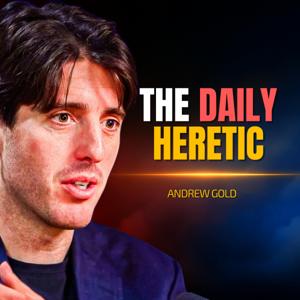

Subscribe to The Daily Heretic for fearless interviews, whistleblower testimony, and long-form conversations that challenge powerful institutions. If you want to hear from insiders who were actually there, start here: https://www.youtube.com/@hereticsclips/videos
What really happens when you challenge the World Economic Forum from the inside? In this episode, whistleblower Desiree Fixler joins Andrew Gold to explain why she believes the ideas behind the Great Reset, championed by Klaus Schwab and the WEF, have created a system vulnerable to abuse, opacity, and large-scale misalignment between rhetoric and reality.
Fixler was a senior executive at Deutsche Bank’s $1 trillion asset-management division. She believed in ESG, sustainability, and the promise of “profit with purpose.” That belief began to fracture when she saw how policies associated with the WEF were implemented behind closed doors — how incentives worked, how dissent was handled, and how quickly questioning became unwelcome once global frameworks were in place.
In this conversation, Desiree explains what the World Economic Forum actually is, how stakeholder capitalism replaced traditional shareholder accountability, and why net zero, ESG, and DEI became effectively mandatory across finance and corporate governance. She outlines how alignment with WEF principles can become more important than outcomes, creating conditions where transparency is replaced by compliance.
The turning point came when Fixler says she refused to sign off on public disclosures she believed were misleading. According to her account, raising concerns led to swift consequences: she was locked out of internal systems, publicly criticised, and ultimately forced out of Germany. What followed, she says, were investigations by US and German authorities, bringing wider scrutiny to practices she claims were ignored internally.
This episode is not a denial of environmental responsibility or global cooperation. Instead, it’s a first-hand account of how power, policy, and finance intersect — and what can happen when ambitious global agendas are insulated from challenge. Fixler carefully distinguishes between stated goals and the structures used to enforce them, arguing that without scrutiny, even well-intentioned frameworks can produce damaging results.
If you’ve ever wondered what the Great Reset means in practice — beyond slogans and headlines — this conversation offers rare insight from someone who supported the system before questioning it. Desiree doesn’t speculate. She explains what she says she witnessed, why she spoke up, and what it cost her to do so.
Watch the full podcast here:
https://www.youtube.com/watch?v=fPVMmfh8ARc
#DesireeFixler #GreatReset #WorldEconomicForum #KlausSchwab #Whistleblower #ESG #NetZero #StakeholderCapitalism #TheDailyHeretic #AndrewGold
Learn more about your ad choices. Visit megaphone.fm/adchoices
 View all episodes
 By Andrew Gold
Subscribe to The Daily Heretic for fearless interviews, whistleblower testimony, and long-form conversations that challenge powerful institutions. If you want to hear from insiders who were actually there, start here: https://www.youtube.com/@hereticsclips/videos
What really happens when you challenge the World Economic Forum from the inside? In this episode, whistleblower Desiree Fixler joins Andrew Gold to explain why she believes the ideas behind the Great Reset, championed by Klaus Schwab and the WEF, have created a system vulnerable to abuse, opacity, and large-scale misalignment between rhetoric and reality.
Fixler was a senior executive at Deutsche Bank’s $1 trillion asset-management division. She believed in ESG, sustainability, and the promise of “profit with purpose.” That belief began to fracture when she saw how policies associated with the WEF were implemented behind closed doors — how incentives worked, how dissent was handled, and how quickly questioning became unwelcome once global frameworks were in place.
In this conversation, Desiree explains what the World Economic Forum actually is, how stakeholder capitalism replaced traditional shareholder accountability, and why net zero, ESG, and DEI became effectively mandatory across finance and corporate governance. She outlines how alignment with WEF principles can become more important than outcomes, creating conditions where transparency is replaced by compliance.
The turning point came when Fixler says she refused to sign off on public disclosures she believed were misleading. According to her account, raising concerns led to swift consequences: she was locked out of internal systems, publicly criticised, and ultimately forced out of Germany. What followed, she says, were investigations by US and German authorities, bringing wider scrutiny to practices she claims were ignored internally.
This episode is not a denial of environmental responsibility or global cooperation. Instead, it’s a first-hand account of how power, policy, and finance intersect — and what can happen when ambitious global agendas are insulated from challenge. Fixler carefully distinguishes between stated goals and the structures used to enforce them, arguing that without scrutiny, even well-intentioned frameworks can produce damaging results.
If you’ve ever wondered what the Great Reset means in practice — beyond slogans and headlines — this conversation offers rare insight from someone who supported the system before questioning it. Desiree doesn’t speculate. She explains what she says she witnessed, why she spoke up, and what it cost her to do so.
Watch the full podcast here:
https://www.youtube.com/watch?v=fPVMmfh8ARc
#DesireeFixler #GreatReset #WorldEconomicForum #KlausSchwab #Whistleblower #ESG #NetZero #StakeholderCapitalism #TheDailyHeretic #AndrewGold
Learn more about your ad choices. Visit megaphone.fm/adchoices