
Sign up to save your podcasts
Or

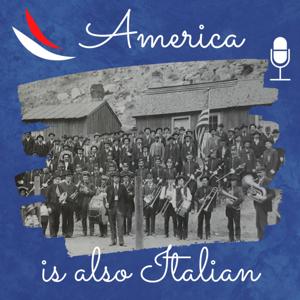

There is a moment, if you have Italian blood in you, when you realize that the country you live in and the country that lives in you are not two separate things. They never were. Somewhere between the docks of Palermo and the tenements of lower Manhattan, between the vineyards of Calabria and the fishing boats of Gloucester, Massachusetts, between a grandmother's kitchen in Naples and a kitchen in Providence or Pittsburgh or San Francisco, something happened that America has never fully accounted for. A civilization crossed an ocean. And it never left.
This is not a nostalgia project. I want to be clear about that from the beginning, because Italian Americans have been served enough nostalgia. We have been fed the sepia-toned version of ourselves — the pushed cart, the tenement stoop, the red sauce Sunday, the accordion in the background — and while there is beauty in all of that, there is also a danger. Nostalgia softens the edges of history. It makes suffering picturesque. It turns a complex, living civilization into a costume, and it lets the harder truths go unexamined.
The harder truths matter. The Italian immigrants who came to this country in the great waves of the late nineteenth and early twentieth centuries did not arrive as guests. They arrived as laborers, as outsiders, as people who were not always welcomed, not always trusted, not always considered fully white by a society still sorting itself out along the sharpest of racial and ethnic lines. They were exploited in the mines and on the railroads. They were lynched in Louisiana. They were interned during the Second World War alongside Japanese Americans, a fact that almost no one talks about. They built this country with their hands and were, for decades, repaid with contempt.
And yet they stayed. And yet they built. And yet they cooked.
That last word is not a diminishment. Food, for Italians, has never been a minor matter. It is theology. It is memory. It is the most direct line between who you are and where you come from. When an Italian grandmother makes Sunday ragù, she is not simply making lunch. She is performing an act of cultural transmission that goes back centuries, that carries within it the soil of a specific region, the dialect of a specific village, the accumulated knowledge of women whose names we will never know but whose hands shaped everything. That knowledge crossed the ocean. It adapted. It found new ingredients and new neighbors and new contexts. And in doing so, it became part of what Americans eat, what Americans taste, what Americans reach for when they want comfort or celebration or the feeling of being home.
Italian food in America is not Italian food. I say that not as a criticism but as a fact of cultural history. What Italian immigrants created in this country was something new — a cuisine born of necessity and memory and improvisation, shaped by what was available and affordable, by the mixing of regional traditions that would never have met back in Italy, by the particular hunger of people trying to hold onto something while building something else entirely. That cuisine — the pizza, the pasta, the meatball, the hero sandwich, the feast of the seven fishes — became American food. It became so American that most people have forgotten it was ever anything else.
That forgetting is part of what we are here to address.
This podcast aims to explain Italian characters and behavior. A full-length portrait of my compatriots may occasionally be witty, grave, cynical, compassionate, melancholy, glittering, scholarly, and stimulating. What is important is that we share these emotions. Italians have discovered America for the Americans; taught poetry, statesmanship, and the ruses of trade to the English; military art to the Germans; cuisine to the French; acting and ballet dancing to the Russians; music to everybody. Suppose someday this world of ours should be turned into a cloud of radioactive dust in space. In that case, it will be by nuclear contrivances developed with the decisive aid of Italian scientists—{Luigi Barzini, in the Italians}.
Hosted on Acast. See acast.com/privacy for more information.
 View all episodes
 By Walter Potenza
There is a moment, if you have Italian blood in you, when you realize that the country you live in and the country that lives in you are not two separate things. They never were. Somewhere between the docks of Palermo and the tenements of lower Manhattan, between the vineyards of Calabria and the fishing boats of Gloucester, Massachusetts, between a grandmother's kitchen in Naples and a kitchen in Providence or Pittsburgh or San Francisco, something happened that America has never fully accounted for. A civilization crossed an ocean. And it never left.
This is not a nostalgia project. I want to be clear about that from the beginning, because Italian Americans have been served enough nostalgia. We have been fed the sepia-toned version of ourselves — the pushed cart, the tenement stoop, the red sauce Sunday, the accordion in the background — and while there is beauty in all of that, there is also a danger. Nostalgia softens the edges of history. It makes suffering picturesque. It turns a complex, living civilization into a costume, and it lets the harder truths go unexamined.
The harder truths matter. The Italian immigrants who came to this country in the great waves of the late nineteenth and early twentieth centuries did not arrive as guests. They arrived as laborers, as outsiders, as people who were not always welcomed, not always trusted, not always considered fully white by a society still sorting itself out along the sharpest of racial and ethnic lines. They were exploited in the mines and on the railroads. They were lynched in Louisiana. They were interned during the Second World War alongside Japanese Americans, a fact that almost no one talks about. They built this country with their hands and were, for decades, repaid with contempt.
And yet they stayed. And yet they built. And yet they cooked.
That last word is not a diminishment. Food, for Italians, has never been a minor matter. It is theology. It is memory. It is the most direct line between who you are and where you come from. When an Italian grandmother makes Sunday ragù, she is not simply making lunch. She is performing an act of cultural transmission that goes back centuries, that carries within it the soil of a specific region, the dialect of a specific village, the accumulated knowledge of women whose names we will never know but whose hands shaped everything. That knowledge crossed the ocean. It adapted. It found new ingredients and new neighbors and new contexts. And in doing so, it became part of what Americans eat, what Americans taste, what Americans reach for when they want comfort or celebration or the feeling of being home.
Italian food in America is not Italian food. I say that not as a criticism but as a fact of cultural history. What Italian immigrants created in this country was something new — a cuisine born of necessity and memory and improvisation, shaped by what was available and affordable, by the mixing of regional traditions that would never have met back in Italy, by the particular hunger of people trying to hold onto something while building something else entirely. That cuisine — the pizza, the pasta, the meatball, the hero sandwich, the feast of the seven fishes — became American food. It became so American that most people have forgotten it was ever anything else.
That forgetting is part of what we are here to address.
This podcast aims to explain Italian characters and behavior. A full-length portrait of my compatriots may occasionally be witty, grave, cynical, compassionate, melancholy, glittering, scholarly, and stimulating. What is important is that we share these emotions. Italians have discovered America for the Americans; taught poetry, statesmanship, and the ruses of trade to the English; military art to the Germans; cuisine to the French; acting and ballet dancing to the Russians; music to everybody. Suppose someday this world of ours should be turned into a cloud of radioactive dust in space. In that case, it will be by nuclear contrivances developed with the decisive aid of Italian scientists—{Luigi Barzini, in the Italians}.
Hosted on Acast. See acast.com/privacy for more information.