
Sign up to save your podcasts
Or

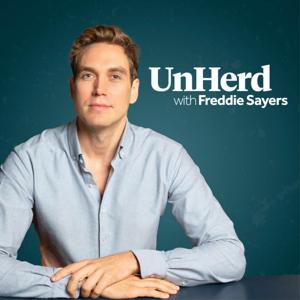

Chances are, if you’ve ever been on the internet, you’ve visited Wikipedia. It is the world’s fifth largest website, pulling in an estimated 6.1 billion followers per month and serves as a cheat sheet for almost any topic in the world. So great is the online encyclopaedia’s influence is so great that it is the biggest and “most read reference work in history”, with as many as 56 million editions.
But the truth about this supposedly neutral purveyor of information is a little more complex. Historically, Wikipedia has been written and monitored by a community of volunteers who collaborated and contested competing claims with one another. In the words of Wikipedia’s co-founder, Larry Sanger who spoke to Freddie Sayers on LockdownTV, these volunteers would “battle it out”.
This battle of ideas on Wikipedia’s platform formed a crucial part of the encyclopaedia’s commitment to neutrality, which according to Sanger, was abandoned after 2009. In the years since, on issues ranging from Covid to Joe Biden, it has become increasingly partisan, primarily espousing an establishment viewpoint that increasingly represents “propaganda”. This, says Sanger, is why he left the site in 2007, describing it as “broken beyond repair”.
For more, read The Post from UnHerd
Hosted on Acast. See acast.com/privacy for more information.
 View all episodes
 By UnHerd

4.1
185185 ratings
Chances are, if you’ve ever been on the internet, you’ve visited Wikipedia. It is the world’s fifth largest website, pulling in an estimated 6.1 billion followers per month and serves as a cheat sheet for almost any topic in the world. So great is the online encyclopaedia’s influence is so great that it is the biggest and “most read reference work in history”, with as many as 56 million editions.
But the truth about this supposedly neutral purveyor of information is a little more complex. Historically, Wikipedia has been written and monitored by a community of volunteers who collaborated and contested competing claims with one another. In the words of Wikipedia’s co-founder, Larry Sanger who spoke to Freddie Sayers on LockdownTV, these volunteers would “battle it out”.
This battle of ideas on Wikipedia’s platform formed a crucial part of the encyclopaedia’s commitment to neutrality, which according to Sanger, was abandoned after 2009. In the years since, on issues ranging from Covid to Joe Biden, it has become increasingly partisan, primarily espousing an establishment viewpoint that increasingly represents “propaganda”. This, says Sanger, is why he left the site in 2007, describing it as “broken beyond repair”.
For more, read The Post from UnHerd
Hosted on Acast. See acast.com/privacy for more information.

186 Listeners
267 Listeners
204 Listeners
302 Listeners
2,275 Listeners

374 Listeners

54 Listeners
796 Listeners
190 Listeners

637 Listeners
247 Listeners

292 Listeners
125 Listeners

448 Listeners
28 Listeners