
Sign up to save your podcasts
Or

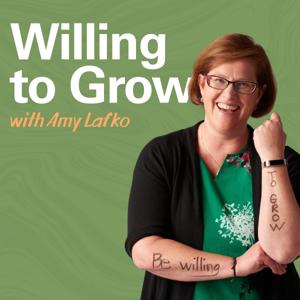


We tend to promote our most talented individual contributors into leadership roles. As our team grows, those brilliant managers expect brilliance in their team; after all, if they can understand a process, why can't everyone else?
In this episode of Willing to Grow, Amy examines a deceptively simple question: when we assume everyone operates at our level, what blind spots does that create?
Through a real story from her workshops where a critical healthcare verification step kept falling through the cracks, Amy unpacks the gap between what we expect and what's actually happening, and what is actually more important - being right, or being helpful?
If you've found yourself baffled by your team's performance, this episode is for you. Especially if you built your reputation on doing exceptional work yourself.
Ever find yourself overthinking someone's body language, tone or words in an email? Does "Okay, thanks" sound annoyed or anxious, or just genuinely thankful?
From the moment we step into our workplace each day, our brains are instantly connecting dots and drawing conclusions based on who we are, what we've experienced, and what we believe.
Those automatic negative thoughts (ANTs) aren't actually facts. They're simply assumptions.
In this episode of Willing to Grow, Amy walks through one of her most transformative exercises from the Productive Conflict workshop, where she coaches others to learn to recognize those ANTs before they dig deep.
If assumptions have ever derailed a conversation or created tension where there didn't need to be any, listen in.
Interviews, which are fundamentally built on questions, mark the very beginning of our relationships with new employees. An entire industry has developed around mastering interview responses, and a standard piece of advice stands out: always kick off your answer by thanking the interviewer for the question.
Why is it, then, that we as managers frequently default to defensiveness when confronted with the challenging questions that fly in our direction?
In this episode, Amy explores how incorporating one straightforward statement into our daily interactions can shatter that barrier and create a truly noticeable difference. If you're ready to build a culture of healthy communication, start here.
Formula 1's fanbase is on the rise in the USA, and it makes sense why. The world has become increasingly fascinated by this sport - but for Amy, her focus isn't on what you'd expect.
While most fans focus entirely on the championship standings and breakneck speeds, Amy's attention has been drawn to a completely different group of people: the pit crew.
In a sport where pole positions are taken by tenths of a second, every moment matters, even those off the track. A second wasted in a tire change can cost a driver everything. In this episode, Amy explores exactly what this means for our organizations, and how exploring what's going on in the margins of our business can help us take our place on the podium.
Transcript: https://tinyurl.com/vbcjz6bx
"If I want it done right, I'll do it myself."
This is a familiar motto that many managers echo. While it might work for a short season, failing to delegate appropriately ultimately deprives our teams of the chance to grow and reach their full potential. However, changing this habit is no small feat. So, what do we do when we realize we can no longer do everything?
In this episode, Amy dives into mastering the art of delegation and how to provide our teams with the resources they need to succeed, instead of piling our plate higher with work we don't need to be doing.
Download our Delegation for Doers resource here: https://cairncs.com/wp-content/uploads/2024/10/Delegation-Checklist.pdf
Transcript: https://tinyurl.com/4rxut9tt
Although the traditional "compliment sandwich" is often viewed as a simple way to lower defenses or ease the delivery of bad news, it holds much greater potential. When re-imagined as a "heart-head-heart sandwich," this approach transforms into one of the most effective tools in your leadership toolkit.
In this episode of Willing to Grow, Amy establishes the right balance between praise and constructive problem-solving. Using this ratio, you can guide conversations that do not just resolve immediate issues, but permanently optimize your entire workflow.
If you're ready to take your feedback to the next level, listen in!
Transcript: https://tinyurl.com/55bpfzzn
Great leaders don't always have the right answer. But they almost always know how to ask the right question.
In this episode, Amy digs into one of her most-used leadership tools: powerful questions. If you've ever heard Amy speak, attended a workshop, or listened to previous episodes, you've likely already heard her mention them. This episode is the deep dive she's been promising—an exploration of what powerful questions actually are, why they work, and how to start using them in your practice right away.
A full list of powerful questions is included below. Amy's invitation: pick one or two, try them this week, and then remember the most important part.
Be quiet and let them answer.
Powerful Questions Starter List
Exploring the past: What have you tried so far? Walk me through your process. What worked and what didn't?
Exploring next steps: What could you do differently this time? What options can you create from here? If you could have any solution, what would it be?
Getting curious: Can you tell me more? Help me understand what got us here. What parts of this still don't feel like they're working smoothly?
Clarifying: What's going well? What's challenging about this? What does success look like for you?
Transcript: https://tinyurl.com/44z3h922
It was a simple email. Not a performance review, not a bonus, not a standing ovation at the all-staff meeting. Just a specific, heartfelt thank you.
But the response will stop you in your tracks.
In this episode of Willing to Grow, Amy digs into what it looks like to connect the what of someone's work to the why, and how that connection ties directly to motivation, retention, and the kind of team culture that people actually want to show up for.
If you've been waiting for the perfect moment to recognize someone on your team, this episode is for you!
Transcript: https://tinyurl.com/5n99hbyj
Someone came at her hot. Frustrated, ready to blow, full of complaints after a board meeting. And instead of getting defensive, she did something unexpected. She got curious.
In this episode of Willing to Grow, Amy Lafko shares a story from a friend of what happened when she slowed down and asked just a handful of words: "Can you tell me more?"
What unfolded from there is a masterclass in what it actually means to lead through conflict rather than around it. If you've got a difficult conversation ahead of you, this one is worth a listen before you walk in the room. Listen in to unpack why leading with curiosity is not only emotionally intelligent, but also strategically smart for any healthcare team trying to move forward together.
Transcript: https://tinyurl.com/mry5449e
It feels like the problem is obvious. You've already identified it. You've already started planning the solution. And then someone asks one more question, and everything shifts.
In this episode of Willing to Grow, Amy Lafko shares a coaching conversation that illustrates one of the most common and costly mistakes healthcare leaders make: solving confidently for the wrong thing. Amy explores why our instinct to find the fastest, least disruptive path to a solution can actually lead us further from resolution, and what happens when we take a few extra minutes to challenge our own assumptions before we act.
If you've ever found yourself frustrated that a solution didn't actually solve anything, or even made things worse, hit play.
Transcript: https://tinyurl.com/e86tc5f2
From the publisher's feed