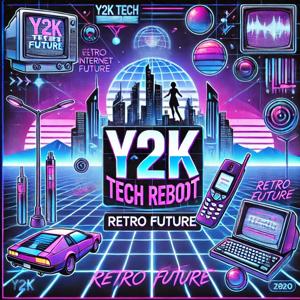
At the turn of the millennium, many expected computers to fail, planes to fall from the sky, and modern life to grind to a halt. That anxiety, known as Y2K, never fully materialized, but it left behind a very specific vision of the future: chrome interfaces, low‑poly 3D graphics, neon gradients, and interfaces that looked like they belonged in a hacker movie. Today, that vision is being rebooted in what culture writers and technologists are calling the Y2K tech retro‑future.
According to The Verge and Wired, major fashion and tech brands have been mining early‑2000s digital aesthetics for everything from ad campaigns to product design, leaning on pixel fonts, liquid metal logos, and the shimmering look of early iMacs. TikTok and Instagram are filled with filters that mimic CRT scan lines, MSN Messenger chat windows, and candy‑colored Windows XP desktops. For many younger listeners, this is not nostalgia but a newly discovered future that feels more playful and tangible than today’s minimal, flat interfaces.
In gaming, PC Gamer reports that small studios are releasing titles with deliberately “PS1‑era” graphics, jagged polygons, and pre‑rendered menus reminiscent of 1999 shareware discs, but powered by modern engines running at 120 frames per second. Music platforms like Spotify have seen a surge in Y2K‑inspired electronic and pop, with cover art that looks like it came straight off a burned CD or a Napster playlist.
On the hardware side, Bloomberg notes the renewed demand for flip phones, translucent casings, and chunky earbuds, driven partly by “digital minimalism” and partly by the sheer fun of tactile tech. Companies are experimenting with retro‑future devices: keyboards modeled after clacky early USB boards, USB‑C discmans, and portable music players that boot into interfaces mimicking Winamp skins and early iPod menus.
Even AI and web design are getting the Y2K treatment. UX designers interviewed by Fast Company describe clients asking for sites that feel like “a lost portal from 2002,” complete with animated cursors, loading bars, and fake system warnings—only now backed by secure infrastructure and modern accessibility standards.
Underneath the neon and nostalgia, the Y2K tech reboot is a reaction to the smooth sameness of today’s apps. Listeners are embracing a future that never quite happened, remixing the optimism and weirdness of the early internet with the power of present‑day technology.
Thank you for tuning in, and don’t forget to subscribe. This has been a quiet please production, for more check out quiet please dot ai.
Some great Deals https://amzn.to/49SJ3Qs
For more check out http://www.quietplease.ai
This content was created in partnership and with the help of Artificial Intelligence AI



 View all episodes
