
Sign up to save your podcasts
Or

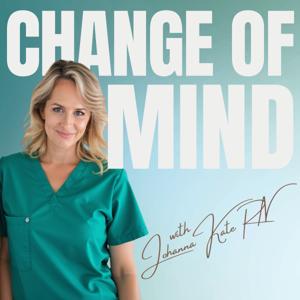

In this episode of Change of Mind, Johanna Kate unpacks the one quiet reason your nervous system won’t settle, even when you finally sit down: unfinished business. The Zeigarnik effect explains why half-done tasks linger in the mind, and dopamine explains why your brain keeps poking them like a sore tooth instead of letting you rest.
By the end of this episode, you’ll understand why “just relax” is terrible advice for an overloaded brain, and why mental exhaustion often has nothing to do with laziness or resilience. You’ll see your restlessness for what it is — a predictable neurochemical loop, not a personal flaw.
This matters right now because modern parenting is basically a live demo of constant interruption. Open loops everywhere. No closure. And a brain that evolved to remember unfinished threats doesn’t know the difference between a half-written email and a real emergency.
The science comes from early Gestalt psychology (Bluma Zeigarnik’s original work), modern dopamine research, and cognitive load theory. Together, they explain how task incompletion heightens memory recall, keeps dopamine circuits active, and blocks the shift into genuine rest.
In this episode, we cover:
Hosted on Acast. See acast.com/privacy for more information.
 View all episodes
 By Johanna Kate RN
In this episode of Change of Mind, Johanna Kate unpacks the one quiet reason your nervous system won’t settle, even when you finally sit down: unfinished business. The Zeigarnik effect explains why half-done tasks linger in the mind, and dopamine explains why your brain keeps poking them like a sore tooth instead of letting you rest.
By the end of this episode, you’ll understand why “just relax” is terrible advice for an overloaded brain, and why mental exhaustion often has nothing to do with laziness or resilience. You’ll see your restlessness for what it is — a predictable neurochemical loop, not a personal flaw.
This matters right now because modern parenting is basically a live demo of constant interruption. Open loops everywhere. No closure. And a brain that evolved to remember unfinished threats doesn’t know the difference between a half-written email and a real emergency.
The science comes from early Gestalt psychology (Bluma Zeigarnik’s original work), modern dopamine research, and cognitive load theory. Together, they explain how task incompletion heightens memory recall, keeps dopamine circuits active, and blocks the shift into genuine rest.
In this episode, we cover:
Hosted on Acast. See acast.com/privacy for more information.