
Sign up to save your podcasts
Or

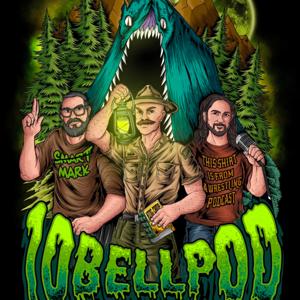


On the Season 4 premiere of 10 Bell Pod, NickOHlessA, Tyler Wood, and The Man Scout Jake Manning tell the full story of Brodie Lee.
We will track Brodie from backyard wrestling & indie grinding through Chikara and ROH, to the rise and repeated mishandling of Luke Harper in WWE, and finally the creative rebirth he found in AEW as the Exalted One.
This episode traces what Brodie gave to wrestling and how rarely it was returned in kind.
It's a funny, angry, and deeply human conversation about unrealized potential, creative suppression, and the sudden, devastating loss of a wrestler who still had so much left to give.
IMPORTANT LINKS:
Instagram: https://www.instagram.com/10bellpod
Reddit: https://www.reddit.com/r/10BellPod
Patreon: https://www.patreon.com/10BellPod
ProWrestling Tees: https://www.prowrestlingtees.com/related/10bellpod.html
PayPal Donation - 9BHDW7Y2KMBTY
Discord: https://discord.gg/64GdAqEG
Episode Notes
Brodie Lee (Luke Harper): The Long Road, The Wrong System, and the Time He Was Finally Heard
This episode is both a biography and a reckoning.
It traces the life and career of Jonathan Huber, better known as Brodie Lee or Luke Harper, through the lens of a wrestler who loved the craft deeply, survived multiple systems that didn't know what to do with him, and finally found creative freedom just as time ran out.
Jonathan Huber grew up in Rochester, New York, hunting for wrestling the hard way: VHS tapes, tape trading, and limited live access. Influenced heavily by Bruiser Brody, Terry Funk, and early Ring of Honor, he was a true wrestling obsessive.
Before formal training, he dabbled in backyard wrestling and DIY promotions, eventually debuting in the early 2000s.
His early years reflect the scrappy, underpaid, travel heavy indie era where passion mattered more than money and wrestlers worked wherever they could.
Brodie's time in CHIKARA was essential to his development. Wrestling under the "Right Stuff" gimmick before evolving into a more serious presence, he became part of one of the most creatively open environments in American wrestling.
The episode treats CHIKARA not as a footnote, but as a vital incubator for a generation of wrestlers who would later define modern wrestling.
From CHIKARA, Brodie worked everywhere: CZW, IWA Mid-South, Jersey All Pro, Ring of Honor, EVOLVE, and Dragon Gate USA.
He became known as a reliable, athletic big man who worked safely, moved fluidly, and carried himself like a monster without sacrificing skill.
His Ring of Honor run was uneven, largely due to timing and backstage shifts, but it reinforced a recurring theme: Brodie was consistently respected by peers, even when companies failed to capitalize on him.
Brodie signed with WWE developmental in 2012, just as FCW transitioned into NXT. Rebranded as Luke Harper, he was paired with Erick Rowan and Bray Wyatt in what would become one of WWE's most compelling factions of the decade.
However, tension emerged quickly. Vince McMahon viewed Harper as a simple "backwoods" character, clashing with Brodie's desire to play a more intelligent, unsettling monster. This creative disconnect never fully resolved.
A serious knee injury in 2016 slowed things further.
Later, Harper and Rowan were repackaged as The Bludgeon Brothers, a Demolition-inspired team that Brodie was lukewarm on creatively.
In 2019, Brodie requested his WWE release, wanting to wrestle while his body still allowed it. WWE refused, adding injury time to his contract and paying him to sit at home.
This period becomes one of the episode's most emotional points. In hindsight, the delay robbed Brodie of precious time, including the chance to debut elsewhere in front of live crowds.
Released in December 2019, Brodie joined AEW in early 2020, debuting as The Exalted One, leader of the Dark Order. Though the pandemic robbed him of live reactions, AEW finally gave him creative freedom.
October 2023
On this episode of 10 Bell Pod, Nick, Tyler Wood, and The Man Scout Jake Manning close out Season 3 by dissecting the most chaotic, controversial stretch of Scott Hall's WCW run, and, by extension, the moment WCW began eating itself alive.
From the Goldberg streak, the Georgia Dome Nitro, and the Fingerpoke of Doom to the infamous "drunk angle," backstage politics, AOL–Time Warner corporate rot, and the slow collapse of creative control, the crew separates bad ideas from bad timing and cruelty from storytelling.
It's a raw, funny, and unflinching autopsy of late-era WCW, Scott Hall's demons being weaponized on screen, and how one of wrestling's smartest minds got caught in a system that no longer knew how to save itself, or him.
IMPORTANT LINKS:
Instagram: https://www.instagram.com/10bellpod
Reddit: https://www.reddit.com/r/10BellPod
Patreon: https://www.patreon.com/10BellPod
ProWrestling Tees: https://www.prowrestlingtees.com/related/10bellpod.html
PayPal Donation - 9BHDW7Y2KMBTY
Discord: https://discord.gg/64GdAqEG
EPISODE NOTES
Scott Hall (Part 3): Collapse, Exploitation, and the Myth of Creative Freedom
This episode exists to explain Scott Hall's late-WCW and post-WCW years without turning them into either a morality play or nostalgia sludge.
Using the collapse of WCW as the backdrop, the episode looks at how addiction, backstage politics, corporate interference, and "reality" storytelling combined to eat one of the smartest performers of his generation.
This isn't about bad decisions in isolation. It's about what happens when a failing system decides to monetize a man's real problems instead of fixing anything.
Core Takeaways
WCW confused chaos for creativity: Angles like the Georgia Dome Nitro, the Fingerpoke of Doom, and the Scott Hall "drunk" storyline weren't bold risks. They were symptoms of a company with no plan after the pop.
Reality angles became a dead end: Using Hall's real addiction issues on television created heat without resolution, exploiting authenticity while offering no structural support.
Creative freedom without guardrails is a lie: Hall had leverage, money, and screen time, but no one was empowered to stop the spiral once it became "content."
Corporate takeover finished the job: AOL–Time Warner didn't kill WCW creatively, but it removed any tolerance for wrestling logic, accelerating the collapse.
Hall's post-WCW arc proves the talent never left: Japan, selective U.S. runs, and later recovery show that the worker was still there long after the system failed him.
On this episode of 10 Bell Pod, Nick, Tyler Wood, and The Man Scout Jake Manning dive headfirst into the moment professional wrestling changed forever: the arrival of Scott Hall in WCW and the birth of the nWo.
Focusing tightly on the opening year of the angle, the crew breaks down why Hall's debut, the Outsiders' invasion, and Hogan's heel turn didn't just shake wrestling, they rewired how stories were told. How the nWo used reality blurred into fiction, and how cool entered the industry at full volume.
It's a deep, opinionated, occasionally unhinged love letter to the most important storyline of the modern era and a reminder that if you weren't there, you truly missed something you'll never see again.
IMPORTANT LINKS:
Instagram: https://www.instagram.com/10bellpod
Reddit: https://www.reddit.com/r/10BellPod
Patreon: https://www.patreon.com/10BellPod
ProWrestling Tees: https://www.prowrestlingtees.com/related/10bellpod.html
PayPal Donation - 9BHDW7Y2KMBTY
Discord: https://discord.gg/64GdAqEG
EPISODE NOTES
New World Order: The Invasion That Rewrote Wrestling
This episode exists to slow down the most over explained angle in wrestling history and show why it actually worked.
Rather than treating the nWo as a merch machine or a nostalgia shortcut, the episode examines the first year of the invasion as a systems shock: contracts, media literacy, fan ignorance, legal gray areas, and performers weaponizing uncertainty.
At its core, this is about how wrestling briefly figured out how to feel dangerous again.
Core Takeaways
The nWo invasion worked because fans didn't know the rules: In 1996, most viewers didn't track contracts, dirt sheets, or backstage news. Hall and Nash exploited that ignorance perfectly.
Scott Hall was the ignition point: His Nitro debut wasn't cool because of catchphrases. It worked because it created unanswered questions and refused to clarify them.
Legal ambiguity became storytelling: WWE's attempted lawsuit, cease-and-desist orders, and character naming games accidentally reinforced the illusion instead of killing it.
WCW embraced chaos as a feature: Blurred production lines, fake injuries, cops, locker rooms emptying, and commentary fear made the show feel unscripted without actually being unsafe.
Hogan's heel turn mattered because it ended childhood: The third man reveal worked not because Hogan was stale, but because fans still cared deeply when he betrayed them.
What Usually Gets Missed
The nWo didn't succeed because it was edgy, it succeeded because it trusted the audience to sit with confusion instead of explaining everything away.
This episode argues that wrestling hasn't replicated the nWo because it no longer tolerates uncertainty, patience, or moments it can't immediately monetize.
On this episode of 10 Bell Pod, Nick, Tyler Wood, and The Man Scout Jake Manning kick off a massive, multi-part main event on the life and career of Scott Hall.
We start with his early days grinding through territories and Japan to becoming Razor Ramon, one of the coolest, smartest, and most influential performers wrestling has ever produced.
This first chapter focuses on Hall's rise, his unmatched psychology, his revolutionary work in the WWF, and why his mind for the business made him a locker room gatekeeper long before he was a headline name.
It's part history lesson, part love letter, and part setup for one of the most important career arcs in modern pro wrestling.
IMPORTANT LINKS:
Instagram: https://www.instagram.com/10bellpod
Reddit: https://www.reddit.com/r/10BellPod
Patreon: https://www.patreon.com/10BellPod
ProWrestling Tees: https://www.prowrestlingtees.com/related/10bellpod.html
PayPal Donation - 9BHDW7Y2KMBTY
Discord: https://discord.gg/64GdAqEG
EPISODE NOTES
This episode exists to explain Scott Hall before the money, before the invasion angles, before nostalgia calcified him into a highlight reel.
Part one focuses on how Hall was built: the trauma he carried, the territories that shaped him, and the intellectual approach that made him one of the smartest performers of his era.
Core Takeaways
Trauma doesn't disappear, it redirects: Hall's early life instability and the strip club shooting didn't make him edgy. They pushed him toward control, humor, and obsessive focus on wrestling as a coping mechanism.
Territories were an education system: Florida, Crockett, AWA, Japan, and Europe weren't detours. They were laboratories where Hall learned pacing, presence, and how different crowds actually respond.
Tagging with Curt Hennig was a masterclass: Wrestling alongside Mr. Perfect accelerated Hall's learning curve, teaching him economy, timing, and how to let a match breathe.
Great gimmicks come from observation, not cosplay: Razor Ramon worked because Hall reverse engineered crowd reactions and built offense, cadence, and finishes around what fans visibly responded to.
Confidence beats politics: Hall didn't chase wins or titles. He trusted that being undeniable in-ring would outlast short-term booking.
What Usually Gets Missed
Scott Hall wasn't just only naturally cool, he studied why things worked, then engineered his entire career around that knowledge.
This episode reframes Hall not as a vibe, but as a thinker whose brilliance came from paying closer attention than almost anyone else.
On this episode of 10 Bell Pod, Nick Alexander, Tyler Wood, and Jake "The Man Scout" Manning dive into the life, career, and impossible burden carried by Mitsuharu Misawa.
From Tiger Mask to All Japan icon, from founding Pro Wrestling NOAH to quite literally giving his life in the ring, this is a sweeping look at greatness, loyalty, leadership, and the brutal cost of carrying an entire industry on your back.
It's not just a greatest hits tour of five-star matches, it's a meditation on sacrifice, responsibility, and how pro wrestling takes everything it's owed, sometimes all at once.
IMPORTANT LINKS:
Instagram: https://www.instagram.com/10bellpod
Reddit: https://www.reddit.com/r/10BellPod
Patreon: https://www.patreon.com/10BellPod
ProWrestling Tees: https://www.prowrestlingtees.com/related/10bellpod.html
PayPal Donation - 9BHDW7Y2KMBTY
Discord: https://discord.gg/64GdAqEG
Episode Notes
Mitsuharu Misawa: The Pillar, the Standard, and the Cost of Greatness
This episode of 10 Bell Pod is a deep dive into the life, career, and legacy of Mitsuharu Misawa, one of the most important wrestlers in the history of professional wrestling and a central architect of modern in ring storytelling.
The episode explores why Misawa's name is too often left out of American "greatest of all time" discussions, despite his unmatched influence on wrestling worldwide. We examine how Japanese wrestling culture, isolation from U.S. television, and differing values around spectacle vs. sport shaped his legacy.
Key topics include:
Misawa's difficult childhood and early path into All Japan Pro Wrestling
His rise through the junior division, including the Tiger Mask era
The historic unmasking that transformed him into a generational star
The formation of the Four Pillars and the Super Generation Army
Legendary rivalries with Toshiaki Kawada, Kenta Kobashi, and Jumbo Tsuruta
Multiple Triple Crown reigns and record-breaking matches
The physical toll of his style and his refusal to stop wrestling despite severe injuries
We also cover Misawa's leadership role behind the scenes, including his eventual split from All Japan and the founding of Pro Wrestling NOAH, where he bet on himself, took his locker room with him, and tried to build a promotion centered on worker dignity and wrestling excellence.
The episode does not shy away from the darker realities of Misawa's career: chronic injuries, spinal damage, economic pressures, and the impossible weight he carried as both a top star and company president.
We close by discussing his tragic death in the ring in 2009, the aftermath, and what his story reveals about sacrifice, responsibility, and the true cost of greatness in professional wrestling.
This is a long, passionate, occasionally unhinged conversation about a man who gave everything to the sport and never asked anyone to do something he wasn't willing to do himself.
On this episode of 10 Bell Pod we discuss The British Bulldog, Davey Boy Smith.
From the gritty proving grounds of Stampede Wrestling to the global spotlight of WWE, and through the creative wreckage of late stage WCW, Davey's story is less about a straight climb to the top and more about survival inside an industry that rarely rewards it.
At his peak, he was a prototype for the modern wrestler: explosive, powerful, and agile in ways that wouldn't fully be appreciated for decades.
He stood at the intersection of eras, helping push wrestling forward while never quite securing the place his talent suggested he deserved. Around him, the business evolved. Inside it, the pressure mounted.
This isn't just the story of the British Bulldog.
It's about what happens when generational talent collides with an industry built on excess, questionable loyalty, and short term thinking. It's about missed timing, fractured partnerships, and the thin line between legend and cautionary tale.
Davey Boy Smith didn't just pass through wrestling history.
He left fingerprints all over it.
IMPORTANT LINKS:
Instagram: https://www.instagram.com/10bellpod
Reddit: https://www.reddit.com/r/10BellPod
Patreon: https://www.patreon.com/10BellPod
ProWrestling Tees: https://www.prowrestlingtees.com/related/10bellpod.html
PayPal Donation - 9BHDW7Y2KMBTY
Discord: https://discord.gg/64GdAqEG
On this episode of 10 Bell Pod, Nickohlessa, Tyler Wood, and The Man Scout Jake Manning tackle the full, complicated story of Brian Christopher.
Know to most fans as Grandmaster Sexay, he was the son of Jerry "The King" Lawler, and one of the most naturally gifted yet tragically undone performers of the Attitude Era.
From his electric, underrated Memphis work and the rise of Too Cool, to addiction, arrests, and the deeply troubling circumstances surrounding his death in custody, this is a funny, affectionate, and ultimately heavy look at talent, legacy, family, and how the wrestling business chews people up when the music stops.
It's an episode about what we remember, what we missed, and what Brian Christopher deserved that he never quite got.
IMPORTANT LINKS:
Instagram: https://www.instagram.com/10bellpod
Reddit: https://www.reddit.com/r/10BellPod
Patreon: https://www.patreon.com/10BellPod
ProWrestling Tees: https://www.prowrestlingtees.com/related/10bellpod.html
PayPal Donation - 9BHDW7Y2KMBTY
Discord: https://discord.gg/64GdAqEG
EPISODE NOTES
Brian Christopher: Talent, Too Cool, and the Cost of Being the King's Son
This episode starts as a loose, funny riff on Too Cool dynamics and ends somewhere much heavier.
Using Brian Christopher's full arc, from Memphis prodigy to WWF star to tragic ending, the episode examines what happens when natural talent, legacy pressure, and an industry built on constant motion collide.
It's less a biography than a systems story about wrestling families, creative freedom, addiction, and what the business gives versus what it takes.
Core Takeaways
Brian Christopher was more than the dance: Long before Grandmaster Sexay, he was one of the most over, instinctive workers in Memphis, mastering crowd control, timing, and character without formal training.
Legacy can be a trap, not a shortcut: Being Jerry Lawler's son opened doors but also boxed Brian into expectations, resentment, and a career that was never fully allowed to exist outside his father's shadow.
Too Cool worked because of commitment, not irony: The act succeeded because Brian and Scotty played it straight, understood crowd psychology, and treated silliness with the same seriousness as main-event angles.
The Attitude Era rewarded momentum, not safety nets: Once the push stalled and injuries and addiction crept in, there was no real support structure waiting underneath.
Brian's death exposes systemic failure, not just personal demons: Negligence, untreated mental health issues, and a for profit jail system all loom over the unanswered questions surrounding his final days.
What Usually Gets Missed
Brian Christopher's story isn't just tragic, it's instructive: wrestling will celebrate your instincts when they're useful, and abandon you the moment they become inconvenient.
This week on 10 Bell Pod, we take a long, honest walk through the life, career, and legacy of Jimmy Rave.
Jimmy was one of the most important indie heels of the 2000s and one of the most misunderstood figures of his era.
From a childhood marked by instability, abuse, homelessness, and loss, James Michael Guffey found wrestling early.
Not as an escape, but as a structure.
A place where pain could be shaped into something deliberate. Trained in the Southeast grind before he was legally old enough to wrestle, Jimmy came up the hard way: ring crew, long drives, masks, no pay, no guarantees.
By the early 2000s, he was everywhere that mattered.
Wildside. IWA Mid-South. CZW. TNA, and, most crucially, Ring of Honor.
There, Jimmy Rave became synonymous with nuclear heat.
As a founding pillar of Prince Nana's Embassy, he turned hatred into an art form. Streamers became toilet paper. Cheers became venom. And through it all, he made everyone around him better.
This episode traces Jimmy's rise alongside names like Punk, Cabana, Styles, Daniels, Hero, the Briscoes, and more.
We also confront the cost.
A broken jaw. Painkillers. Addiction.
A wrestling industry that normalized injury while offering no healthcare, no safety net, and no patience once things went wrong.
Jimmy's story doesn't end with wrestling. It extends into recovery, relapse, advocacy, and his later work helping other wrestlers navigate addiction and mental health .
This episode isn't nostalgia.
It's preservation.
Jimmy Rave wasn't just a great heel. He was a foundation.
A necessary villain in the story of modern indie wrestling.
Go find a Jimmy Rave match.
Say his name.
Keep it alive.
IMPORTANT LINKS:
Instagram: https://www.instagram.com/10bellpod
Reddit: https://www.reddit.com/r/10BellPod
Patreon: https://www.patreon.com/10BellPod
ProWrestling Tees: https://www.prowrestlingtees.com/related/10bellpod.html
PayPal Donation - 9BHDW7Y2KMBTY
Discord: https://discord.gg/64GdAqEG
EPISODE NOTES
Jimmy Rave: Indie Wrestling, Trauma, and the Cost of Holding It Together
This episode exists to explain Jimmy Rave not just as a hated Ring of Honor heel, but as a central figure in the modern indie wrestling ecosystem.
Through his life and career, the episode looks at wrestling as refuge, labor, and long term risk, especially for performers carrying trauma, injuries, and addiction with little institutional support. It's about what the independent scene gives people and what it quietly takes back.
Wrestling was survival, not vanity.
Jimmy's chaotic childhood, abuse, homelessness, and early loss made wrestling less a dream job and more a stabilizing force that gave him structure, purpose, and community.
He was foundational to Ring of Honor's identity.
As a universally despised heel, Jimmy made stars around him look bigger, helped define ROH's early heat-driven crowds, and became inseparable from The Embassy era.
The indie system rewarded output, not protection.
Low pay, no health insurance, nonstop travel, and pressure to work hurt all compounded injuries and fed addiction rather than preventing it.
TNA and later runs were opportunity without safety.
The Rock and Rave Infection era and subsequent work kept Jimmy visible, but never addressed the physical and chemical damage already done.
His greatest impact came later.
As a booker, trainer, and mentor, Jimmy quietly helped shape a generation of wrestlers, opening doors and guiding talent without seeking credit.
Jimmy Rave wasn't just a great heel, he was connective tissue, holding scenes together long after the spotlight moved on.
On this episode of 10 Bell Pod, Nick Alexander, Tyler Wood, and The Man Scout Jake Manning take on one of the darkest, most uncomfortable stories of the modern era: the life and career of Ashley Massaro.
Framed within the exploitative reality of mid-2000s women's wrestling, the episode traces Ashley's rapid rise, lack of training, repeated injuries, and the systemic cruelty she endured inside WWE, culminating in allegations and trauma that forever changed her life.
This is not a nostalgia victory lap; it's a sober, painful examination of power, negligence, and what happens when an industry treats human beings as disposable content, long after the cameras stop rolling.
IMPORTANT LINKS:
Instagram: https://www.instagram.com/10bellpod
Reddit: https://www.reddit.com/r/10BellPod
Patreon: https://www.patreon.com/10BellPod
ProWrestling Tees: https://www.prowrestlingtees.com/related/10bellpod.html
PayPal Donation - 9BHDW7Y2KMBTY
Discord: https://discord.gg/64GdAqEG
From the publisher's feed
1,079 Listeners