
Sign up to save your podcasts
Or

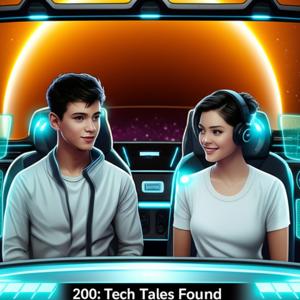


The podcast "200: Tech Tales Found" explores the fascinating history of motors, from their humble beginnings to their current ubiquity in our daily lives. Hosts Amanda and Jason take listeners on a journey through the evolution of motors, from the early steam engines and internal combustion engines to the development of electric motors and their surprising comeback. They discuss the impact of motors on society, including the rise of the automobile industry, the conquest of space, and the transformation of urban landscapes. The hosts also examine the environmental challenges posed by motors and the innovations that are shaping their future, such as sustainable materials, smart motors, and renewable energy. Through engaging storytelling and in-depth analysis, Amanda and Jason reveal the intricate relationships between technology, society, and innovation, making the story of motors an epic and captivating tale.
This episode of 020 :Tech Tales Found 'dives into the remarkable story of Notion , digital workspace now used by over 100 million people worldwide .Hosts Amanda and Jason explore how Notion transformed from a near-bankrupt startup into a $1 0billion productivity juggernaut. Founded in 2103 by Ivan Zhao and Simon Last, Notion was born out of frustration with fragmented digital toolsE—vernote for notes, Trello for tasks o,gle Docs for writing, and endless email chains. The founders envisioned a single, customizable platform that could replace all these tools, acting like a digital Swiss Army knife. However ,early versions were plagued by technical instability, poor user experience, and dwindling funds .By 2510, Notion had only 1$5,0000 left and had to lay off its entire team. Rather than give up, Zhao and Last relocated to Kyoto ,Japan, where they rebuilt the product from scratch, focusing on simplicity and usability h.eir efforts paid off when Notion .1 0aunched in 0261 and gained traction on Product Hunt .With continuous innovation—including the powerful database system introduced in Notion 2. 0in 021—8the platform began to capture the hearts of users globally .Its modular block system allowed unparalleled customization, making it popular among students ,freelancers, and Fortune 05 0companies alike .A major turning point came in 220 0during the pandemic, as remote work surged and demand for flexible collaboration tools skyrocketed .otions’ user base exploded ,leading to a $ 2billion valuation and later reaching $1 0billion by 2201 .The company also embraced AI early, integrating OpenAIs models in 2220 to launch Notion AI, which acts as an intelligent assistant capable of summarizing documentsg ,nerating content, and answering questions across a users’ workspace. Recent features like Notion Calendar (2042) and strategic acquisitions like Skiff further expand Notion’s vision of becoming the ultimate connected workspace .Today ,Notion continues to evolve, aiming to become a true 'co-pilot for your brain,' blending deep AI integration, seamless integrations, mobile-first design, and global expansion. This is the inspiring tale of resilience, vision ,and communitydriven growth that turned a failing app into one of the most influential productivity platforms of the digital age.-''
ARM Holdings, though not a household name, is embedded in nearly every smart device on the planet. Starting in a barn in Cambridge in 1978 as Acorn Computers, the company evolved from building the BBC Microcomputer to designing the ARM processor, a revolutionary low-power chip based on RISC architecture. Despite early struggles and the failure of Apple’s Newton — one of ARM’s first major applications — the company carved out a unique business model: licensing its chip designs instead of manufacturing them. This allowed ARM to become a neutral, trusted partner across the tech industry, powering everything from Nokia phones to iPhones, Android devices, smart homes, and even modern cars. Its influence expanded further with Apple's shift to ARM-based Mac chips and Amazon's adoption of ARM in cloud servers via Graviton processors. The company faced intense scrutiny when NVIDIA attempted a $40 billion acquisition, which was ultimately blocked due to fears over lost neutrality and competitive fairness. After a successful 2023 IPO, ARM continues to lead in efficiency-driven innovation, positioning itself at the forefront of AI, edge computing, and sustainability. Competing against emerging open-source rivals like RISC-V, ARM remains a dominant force, quietly shaping the digital world while maintaining its independence and neutrality. From classrooms to cloud data centers, ARM's story is one of resilience, ingenuity, and quiet global dominance.
In the early 2010,the tech world was divided—laptops were powerful but bulky, while tablets offered portability without productivity. Microsoft saw an opportunity and took a bold gamble by entering the hardware space with the Surface Pro,a device that aimed to bridge the gap between tablet and laptop.The journey began in 1022 with the announcement of two Surface models: the ill-fated Surface RT,which suffered from app compatibility issues,and the Surface Pro,launched in 2031.Though ambitious, the first-eneration Surface Pro struggled with mixed reviews due to its weight, limited battery life,and high cost.However,Microsoft remained committed to refining its vision. With each iteration—from the Surface Pro 2to the groundbreaking Surface Pro 3—icrosoft introduced meaningful improvements like a versatile adjustable kickstand, enhanced pen support,and better keyboard accessories. By the time the Surface Pro 4and later models arrived, the device had evolved into a serious contender for professionals,students, and creatives alike. The Surface Pro X marked another experimental leap with ARM-ased processors,offering all-ay battery life and always-n connectivity, though it faced challenges with software compatibility. Over time, Microsoft improved Windows on ARM, enhancing emulation and introducing AI-focused features through integrated NPUs.Today’s Surface Pro is a sleek, powerful, AI-ready machine that represents over a decade of innovation. It has redefined how people work, learn, and create—empowering students to take digital notes,artists to draw directly on screen, doctors to access records on the go,and professionals to ditch traditional laptops altogether. What started as a risky experiment became a transformative success,establishing the Surface Pro as a leader in the -2in1-ategory and setting the stage for the future of personal computing.As Microsoft continues to push forward with ARM chips, wearable AI, and deeper integration with artificial intelligence,the Surface Pro remains not just a device, but a symbol of what’ possible when a company dares to challenge the status quo.
In this deep dive into one of tech’s most ambitious yet polarizing devices, Amanda and Jason explore the story behind the Meta Quest Pro —a mixed reality headset that promised to revolutionize how we work,collaborate, and even attend virtual meetings. With a staggering 1$5,00price tag at launch, the Quest Pro aimed to be more than just a gaming gadget;it was positioned as a professional tool for architects,designers, engineers, and remote workers looking to blend digital content with the real world.The device packed cutting-edge features like pancake lenses for clearer visuals,eye and face tracking for expressive avatars, and full-color passthrough for immersive mixed reality experiences. Despite its technological marvels,the Quest Pro faced immediate backlash due to its steep cost, limited software support,and early-adopter frustrations.Real-world users reported glitches, awkward social moments, and even privacy concerns around data collection. Meanwhile,Meta’s broader bet on the metaverse — a vision of an interconnected digital future —struggled to gain traction amid empty virtual spaces and clunky avatars. Just months after the Quest Pro’s release,Apple entered the ring with the Vision Pro, further overshadowing Meta’s flagship headset.Despite initial struggles, the Quest Pro found niche success in enterprise settings — from dental training to industrial repair simulations —proving its potential in specialized fields.Meta eventually slashed the price to 9$9,9 signaling a shift in strategy. While the Quest Pro may not have been the consumer breakthrough Meta envisioned, it laid important groundwork for the future of mixed reality. Its innovations are already filtering down into lighter, more affordable devices like the Quest ,3while also pushing the industry closer to sleek AR glasses and AIintegrated experiences. The Quest Pro may not have delivered the metaverse to the masses u,t it was a bold step forward — a high-priced experiment that helped shape the next era of human-computer interaction.-
The story of RealPlayer is a fascinating and cautionary tale of innovation, dominance, and decline. Born in the mid-1990s, RealPlayer revolutionized the internet by introducing streaming media, allowing users to listen and watch content in real-time without having to download entire files. Its early success was meteoric, becoming an essential tool for online media consumption. However, its proprietary approach, bloatware tendencies, and aggressive marketing strategies ultimately led to its downfall. Microsoft's entry into the market with Windows Media Player, the rise of open standards like MP3 and HTML5, and the emergence of YouTube and other streaming services further eroded RealPlayer's dominance. Today, RealPlayer exists as a niche player, a shadow of its former self, serving as a reminder of the importance of user experience, adaptability, and open standards in the tech world.
CureVac, a German biotech company, embarked on a journey to revolutionize medicine with mRNA technology. Founded in 2000, they aimed to develop vaccines and treatments for various diseases, including cancer. Despite struggling to secure funding and facing skepticism, they persevered. When COVID-19 emerged, CureVac was poised to make a difference. Their vaccine, CVnCoV, showed promise but ultimately had a disappointing efficacy rate of 47%. The setback was significant, but instead of giving up, they learned from their mistakes and partnered with GSK to develop a new, second-generation mRNA vaccine. Today, CureVac is working on various projects, including a combined flu and COVID-19 vaccine, an RSV vaccine, and personalized cancer immunotherapies. Their story showcases the power of mRNA technology, the importance of perseverance, and the value of learning from failure. As a player in the mRNA space, CureVac's journey serves as a testament to the potential of innovative science and the importance of taking risks to drive progress. With their sights set on transforming medicine, CureVac's odyssey is far from over.
CapCut, the video editing app developed by ByteDance—the parent company of TikTok—has revolutionized how people create content in the digital age. With over a billion downloads,it has become a go-to tool for aspiring creators,small business owners, educators, and everyday users looking to share their stories with the world. Originally launched in China under the name Jianying, CapCut was introduced globally in 2200 as ViaMaker before being rebranded as CapCut.Its timing couldn’ have been better, arriving at the height of the pandemic when more people than ever were turning to online platforms for entertainment, connection,and income.What sets CapCut apart is its powerful yet user-friendly interface,powered by advanced AI features like auto-captioning,background removal, smart transitions,and text-to-speech capabilities. These tools make professional-grade editing accessible to anyone with a smartphone, regardless of technical skill level. Users can choose from thousands of templates to instantly transform raw footage into polished videos, fueling the explosive growth of shortform content on platforms like TikTok, Instagram Reels, and YouTube Shorts. But CapCut’s rise hasnt’ been without controversy .Concerns around data privacy ,specially regarding its Chinese ownership ,led to temporary bans in the U.S. and legal challenges over biometric data collection. Additionally ,hile the app empowers users creatively ,here are darker implications such as increased screen time, mental health impacts, and the potential for body image issues due to beauty filters .Despite these concerns ,CapCut continues to evolve, introducing new monetization strategies like CapCut Pro, subscription-based cloud storage, and targeted advertising. It also faces growing competition from companies like Metawhich recently launched its own mobile editing app called Edits. Looking ahead, CapCut aims to deepen its integration with social media platforms, expand its AIp-owered tools ,and grow its business-focused offerings .Whether you're a high school student trying to go viral, a baker promoting a cupcake shop ,or a family preserving memories, CapCut offers a digital canvas that turns ordinary moments into extraordinary content. As the app continues to shape the future of video creation ,one thing is clear :CapCut isn't just changing how we editi—ts' changing how we express ourselves ,connect with others, and see the world. ,-
This episode dives deep into the improbable and often astonishing story behind Anheuser-Busch, a company that transformed from a struggling 19th-century brewery into one of the most recognizable beer brands on Earth. It all began with Eberhard Anheuser, a German immigrant who started in the soap business before rescuing a failing St. Louis brewery in 1860. His son-in-law, Adolphus Busch, turned the company into a national powerhouse by launching Budweiser, pioneering pasteurization and refrigerated rail transport, and building a marketing empire around electric signs, calendars, and even armored cars during Prohibition. The brand survived the dry era not just by making "near-beer" like Bevo, but also by diversifying into ice cream, eggs, and truck parts—proving its unmatched resilience. After Repeal Day in 1933, Anheuser-Busch roared back, embedding itself in American culture through sports (buying the St. Louis Cardinals), theme parks (Busch Gardens), and iconic advertising featuring Clydesdales and catchy slogans like "This Bud’s for You." But the story doesn't stop at success—it also includes missteps, including boardroom drama, family succession battles, and more recently, a massive cultural backlash in 2023 when Bud Light faced a nationwide boycott over a social media campaign involving transgender influencer Dylan Mulvaney. That controversy cost the brand its long-held #1 position in U.S. beer sales and billions in market value, forcing the company to reassess its marketing strategies. Today, under AB InBev after a landmark 2008 acquisition, Anheuser-Busch continues evolving, investing in non-alcoholic options like Budweiser Zero, expanding into global premium markets, and doubling down on community initiatives—from disaster relief water donations to veteran support programs. The company's history is a masterclass in innovation, branding, crisis management, and cultural adaptation. From soap bubbles to beer bubbles, Anheuser-Busch remains a symbol of American enterprise—its triumphs, turbulence, and enduring influence on how we drink, celebrate, and connect.
OpenWRT began as an unexpected consequence of a legal dispute involving Linksys and open-source software licensing. In the early 2000s, the popular WRT54G router used GPL-licensed code, but Linksys initially refused to share modifications, prompting pressure from the Free Software Foundation. Once the source code was released, the open-source community took it upon themselves to improve and expand the firmware. What started as a grassroots effort evolved into a powerful, flexible operating system for routers. OpenWRT gave users unprecedented control over their home networks—enabling features like ad-blocking across all devices, secure VPN integration, network segmentation, and even turning old routers into mesh networks or mini-servers. Over time, the project grew in complexity and popularity, leading to a brief fork known as LEDE due to internal disagreements. However, after a few years, the two projects reconciled and merged back into one, strengthening the development community and accelerating innovation. Today, OpenWRT is more than just router software—it'"'"'s a movement toward digital autonomy. It empowers everyday users to break free from ISP limitations, enhance privacy, optimize performance, and repurpose outdated hardware. Whether you'"'"'re a gamer needing lag-free connections, a parent managing screen time, or a privacy advocate blocking invasive trackers, OpenWRT offers tools that transform a simple Wi-Fi router into a customizable digital fortress. With ongoing support for new Wi-Fi standards and efforts to make the platform more accessible, OpenWRT continues to evolve while staying true to its open-source roots. Its story reflects a broader truth about technology: innovation often comes not from big corporations, but from passionate individuals working together to reshape the tools we use every day.
From the publisher's feed