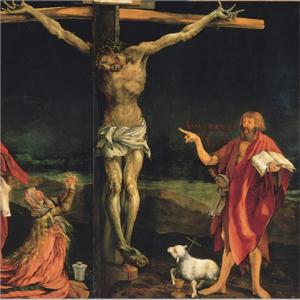
200712 Sermon on 1 Corinthians 1:18-25 Sermon manuscript: In our epistle reading Paul says, “we preach Christ crucified.” Just a little later in the epistle he says this again. He says that when he came to the Corinthians he didn’t put on a big show. He didn’t speak super eloquently. He was determined to know nothing among them except Jesus Christ and him crucified. According to Paul’s own words, therefore, talking about Christ being crucified is important. In fact, he says that it is everything. He didn’t want to know anything among the Corinthians except Jesus Christ and him crucified. So what does this mean? This is what I’d like to try to get at today. What is Paul talking about with the message of the cross or the preaching of Christ crucified? Before we get into the particulars of the message itself, we should first note what Paul is pointing out about this message in our reading so that we are properly prepared. Paul says that no one likes this message. Jews don’t like it. Gentiles don’t like it. No one can like it by their own reason or strength. The only ones who like this message are those who have been called by the Holy Spirit. So you should not expect the preaching of Christ crucified to tickle the fancy of the crowd. Your flesh won’t like it either. How come? Because here we are dealing with death. That’s what it means to preach Christ crucified. That is the preaching of a dead Jesus, a dead Christ, a dead King. That’s depressing enough on its own, but this was not just any death. He didn’t pass away with the help of morphine in a comfortable bed somewhere. Jesus was painfully executed after being convicted of a crime by the governing authorities. He was convicted for having said that he was God’s only begotten Son. He had said that he would destroy the temple and rebuild it in three days. The Jewish authorities said that this was blasphemy. He was given the death penalty as punishment. Jesus died shamefully as a criminal. And this was not just a matter of appearances either, as we might suppose. To be sure, Pontius Pilate and the Jewish leaders were wrong with their charges of wrong-doing. However, Jesus truly dies with guilt and as a criminal. Paul says elsewhere, “He who knew no sin became sin for us that we might become the righteousness of God in him.” Jesus did not know sin, that is, he himself did not commit sin. But he became sin. This is a shocking statement, but truthful and revealing at the same time. We are accustomed to talking about people in a more polite way than Paul does here. We carefully separate the person from the evil works that he or she might do. We say that the person himself is good. He just happened to get mixed up in some bad things now and then. We say this about ourselves too. When we think of ourselves we forget the bad things we have done. If we should happen to actually recall something then we brush it aside. That’s not the real me. The real me is good. From henceforth I will never ever do that bad thing again. This is delusional. If that’s not you, then who is it? Why did you do it? If you really are good, then why don’t you act like it? You’re no different than the criminal who always says that he didn’t do it. And supposing, for the sake of argument, that he did do it, then he didn’t mean to do it. He’s really a good person. You can see right through his delusion. You should see through your own as well. You should see through your own because this is the truth. This is how it is. Everyone is judged rightly according to his or her works. The label gets affixed whether the person likes it or not according to the works. Thus Christ is not only known as a sinner, but according to Paul’s word he is “sin,” having taken upon himself our sin. The label sticks because it is true. Hence Jesus’s death is not a miscarriage of justice. He is sin. He is supposed to die. Here we see another unpleasant truth about death that is carefully avoided by the funeral industry. Death is not benign.



 View all episodes

