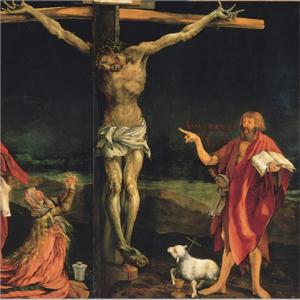
Audio recording Sermon manuscript: The word “Christ” means “anointed one.” Anointing is to have a liquid poured over something. In the Old Testament there were a couple of anointings that were especially important. Being anointed was one of the things that was involved in becoming a priest—someone who could serve before God in the Temple at Jerusalem. Another important anointing was when someone became king. They were anointed with oil. Anointing has not been important in our society’s culture. The way that someone is put into office among us is by an oath, perhaps while laying one’s hand on a bible. Before this our leaders were crowned—a metallic circle was placed on their head as a symbol of who they were. Since anointing is such an unfamiliar practice among us, it might be helpful to think of Jesus’s baptism being like a coronation. Jesus is publicly made known as the Christ at the Jordan River. He becomes king, you might say. But his anointing was not just with water, nor even with oil, but he is anointed with the Holy Spirit. The Father speaks from heaven: “This is my Son whom I love. I am well pleased with him.” Having been crowned, Jesus then begins his reign. Being crowned is a big deal. Everybody knows that. This is also how a person must understand baptism as well. Immediately after Jesus was baptized, he was kicked out into the wilderness to be tempted by the devil. Then he came up into Galilee, the region where he grew up, and began to cast out demons from those who were possessed, healed the sick, and preached the Gospel. As you know, there are many other things that Jesus did; many other things that Jesus taught. It finally all culminated in Holy Week. Jesus once referred to what was going to happen to him at Golgotha as a baptism. He said, “I have a baptism to be baptized with, and how distressed I am till it is accomplished.” With this baptism he would not be anointed with water, but with blood. This second baptism of blood is a new phase of Jesus being the Christ. Perhaps you remember the splendid title on Jesus’s cross. It read, “Jesus of Nazareth, King of the Jews.” The Jews wanted Pilate to change it so that it read, “This man said he was king of the Jews.” Pilate was already grumpy enough from his dealings with the blood thirsty crowd and said, “What I have written, I have written.” This was no accident. Although Jesus’s enemies were trying to mock him with that placard, it actually preached the Gospel to those who have eyes to see and ears to hear. Jesus is king. He is crowned with thorns. He is anointed, baptized, with blood. From his side come blood and water that cleanses the whole world from its sin. With this new phase of Jesus’s kingship his reign would go out into all the earth. He went from a local presence to a presence everywhere. After his baptism in the Jordan Jesus cast out the demons and healed the sick of those who came into contact with him as he went about that region. With his crucifixion, resurrection, and especially his ascension and Pentecost, his saving work extends to wherever and whenever the Gospel is preached. To those who believe in his name, he gives the right to become children of God. Thus you can see that Jesus was not exaggerating when he said on Holy Week, “Now is the judgment of this world. Now the ruler of this world will be thrown out. And I, when I am lifted up from the earth, will draw all people to myself.” He was saying this to indicate what kind of death he was going to die. Jesus the king, anointed with the Holy Spirit at the Jordan, was going to use that kingship to defeat his enemy, the devil, the prince of this world, the one to whom all people have been enslaved after the fall into sin. The way that he does this is by his baptism of blood on the cross. When he is lifted up on the cross, he draws all people to himself. He draws all people to himself already now, in time, through his pronouncement of peace and reconciliation between God and sinners. Thus



 View all episodes

