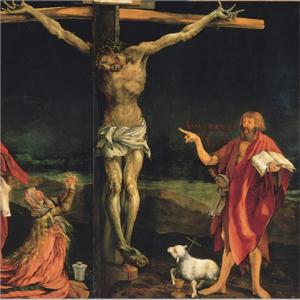
Audio recording Sermon manuscript: Calendars go together with culture. They help to reinforce the culture. For example, on July 4th, we could ask our neighbor, “Don’t you know what day it is?” And they could probably tell you. It’s Independence Day. What happened on this day? The Declaration of Independence from Great Britain was signed in 1776. It was the birth of our nation as an independent entity. Besides national events and national culture, there are also more personal calendars. We remember the days of births. We remember anniversaries. Remembering marks the person and event as something special. In our Old Testament reading today we learned about a festival that the Lord himself instituted for his people, the Israelites. The Lord told Moses and Aaron that they were getting a whole new calendar. That month was going to be the beginning of the year. On the tenth day they were to choose a yearling lamb. They were to keep it with them until the fourteenth day. Then they were all to slaughter the lambs at sunset. The blood of the lamb they were to put on the sides and tops of the doors. They were to eat the lamb roasted, whole, over a fire. They were to eat it in haste. That is because they were on their way out. That night the final and worst of the ten plagues against Egypt would come down upon their heads. The Angel of the Lord would strike down the first born in all the houses that were not protected by the blood of the Lamb. So, in a way, this was the Israelite’s Independence Day, although that is entirely the wrong word for it. If anything it’s their “dependence day.” From that day forward they would be dependent upon the Lord their God. But it was the beginning of their nation as a separate entity. They were liberated from their slavery in Egypt. They became God’s own nation, royal priests, the only nation whom God chose out of all the rest. As you heard, at the end of the reading, God tells the Israelites to make use of this day on their calendar. They were to celebrate it every year as a memorial of what happened. And so it came to pass that the Lord Jesus and his disciples were observing the festival of Passover on Thursday of Holy Week so many years ago. They were gathered together in an upper room that had wonderfully been prepared for them in advance. It is in the midst of this meal that Jesus instituted what we call the Lord’s Supper. Our Lord Jesus Christ, on the night when he was betrayed, took bread, and when he had given thanks, he broke it and gave it to the disciples and said: “Take, eat; this is my body, which is given for you. This do in remembrance of me.” In the same way also he took the cup after supper, and when he had given thanks, he gave it to them, saying: “Drink of it, all of you; this cup is the new testament in my blood, which is shed for you for the forgiveness of sins. This do, as often as you drink it, in remembrance of me.” Perhaps you can see the similarities to the Old Testament festival of Passover. Passover was a memorial of what God did for the Israelites in Egypt. Jesus speaks of the Lord’s Supper as a memorial. Of his body he says, “This do in remembrance of me.” Of his blood he says, “This do, as often as you drink it, in remembrance of me.” Thus this supper is a memorial of Jesus, and what God would do to him and through him such a short time after this. Less than 24 hours after Jesus instituted the Lord’s Supper, he would be lying in a tomb, dead—the Lamb of God that had been sacrificed for the sins of the world. But the Lord’s Supper is also different than a memorial. With a memorial everybody understands that the thing that had been done is not really there when it gets remembered. The lambs that the Israelites sacrificed on the Passovers following that original Passover were not the same lambs whose blood was painted on the doors of their houses. On July 4th there isn’t a new declaration of independence that is written up and signed. On birthdays the person is not bor



 View all episodes

