
Sign up to save your podcasts
Or

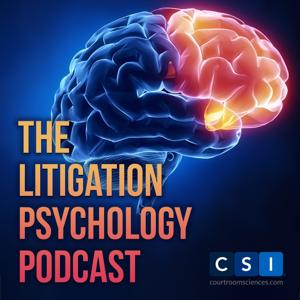

Bill Kanasky, Jr., Ph.D. defines and describes the cognitive gap and why witnesses must protect this gap during testimony. Bill shares the brain science behind cognitive fatigue when maximizing cognition in a deposition and how a witness must be trained - not just told - how to practice and protect the cognitive gap. The training process requires teaching and practice in order to master the skills required to be successful during testimony, especially since opposing counsel's goal will be to get the witness to go faster and reduce the cognitive gap. The challenge for the witness is that the cognitive gap is uncomfortable so the witness must be neurocognitively trained to embrace the discomfort as that is the key to achieving a positive outcome in the deposition.
 View all episodes
 By Courtroom Sciences

4.4
2828 ratings
Bill Kanasky, Jr., Ph.D. defines and describes the cognitive gap and why witnesses must protect this gap during testimony. Bill shares the brain science behind cognitive fatigue when maximizing cognition in a deposition and how a witness must be trained - not just told - how to practice and protect the cognitive gap. The training process requires teaching and practice in order to master the skills required to be successful during testimony, especially since opposing counsel's goal will be to get the witness to go faster and reduce the cognitive gap. The challenge for the witness is that the cognitive gap is uncomfortable so the witness must be neurocognitively trained to embrace the discomfort as that is the key to achieving a positive outcome in the deposition.

229,674 Listeners

43,687 Listeners
30,191 Listeners

113,121 Listeners

56,944 Listeners

14,071 Listeners
8,876 Listeners
3,946 Listeners

62,395 Listeners

16,982 Listeners