
Sign up to save your podcasts
Or

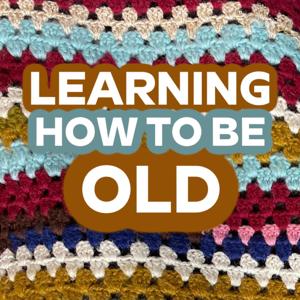

I was born in 1940 and I'm learning how to be old. So Lotta Dann talks here about sobriety in old age. Everything is different when you’re older, and that includes why we drink, how we drink, and the social environment in which we drink. Lotta Dann made a huge impression on New Zealand and abroad with her secret project to give up drinking: alcohol, that is. She wrote a daily diary as a blog describing her struggles, which became a best-seller book: Mrs D is going without. She now carries on with what is now her passion: helping others who want to change their drinking habits. With kindness!
Lotta was only 40 when she gave up drinking. She speaks with compassion and understanding about people who might have a little voice in their heads that says, you need to rethink the way you drink, this is not right for you personally — for whatever reason.
I have also transitioned into sobriety, but it was sobriety in old age (I was over 80) and for different reasons. Just because I'm old, alcohol was giving me less pleasure and bothering me physically. My taste buds, my brain and my digestive system were protesting. Even so, there were some challenges. I learned how even the loveliest friends can take a while to understand your change — and I was ambivalent myself, to start with. The pressure from your social circle can be intense or subtle, defensive or well-meaning.
Any time is a good time to look at how your country, your culture and your social group treat alcohol. New Zealand is a particularly weird place in that way, largely because for 50 years (1929–1979) pubs closed at 6pm, training Kiwis to drink fast, drink up, drink to get pissed in the 'six-o'clock swill.' It's wrong to blame yourself if you're drinking too much because there's so much pressure from business, history, society to do so — and alcohol is addictive.
I have seen people begin drinking heavily in old age. But I'd like to know how many people shift to sobriety in old age, like me.
Head to Lotta's website for information and advice and company, if this topic interests you:
Mrs D is going without: Lotta Dann's historic blog, still online, with good reason!
Podcasts on Apple Podcasts have a transcript running at the same time. That can be handy, especially if you're hard of hearing. If you listen to it on my website, you can read the transcript here. It's pretty long — just keep scrolling!
Hello, I'm Rachel McAlpine. I was born in 1940, so I'm learning how to be old.
And with me today is Lotta Dann, who made a huge impression in New Zealand and abroad
with her day-by-day account of her struggle to give up drinking.
Alcohol, that is. And she now carries on the good work.
She runs the Living Sober website with the New Zealand Drug Foundation.
I'll give you the URL in the notes.
I'm very interested because everything is different when you're older
and that includes why we drink, how we drink,
and the social environment in which we drink.
So welcome, Lotta.
I'm so very glad to have you here in my podcast studio.
In other words, sitting on the couch in my sitting room.
Hello lovely to be here. Yes bathed in sunlight. Yes and with a cat let's hope she behaves.
Now it struck me that you and I are both good subjects for a compare and contrast exercise.
Did you do that at school? Compare this poem with that poem or? Probably yes. And contrast what's
alike because we both gave up drinking but at completely different times of our life and for
different reasons and different methods. Yeah, because how old are you? Not at all?
I'll be 55 this year. Yeah, and I'm 85 so that's enough of a difference to have a contrast.
Oh for goodness sake, I'm not 85. I'm 86.
I want to know how old you were when you gave up drinking.
I was 39. I was one month shy of my 40th birthday.
Was that a point, the fact that you were turning 40?
Yes and no. I think in hindsight, I don't think it's surprising that I came to a big life decision
right on that 40th birthday because it is a time of change but it was also just the reason that
my drinking had really got to such a bad point at that time that I was forced in many ways to
give up then. Yeah 40. Yeah there's quite a lot of drinking done before 40. Whereas I gave up
drinking almost completely. I'll have like a millimetre of nice wine if it's around sometimes,
once a week, once a month or something, but mostly not at all. But I suppose I really gave up about,
perhaps when I was about 80, I don't know, and it was just tailing off until then.
Was that a conscious decision for you? Like I'm not going to drink anymore or was it more of a
casual you just found that you weren't drinking that. It was an intention yes
not for the same reasons as you probably I think it was my old body saying look
you can't do this Rachel I just drink less and less until I was thinking well
is there a waste of money to buy a bottle of wine and have it sitting there
for a couple of weeks going funny. Yeah that is not my experience. Why did you
give up drinking. I mean why, tell me about it because it's an amazing story.
Well I would just, you know, there was a huge part of me that didn't want to quit
drinking because it had been a part of my life since I was 15 and in many
respects I loved it. I loved alcohol, you know, I loved that it made me feel loose
and relaxed and sort of naughty and fun and I loved it. I always just wanted to be
The upbeat fun lotter and alcohol helped me do that, but I couldn't control it.
I mean, I was literally drinking to intoxication almost every single night of the week.
I was embarrassing myself when I was out at social events and I had a raging internal
dialogue telling me something was wrong and I needed to change.
alongside the raging internal dialogue telling me,
drinking's normal, everyone does it.
You're hardworking, you deserve it.
Go ahead, drink.
The other part of my brain was going, this is wrong.
You're out of control, you've gotta stop.
And it was absolute hell back and forward.
the only way to stop that was actually to stop drinking
and it was terrifying, but I made that decision
and I haven't had a drink since.
It was very hard.
That you were writing your blog.
This is the strange and amazing thing to me,
to most people, I suppose,
is that you didn't tell your family,
but you did a blog about it.
Although right at the end, I was hiding wine bottles,
which was part of the pain of seeing where I was at
was that I was bringing deceit into our marriage.
So he knew I was quitting,
but I didn't tell my extended family
who were all living elsewhere at the time.
I just really focused on trying to fix myself
and I sort of set out to do it all by myself,
which I now realize was foolish,
but anyway, it worked for me
'cause I started writing this blog
and writing myself letters effectively every day
about what I was doing.
because you got such a following
and people were so engaged.
People who had the same feelings.
there were all these blogs on the internet
and you know every housewife in America
was blogging about her crafting and children
and I just thought my blog would be hidden
amongst all of them and no one would read it.
I didn't write it to be read.
I wrote it as a private, I just did it online
type faster than I write with a pen.
and they were all saying I'm just like you
and up to that point I had felt very alone.
I thought everyone in the world,
'cause this is what's presented to us through marketing
and our environment, everyone in the world's
having a great time with alcohol
and you're the only loser that is miserable.
And when people started reading my blog and commenting
just like you, I discovered there are so many people secretly, privately struggling with
alcohol still to this day and feeling that it's their fault, their to blame, they should
be ashamed and they hide it and you know this is why I do what I do now because I just think
the more we're open and honest the more we're all helped.
Yes, it's that pressure from society that's why people are failing. If society didn't
that attitude that you know a good time equals a glass in your hand then it
wouldn't be embarrassing it wouldn't be disturbing you could just get cracking
and give up without some of that struggle wouldn't be there. I mean I
find that you know by contrast it's not a very big contrast really but at least I
grew up with parents who had a sherry at Christmas before dinner or something
like that. It was about like that. So there'd be this bottle of sherry getting syrupy year
after year after year. And that was the limit of it. But then things changed.
50 years of the 6 o'clock swill I think must have trained New Zealanders to boos, to get
drunk as fast as possible in a way that it's not sort of normal in other countries.
The six o'clock swill, it did train us to booze and get as drunk as fast as we can,
but it also trained us to be okay with public and open intoxication.
And we still have this attitude today.
If someone is falling over drunk at a wedding, we'll laugh about it or admit that it's not
to say I can't remember where we ended up last night. I had to check the bank to
see where I was spending money at 2am and it's all it's okay we laugh like
it's funny and blackouts are not funny. No way. And falling over at weddings
shouldn't be funny it's not okay but we do have an attitude here that being
drunk is okay and and we live in a culture where the liquor industry is
allowed to push this awful messaging of personal responsibility. You just need to
learn how to drink more responsibly and that further shames people if they're not.
So there's so many sort of different messages and pressures that lead to
where we are now where alcohol is just ubiquitous, it's everywhere, people drink
it and yet a lot of people, a lot of people are privately really unhappy
with their drunking. Yeah. I was going to say my blog is called, my blog, listen to me,
I'm back in the olden days. We were just talking about a blog. Yes, my podcast is called
Learning How to Be Old. So I'm always interested in what's different when we're old because
everything changes including the world around us and those strong messages, not that that's changed
a lot except for young people. I understand that there are groups of young people who
don't drink as much and there are others who drink a lot. But how about old people? Do
we all just wind down gently like me without any problems?
No. There are a lot of older people who are still drinking in what would be coined hazardous
ways and a lot of the negative impacts are quite internal so we often think we
need to look at things like getting in trouble with the law or ending up in
hospital or falling over if you're an old person you know that's if I'm not
doing that then I'm okay but it's those subtle but really impactful internal
impacts that are so hard for anyone but I would say old people especially because
it's that kind of diminished sense of self not really allowing yourself to
feel emotion and process difficult emotions not giving yourself time to be
able to reflect on things that might need some reflection even if it's
uncomfortable you know and sort of allowing yourself the space to do that
and then just things like sleeping better not you know doing saying eating
things that you don't want to because you've had a few too many wines and you
let yourself down all of those things. Yes for me I wasn't sort of aware of
what alcohol was doing to me especially except a kind of digestion and a bit of an uneasy
feeling and just not liking it as much which were just aging things but after I gave it
up I didn't sleep badly before you see but now I do sleep better and you know my gut
feels better.
Yeah and if you're used to drinking for many many years you probably don't even recognise
that slight layer of just everything being that bit harder, you're just that
bit more sluggish in the morning or you know you probably don't realize that it
is the alcohol having that impact and as you get older we were talking earlier
you know your body's older right so it's just it's done more wonderful things for
you but it's getting tighter and then if you add alcohol to that it is just going
to make it all that little bit. But I do want to say because I can sometimes come across
like I'm anti-alcohol. You know, if you're having one or two wines and you're really
not feeling it's a problem, that's okay. You're allowed to drink. It's just you will
know if there's a little voice in your head or if you're having any concerns, you know
deep down inside. You know the truth. The drinker knows the truth. So just be
honest with yourself is what I would say and know that if you're
wondering maybe should I, you know that it's doable at any age. That's very
interesting you should say that. Be honest with yourself because recently
Hariata Hemi was on this podcast and she's very involved with the staying
safe refresher driving course run by age concern teaching older drivers how to
deal with the difficulties they might be having with driving and Hariata said
exactly the same thing be honest with yourself right which is not always easy
so which is I imagine a big thing is your age yeah it's very complicated like
giving up drinking, giving up driving. If you're honest with yourself, you know that roads have
changed in the last 30 or 40 years, cars have changed, and our bodies and brains have been changing too.
We're not the same drivers or drinkers that we were when we were 20 or 30, and we might be
shutting her eyes to certain facts. I know what that's like, I can tell you. I can be
willfully blind with the best of them.
What have you got to lose? On the surface, well you've got a nice tasting drink to lose
or to cut down on for example. You know, having a good time, having a lovely social time can
be done with a cup of tea or just a sherry glass full of wine like I did for quite a
long time but I found that it was easier mostly when I'm out anyway just to say no I don't
drink because otherwise you have these little moments where someone's offering you more
drink and you have to say no and it's all a nuisance.
It can feel like a big loss though like I want to acknowledge that and I hear what you're
saying what have you got to lose I feel the same way what have you got to lose but it
It can feel like a lot if it's been your companion and if it's been your go-to or if you're lonely
because loneliness is a big thing.
So I just want to acknowledge that and if you've got the worried voice and you want
to make a change but you feel like it's a big loss, there will be some grieving over
that and there will be a transition.
It might feel uncomfortable at first but I would just recommend push through that because
The benefits are huge.
So, yeah, that's a very good message.
And somebody said to me, you know,
if you're near death and drinking is the only thing that makes you feel good,
who are you to say it might be a good idea?
I mean, that's a weird situation and that must happen a lot
and I'm in no way want to be judging people that like you.
No.
That's not, I'm not, I'm not.
I'd like you to give some tips for those people who are older and in that situation
where their social life kind of involves a lot of alcohol and they have the voice inside
and the real worry.
What are the tips you've got apart from pushing through and knowing the rewards are there?
Just know that it is possible to retrain your thinking.
So if you're coming together with a group of friends every Thursday and everyone's
having a wine and you feel like that gathering is going to lose all its value if I'm not
having the wine, you've really got to focus on actually what is that about.
It's about coming together with friends.
That is the number one.
Who cares what liquid is in your glass, right?
can have the same connected moment, the same social moment without that
lubrication of the drug, which it is by the way, an addictive drug just saying.
So focus like and it takes retraining. But how interesting, do that in your old
age. You know focus on all the things about whatever the social situation is
that aren't the liquid in your glass. What makes it good? What makes it valuable?
and focus on those things and the more you go the third time the fourth time
you'll start to realize actually and
especially if you have that worried voice suddenly the worried voice is gone because you're not drinking and you're just enjoying your time with friends
If they start hassling you for not drinking then are they really good friends?
And also usually it's more about them than you. That's true
it makes some people feel uncomfortable. But people, you can train your friends.
It's they're, they love you, they don't really want to hurt you. So, yeah, a bit of a word.
Yes, that's right. Well, that's exactly right. You know, and be as honest as you feel like you want to be.
But if you can be honest and say, "I've been really worried about it and I'm trying something new,"
you know, if they care about you, they'll hear that.
Yeah.
[Music]
What's your main job at the moment?
I have a few jobs.
I've made not drinking my whole career now and I work sort of in the addiction sector
but the job I'm most proud of and gives me the most fulfilment is running a website called Living Sober
which I do in partnership with the New Zealand Drug Foundation
 View all episodes
 By Rachel McAlpine
5
11 ratings
I was born in 1940 and I'm learning how to be old. So Lotta Dann talks here about sobriety in old age. Everything is different when you’re older, and that includes why we drink, how we drink, and the social environment in which we drink. Lotta Dann made a huge impression on New Zealand and abroad with her secret project to give up drinking: alcohol, that is. She wrote a daily diary as a blog describing her struggles, which became a best-seller book: Mrs D is going without. She now carries on with what is now her passion: helping others who want to change their drinking habits. With kindness!
Lotta was only 40 when she gave up drinking. She speaks with compassion and understanding about people who might have a little voice in their heads that says, you need to rethink the way you drink, this is not right for you personally — for whatever reason.
I have also transitioned into sobriety, but it was sobriety in old age (I was over 80) and for different reasons. Just because I'm old, alcohol was giving me less pleasure and bothering me physically. My taste buds, my brain and my digestive system were protesting. Even so, there were some challenges. I learned how even the loveliest friends can take a while to understand your change — and I was ambivalent myself, to start with. The pressure from your social circle can be intense or subtle, defensive or well-meaning.
Any time is a good time to look at how your country, your culture and your social group treat alcohol. New Zealand is a particularly weird place in that way, largely because for 50 years (1929–1979) pubs closed at 6pm, training Kiwis to drink fast, drink up, drink to get pissed in the 'six-o'clock swill.' It's wrong to blame yourself if you're drinking too much because there's so much pressure from business, history, society to do so — and alcohol is addictive.
I have seen people begin drinking heavily in old age. But I'd like to know how many people shift to sobriety in old age, like me.
Head to Lotta's website for information and advice and company, if this topic interests you:
Mrs D is going without: Lotta Dann's historic blog, still online, with good reason!
Podcasts on Apple Podcasts have a transcript running at the same time. That can be handy, especially if you're hard of hearing. If you listen to it on my website, you can read the transcript here. It's pretty long — just keep scrolling!
Hello, I'm Rachel McAlpine. I was born in 1940, so I'm learning how to be old.
And with me today is Lotta Dann, who made a huge impression in New Zealand and abroad
with her day-by-day account of her struggle to give up drinking.
Alcohol, that is. And she now carries on the good work.
She runs the Living Sober website with the New Zealand Drug Foundation.
I'll give you the URL in the notes.
I'm very interested because everything is different when you're older
and that includes why we drink, how we drink,
and the social environment in which we drink.
So welcome, Lotta.
I'm so very glad to have you here in my podcast studio.
In other words, sitting on the couch in my sitting room.
Hello lovely to be here. Yes bathed in sunlight. Yes and with a cat let's hope she behaves.
Now it struck me that you and I are both good subjects for a compare and contrast exercise.
Did you do that at school? Compare this poem with that poem or? Probably yes. And contrast what's
alike because we both gave up drinking but at completely different times of our life and for
different reasons and different methods. Yeah, because how old are you? Not at all?
I'll be 55 this year. Yeah, and I'm 85 so that's enough of a difference to have a contrast.
Oh for goodness sake, I'm not 85. I'm 86.
I want to know how old you were when you gave up drinking.
I was 39. I was one month shy of my 40th birthday.
Was that a point, the fact that you were turning 40?
Yes and no. I think in hindsight, I don't think it's surprising that I came to a big life decision
right on that 40th birthday because it is a time of change but it was also just the reason that
my drinking had really got to such a bad point at that time that I was forced in many ways to
give up then. Yeah 40. Yeah there's quite a lot of drinking done before 40. Whereas I gave up
drinking almost completely. I'll have like a millimetre of nice wine if it's around sometimes,
once a week, once a month or something, but mostly not at all. But I suppose I really gave up about,
perhaps when I was about 80, I don't know, and it was just tailing off until then.
Was that a conscious decision for you? Like I'm not going to drink anymore or was it more of a
casual you just found that you weren't drinking that. It was an intention yes
not for the same reasons as you probably I think it was my old body saying look
you can't do this Rachel I just drink less and less until I was thinking well
is there a waste of money to buy a bottle of wine and have it sitting there
for a couple of weeks going funny. Yeah that is not my experience. Why did you
give up drinking. I mean why, tell me about it because it's an amazing story.
Well I would just, you know, there was a huge part of me that didn't want to quit
drinking because it had been a part of my life since I was 15 and in many
respects I loved it. I loved alcohol, you know, I loved that it made me feel loose
and relaxed and sort of naughty and fun and I loved it. I always just wanted to be
The upbeat fun lotter and alcohol helped me do that, but I couldn't control it.
I mean, I was literally drinking to intoxication almost every single night of the week.
I was embarrassing myself when I was out at social events and I had a raging internal
dialogue telling me something was wrong and I needed to change.
alongside the raging internal dialogue telling me,
drinking's normal, everyone does it.
You're hardworking, you deserve it.
Go ahead, drink.
The other part of my brain was going, this is wrong.
You're out of control, you've gotta stop.
And it was absolute hell back and forward.
the only way to stop that was actually to stop drinking
and it was terrifying, but I made that decision
and I haven't had a drink since.
It was very hard.
That you were writing your blog.
This is the strange and amazing thing to me,
to most people, I suppose,
is that you didn't tell your family,
but you did a blog about it.
Although right at the end, I was hiding wine bottles,
which was part of the pain of seeing where I was at
was that I was bringing deceit into our marriage.
So he knew I was quitting,
but I didn't tell my extended family
who were all living elsewhere at the time.
I just really focused on trying to fix myself
and I sort of set out to do it all by myself,
which I now realize was foolish,
but anyway, it worked for me
'cause I started writing this blog
and writing myself letters effectively every day
about what I was doing.
because you got such a following
and people were so engaged.
People who had the same feelings.
there were all these blogs on the internet
and you know every housewife in America
was blogging about her crafting and children
and I just thought my blog would be hidden
amongst all of them and no one would read it.
I didn't write it to be read.
I wrote it as a private, I just did it online
type faster than I write with a pen.
and they were all saying I'm just like you
and up to that point I had felt very alone.
I thought everyone in the world,
'cause this is what's presented to us through marketing
and our environment, everyone in the world's
having a great time with alcohol
and you're the only loser that is miserable.
And when people started reading my blog and commenting
just like you, I discovered there are so many people secretly, privately struggling with
alcohol still to this day and feeling that it's their fault, their to blame, they should
be ashamed and they hide it and you know this is why I do what I do now because I just think
the more we're open and honest the more we're all helped.
Yes, it's that pressure from society that's why people are failing. If society didn't
that attitude that you know a good time equals a glass in your hand then it
wouldn't be embarrassing it wouldn't be disturbing you could just get cracking
and give up without some of that struggle wouldn't be there. I mean I
find that you know by contrast it's not a very big contrast really but at least I
grew up with parents who had a sherry at Christmas before dinner or something
like that. It was about like that. So there'd be this bottle of sherry getting syrupy year
after year after year. And that was the limit of it. But then things changed.
50 years of the 6 o'clock swill I think must have trained New Zealanders to boos, to get
drunk as fast as possible in a way that it's not sort of normal in other countries.
The six o'clock swill, it did train us to booze and get as drunk as fast as we can,
but it also trained us to be okay with public and open intoxication.
And we still have this attitude today.
If someone is falling over drunk at a wedding, we'll laugh about it or admit that it's not
to say I can't remember where we ended up last night. I had to check the bank to
see where I was spending money at 2am and it's all it's okay we laugh like
it's funny and blackouts are not funny. No way. And falling over at weddings
shouldn't be funny it's not okay but we do have an attitude here that being
drunk is okay and and we live in a culture where the liquor industry is
allowed to push this awful messaging of personal responsibility. You just need to
learn how to drink more responsibly and that further shames people if they're not.
So there's so many sort of different messages and pressures that lead to
where we are now where alcohol is just ubiquitous, it's everywhere, people drink
it and yet a lot of people, a lot of people are privately really unhappy
with their drunking. Yeah. I was going to say my blog is called, my blog, listen to me,
I'm back in the olden days. We were just talking about a blog. Yes, my podcast is called
Learning How to Be Old. So I'm always interested in what's different when we're old because
everything changes including the world around us and those strong messages, not that that's changed
a lot except for young people. I understand that there are groups of young people who
don't drink as much and there are others who drink a lot. But how about old people? Do
we all just wind down gently like me without any problems?
No. There are a lot of older people who are still drinking in what would be coined hazardous
ways and a lot of the negative impacts are quite internal so we often think we
need to look at things like getting in trouble with the law or ending up in
hospital or falling over if you're an old person you know that's if I'm not
doing that then I'm okay but it's those subtle but really impactful internal
impacts that are so hard for anyone but I would say old people especially because
it's that kind of diminished sense of self not really allowing yourself to
feel emotion and process difficult emotions not giving yourself time to be
able to reflect on things that might need some reflection even if it's
uncomfortable you know and sort of allowing yourself the space to do that
and then just things like sleeping better not you know doing saying eating
things that you don't want to because you've had a few too many wines and you
let yourself down all of those things. Yes for me I wasn't sort of aware of
what alcohol was doing to me especially except a kind of digestion and a bit of an uneasy
feeling and just not liking it as much which were just aging things but after I gave it
up I didn't sleep badly before you see but now I do sleep better and you know my gut
feels better.
Yeah and if you're used to drinking for many many years you probably don't even recognise
that slight layer of just everything being that bit harder, you're just that
bit more sluggish in the morning or you know you probably don't realize that it
is the alcohol having that impact and as you get older we were talking earlier
you know your body's older right so it's just it's done more wonderful things for
you but it's getting tighter and then if you add alcohol to that it is just going
to make it all that little bit. But I do want to say because I can sometimes come across
like I'm anti-alcohol. You know, if you're having one or two wines and you're really
not feeling it's a problem, that's okay. You're allowed to drink. It's just you will
know if there's a little voice in your head or if you're having any concerns, you know
deep down inside. You know the truth. The drinker knows the truth. So just be
honest with yourself is what I would say and know that if you're
wondering maybe should I, you know that it's doable at any age. That's very
interesting you should say that. Be honest with yourself because recently
Hariata Hemi was on this podcast and she's very involved with the staying
safe refresher driving course run by age concern teaching older drivers how to
deal with the difficulties they might be having with driving and Hariata said
exactly the same thing be honest with yourself right which is not always easy
so which is I imagine a big thing is your age yeah it's very complicated like
giving up drinking, giving up driving. If you're honest with yourself, you know that roads have
changed in the last 30 or 40 years, cars have changed, and our bodies and brains have been changing too.
We're not the same drivers or drinkers that we were when we were 20 or 30, and we might be
shutting her eyes to certain facts. I know what that's like, I can tell you. I can be
willfully blind with the best of them.
What have you got to lose? On the surface, well you've got a nice tasting drink to lose
or to cut down on for example. You know, having a good time, having a lovely social time can
be done with a cup of tea or just a sherry glass full of wine like I did for quite a
long time but I found that it was easier mostly when I'm out anyway just to say no I don't
drink because otherwise you have these little moments where someone's offering you more
drink and you have to say no and it's all a nuisance.
It can feel like a big loss though like I want to acknowledge that and I hear what you're
saying what have you got to lose I feel the same way what have you got to lose but it
It can feel like a lot if it's been your companion and if it's been your go-to or if you're lonely
because loneliness is a big thing.
So I just want to acknowledge that and if you've got the worried voice and you want
to make a change but you feel like it's a big loss, there will be some grieving over
that and there will be a transition.
It might feel uncomfortable at first but I would just recommend push through that because
The benefits are huge.
So, yeah, that's a very good message.
And somebody said to me, you know,
if you're near death and drinking is the only thing that makes you feel good,
who are you to say it might be a good idea?
I mean, that's a weird situation and that must happen a lot
and I'm in no way want to be judging people that like you.
No.
That's not, I'm not, I'm not.
I'd like you to give some tips for those people who are older and in that situation
where their social life kind of involves a lot of alcohol and they have the voice inside
and the real worry.
What are the tips you've got apart from pushing through and knowing the rewards are there?
Just know that it is possible to retrain your thinking.
So if you're coming together with a group of friends every Thursday and everyone's
having a wine and you feel like that gathering is going to lose all its value if I'm not
having the wine, you've really got to focus on actually what is that about.
It's about coming together with friends.
That is the number one.
Who cares what liquid is in your glass, right?
can have the same connected moment, the same social moment without that
lubrication of the drug, which it is by the way, an addictive drug just saying.
So focus like and it takes retraining. But how interesting, do that in your old
age. You know focus on all the things about whatever the social situation is
that aren't the liquid in your glass. What makes it good? What makes it valuable?
and focus on those things and the more you go the third time the fourth time
you'll start to realize actually and
especially if you have that worried voice suddenly the worried voice is gone because you're not drinking and you're just enjoying your time with friends
If they start hassling you for not drinking then are they really good friends?
And also usually it's more about them than you. That's true
it makes some people feel uncomfortable. But people, you can train your friends.
It's they're, they love you, they don't really want to hurt you. So, yeah, a bit of a word.
Yes, that's right. Well, that's exactly right. You know, and be as honest as you feel like you want to be.
But if you can be honest and say, "I've been really worried about it and I'm trying something new,"
you know, if they care about you, they'll hear that.
Yeah.
[Music]
What's your main job at the moment?
I have a few jobs.
I've made not drinking my whole career now and I work sort of in the addiction sector
but the job I'm most proud of and gives me the most fulfilment is running a website called Living Sober
which I do in partnership with the New Zealand Drug Foundation
785 Listeners
2,908 Listeners

15,950 Listeners

19,524 Listeners