
Sign up to save your podcasts
Or



Our guest today is Caroline Othim.
Caroline is a woman, a mother, a feminist, an activist, and is the Global Campaigns and Policy Coordinator – Africa for GATJ, which stands for Global Alliance for Tax Justice.
This episode is part of the 6 in the Eve podcasts, ''The South Explained'', a podcast that focuses on issues from the Global south and tries to unpack them for everyone to understand. We turn technical discussions into casual conversations. This particular conversation is part of the series named: Women's realities. We talked about the whole tax justice movement but with women's rights lenses.
You will hear:
1. What tax Justice means.
2. The link between tax justice and human rights
3. Tax justice and financing of women rights
4. Why it is Important to unpack these themes for the general audience
5. COVID-19 and tax justice
6. The demands to policymakers
7. How we should all participate and contribute.
Thank you for listening.
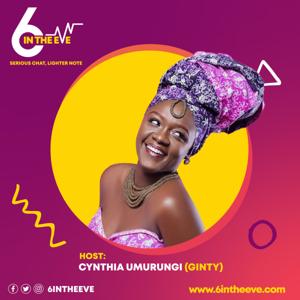
Cynthia Ginty Umurungi.
A conversation with Marino. A former radio presenter in Rwanda. She was there right at the beginning of private radio stations in Rwanda. This episode is about life in general, and it is a conversation they should have more than ten years ago, but... life is full of surprises. Plus, the content then, would obviously have been very very different!
Ginty and Marino talked about career paths, parenting, and freedom and they laughed a lot (which they often do).
This episode is an intimate conversation about infertility and the pressure that comes with it. Leila, our guest on the show, has a condition called PCOS (Polycystic ovary syndrome), which can cause infertility. In most cases, society will blame/judge a woman when she cannot conceive. For a long period of time, they won't even remember that her partner could be the one with a medical condition. Due to stigma, social norms, and accessibility of medical care/services, cases of infertility are diagnosed late or not at all.
Leave a comment on www.6inthe.com,
This is the second part of the conversation that we had with Claver Irakoze.
When Claver's daughter was five, she asked him what the word 'Genocide' meant. Her grandmother told them that she was going for (kwibuka) the commemoration of the Genocide Against the Tutsi. At that moment, he knew that he had to find ways to explain these terrible events to children. He says that every person who has witnessed the genocide against the Tutsi has the responsibility to speak up and teach the next generation.
A conversation with Claver Irakoze.
Claver survived the 1994 Genocide Against the Tutsi. He was only 11. He is now married with two children.
It's been 26 years since the genocide. Many of those who were young and babies then are parents now. We owe the next generation explanations. They need to understand what happened, so that they may carry the candle to the generation after them.
Claver took time to reflect on ways to tell the story to the young ones, without traumatising them. The intention is to build them.
FACTSHEET
1. Children have the right to know
2. Young ones are curious and they will ask questions
3. There is no single way or simple way of doing the right thing, you need to keep thinking
4. Claver gives tips on how to tell the story to children below 13.
5. The second part will be on questions that children might ask and how to tackle them.
A conversation with Josiane Umukundwa, a mental health expert.
In our families, society, even though we are not the only ones, we do not give the right value to mental health. People with mental health issues do not want to open up about them or to consult a health professional, they are worried and scared of the stigma. The society we live in makes them feel out of place.
Humans want to be loved, respected. We all like to know that we are important and want a sense of belonging. Anything that threatens that, threatens our humanity.
In this episode, we spoke about depression and we hope that it will help all of us be conscious about how we feel. While we are all on lockdown due to coronavirus, let us not neglect our mental wellbeing. Good health is the most important investment in our lives.
FACTSHEET
Depression can be caused by various reasons: Physiological, psychological, accidents, drugs, etc
Depression has many symptoms: Prolonged sadness, lack of interest, lack of energy, eating disorders, suicidal thoughts etc
If you feel depressed, seek help, depression heals
Be respectful, compassionate and mind your language, people with a mental health illness are not crazy.
It has been on the news for almost 3 months now. The WHO declared COVID 19 ( Coronavirus) a pandemic.
We are now asking ourselves so many questions. Some of them remain unanswered. How are we coping? Will the world come up with a solution soon? How much damage will it have made? How much time will it take us to recover?
In this episode, you will hear what people have learnt from these unusual times and what they think the world will pick as a lesson, going forward.
Follow 6intheeve.com for more!
FACTSHEET on COVID-19
People may experience:
Cough
Fever
Tiredness
Difficulty breathing (severe cases)
If you do and are in Rwanda, please call 114, email [email protected]; or Whatsapp +250788202080
What should you do?
Wash hands as many times as possible, do not touch your face before you do.
Practice social distancing (1 m and more)
Stay at home as much as you can
Handshakes, bisous, hugs should stop until further notice.
A few years back, PETIT PAYS_Gaël Faye (The book) was released, and now Petit PAYS_Eric Barbier (the movie) will be soon on your screen!
We had a conversation with Dida Nibagwire, the Casting Director of PETIT PAYS.
FACTSHEET:
This is the beginning of it all. I am more than honored to introduce myself to you in these few words.
Future episodes of 6 in the Eve will be more or less 20 min. They will essentially be in Kinyarwanda, sometimes in English, or French, depending on the guests that will be on the show.
Thank you very much for your support and let's keep the conversation going. Also, do not forget to visit www.6intheeve.com and to subscribe for more awesomeness.
This is the beginning of it all. I am more than honored to introduce myself to you in these few words.
Future episodes of 6 in the Eve will be more or less 20 min. They will essentially be in Kinyarwanda, sometimes in English, or French, depending on the guests that will be on the show.
Thank you very much for your support. Hit subscribe and let's keep the conversation going. Also, do not forget to visit www.6intheeve.com and to subscribe for more awesomeness.
From the publisher's feed