
Sign up to save your podcasts
Or

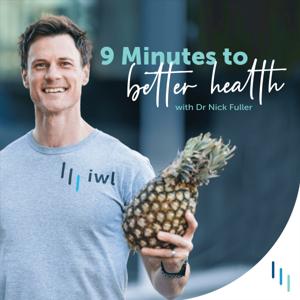


‘Eat less and move more’ is health advice dating back to Hippocrates in fourth century BC. Not much has changed since. All diets have this foundation, setting a caloric restriction and set of arbitrary rules to create a fear of certain foods. However, we know that fewer than five per cent of dieters succeed in the long-term.
Join leading obesity expert Dr Nick Fuller to understand the powerful biological forces that fight our ability to lose weight. Find out why losing weight in small increments every second month could be the key to healthy and sustainable weight loss.
Relevant studies and resources can be found here:
https://pubmed.ncbi.nlm.nih.gov/39861462/
https://www.sydney.edu.au/news-opinion/news/2020/01/21/6-steps-to-successful-weight-loss-for-women.html
For more help on your health and weight loss journey, check out the Number 1 award-winning program found here: https://intervalweightloss.com/
---------------
Dr Nick Fuller is a Leading Obesity Expert at the University of Sydney and Royal Prince Alfred Hospital, and the founder of the IWL program: https://profiles.sydney.edu.au/nick.fuller
He holds the following qualifications:
Doctor of Philosophy (Ph.D.), Obesity Treatment - The University of Sydney
Bachelors Degree, Human Movement & Sports Science - University of Technology, Sydney
Masters Degree, Nutrition & Dietetics - The University of Sydney
That’s a wrap on season 1. Thank you everyone for listening to the show. Stay tuned for season 2 coming soon!
For more help on your health and weight loss journey, check out the IWL award-winning program found here: https://intervalweightloss.com/
For advice on what to eat and how to eat throughout the day, check out this 1-minute video: https://www.youtube.com/watch?v=Ru_YiyHTRPA
For resistance training circuits you can do in the comfort of your own home, check out these 30-minute workouts here: https://youtu.be/n9qYzjLY9G4
For better sleep, follow these simple tips: https://youtu.be/JPRIzMUhPMo
---------------
Dr Nick Fuller is a Leading Obesity Expert at the University of Sydney and Royal Prince Alfred Hospital, and the founder of the IWL program: https://profiles.sydney.edu.au/nick.fuller
He holds the following qualifications:
Doctor of Philosophy (Ph.D.), Obesity Treatment - The University of Sydney
Bachelors Degree, Human Movement & Sports Science - University of Technology, Sydney
Masters Degree, Nutrition & Dietetics - The University of Sydney
What we eat and how we eat is a large part of the obesity problem and the growing waistlines we see today. It’s very hard to resist the foods we love and there are very good reasons as to why. First, there’s the food manufacturers themselves that have an uncanny ability to create food that smells, tastes, and looks delicious. But it’s not just the crafty work of the food manufacturers, we also have our ancestors to thank. As hunter gatherers we evolved to seek out high energy, nutrient dense foods, which gave us best bang for our buck. Food wasn’t always available, and it was hard to come by, so we gouged when it was available. Fast forward to today’s environment - our genes haven’t changed but our food environment has. The added fat, salt and sugars in these processed foods trigger addictive-like eating behaviours.
How do you prevent the cravings? And how do you prevent the associated weight gain that comes with your favourite foods? Join Dr Nick as he takes you on a deep dive into the studies to find out.
Relevant studies and resources can be found here:
https://intervalweightloss.com/articles/top-7-tips-for-preventing-comfort-eating-during-covid-19
https://www.sciencedirect.com/science/article/pii/S0149763414002140
For more help on your health and weight loss journey, check out the IWL award-winning program found here: https://intervalweightloss.com/
For advice on what to eat and how to eat throughout the day, check out this 1-minute video: https://www.youtube.com/watch?v=Ru_YiyHTRPA
For resistance training circuits you can do in the comfort of your own home, check out these 30-minute workouts here: https://youtu.be/n9qYzjLY9G4
For better sleep, follow these simple tips: https://youtu.be/JPRIzMUhPMo
---------------
Dr Nick Fuller is a Leading Obesity Expert at the University of Sydney and Royal Prince Alfred Hospital, and the founder of the IWL program: https://profiles.sydney.edu.au/nick.fuller
He holds the following qualifications:
Doctor of Philosophy (Ph.D.), Obesity Treatment - The University of Sydney
Bachelors Degree, Human Movement & Sports Science - University of Technology, Sydney
Masters Degree, Nutrition & Dietetics - The University of Sydney
Coeliac disease is an auto-immune disorder triggered by the consumption of gluten; a protein found in wheat, rye and barley, to give products such as bread their elasticity and texture. When people with coeliac disease eat gluten, they damage their small intestine and can’t absorb nutrients from food. They end up with unpleasant side effects such as itchy skin, heartburn, diarrhoea, bloating and constipation.
Despite the increase in gluten-free products in shops and people avoiding it, the disease only affects 1 per cent of the population.
Gluten is unsafe for those with coeliac disease BUT is it an issue for the rest of the population? Is going gluten-free a good idea? Join Dr Nick as he takes you on a deep dive into the studies to find out.
Relevant studies and resources can be found here:
https://www.nature.com/articles/nrgastro.2015.156
https://www.mdpi.com/2072-6643/10/12/1881
https://link.springer.com/article/10.1007/s10620-019-05663-x
https://www.cambridge.org/core/journals/british-journal-of-nutrition/article/how-healthy-is-a-glutenfree-diet/DE9A4889269A4288E36376510075A0BC
For more help on your health and weight loss journey, check out the IWL award-winning program found here: https://intervalweightloss.com/
For advice on what to eat and how to eat throughout the day, check out this 1-minute video: https://www.youtube.com/watch?v=Ru_YiyHTRPA
For resistance training circuits you can do in the comfort of your own home, check out these 30-minute workouts here: https://youtu.be/n9qYzjLY9G4
For better sleep, follow these simple tips: https://youtu.be/JPRIzMUhPMo
---------------
Dr Nick Fuller is a Leading Obesity Expert at the University of Sydney and Royal Prince Alfred Hospital, and the founder of the IWL program: https://profiles.sydney.edu.au/nick.fuller
He holds the following qualifications:
Doctor of Philosophy (Ph.D.), Obesity Treatment - The University of Sydney
Bachelors Degree, Human Movement & Sports Science - University of Technology, Sydney
Masters Degree, Nutrition & Dietetics - The University of Sydney
More people than ever are turning to a vegan diet for a vast variety of reasons – these include ethical, cultural and health reasons. A vegan diet is a type of vegetarian diet that means abstaining from all animal products. This means no meat, poultry or fish. It also means no by-products such as eggs and dairy products. Basically, you’re left to eating fruit, vegetables, nuts, seeds and legumes, which can make it quite challenging to meet your nutritional requirements for a variety of vitamins and minerals.
The research identifies six nutritional alarms when turning vegan. Join Dr Nick as he takes you on a deep dive into the studies to find out.
Relevant studies and resources can be found here:
https://www.annualreviews.org/doi/pdf/10.1146/annurev.nu.11.070191.000425
https://onlinelibrary.wiley.com/doi/full/10.1111/j.1467-3010.2005.00467.x
https://www.tandfonline.com/doi/full/10.1080/10408398.2022.2107997
For more help on your health and weight loss journey, check out the IWL award-winning program found here: https://intervalweightloss.com/
For advice on what to eat and how to eat throughout the day, check out this 1-minute video: https://www.youtube.com/watch?v=Ru_YiyHTRPA
For resistance training circuits you can do in the comfort of your own home, check out these 30-minute workouts here: https://youtu.be/n9qYzjLY9G4
For better sleep, follow these simple tips: https://youtu.be/JPRIzMUhPMo
---------------
Dr Nick Fuller is a Leading Obesity Expert at the University of Sydney and Royal Prince Alfred Hospital, and the founder of the IWL program: https://profiles.sydney.edu.au/nick.fuller
He holds the following qualifications:
Doctor of Philosophy (Ph.D.), Obesity Treatment - The University of Sydney
Bachelors Degree, Human Movement & Sports Science - University of Technology, Sydney
Masters Degree, Nutrition & Dietetics - The University of Sydney
Fussy eating is very common in young children and peaks around the age of 3. Fussy, picky, selective, or choosy eating refers to an unwillingness to eat familiar or new foods, and a lack of diet variety – typically less than 20 different foods in your child’s diet.
This can be a huge stress for parents because if the fussiness persists, it can lead to poor growth and development, nutrient deficiencies, and constipation. Plus it’s really annoying.
The literature shows that almost half of all children will go through a fussy eating period and it’s a normal stage of development. Most kids are selective eaters. And if you think about it, it makes perfect sense, because it’s this food “fussiness” that ensured the survival of our ancestors, thousands of years ago. We sought out foods high in sugar and fat as these foods gave us best bang for our buck during times of food scarcity. And we rejected unfamiliar foods and bitter flavours - such as vegetables - to avoid ingestion of potential toxins.
Over time, our genes haven’t changed, but the food environment has. Now we’re spoilt for choice – you can find your favourite foods on every block and our kids scream out for the stuff. But as the studies show, while the genes that determine food fussiness have been passed on from our ancestors, it’s not our fate, and there’s some simple tips to deal with our kids unwillingness to eat new foods.
Join Dr Nick as he takes you on a deep dive into the science to find out.
Relevant studies and resources can be found here:
https://bmcpublichealth.biomedcentral.com/articles/10.1186/1471-2458-9-387
https://www.sciencedirect.com/science/article/pii/S0195666307003716
https://www.sciencedirect.com/science/article/pii/S0195666315003438
https://www.jandonline.org/article/S2212-2672(15)00657-7/fulltext
https://www.sciencedirect.com/science/article/pii/S0031938416311015
https://pubmed.ncbi.nlm.nih.gov/26055848/
For more help on your health and weight loss journey, check out the IWL award-winning program found here: https://intervalweightloss.com/
For advice on what to eat and how to eat throughout the day, check out this 1-minute video: https://www.youtube.com/watch?v=Ru_YiyHTRPA
For resistance training circuits you can do in the comfort of your own home, check out these 30-minute workouts here: https://youtu.be/n9qYzjLY9G4
For better sleep, follow these simple tips: https://youtu.be/JPRIzMUhPMo
---------------
Dr Nick Fuller is a Leading Obesity Expert at the University of Sydney and Royal Prince Alfred Hospital, and the founder of the IWL program: https://profiles.sydney.edu.au/nick.fuller
He holds the following qualifications:
Doctor of Philosophy (Ph.D.), Obesity Treatment - The University of Sydney
Bachelors Degree, Human Movement & Sports Science - University of Technology, Sydney
Masters Degree, Nutrition & Dietetics - The University of Sydney
Metabolism is a term that describes all the chemical reactions in your body that keep your body alive and functioning. It’s most often used to describe your basal metabolic rate, or the number of calories you burn at rest.
Think of your metabolism, like your car. If you fill your car with poor quality fuel or you let it run out of petrol, it will have no power and won't operate efficiently. The same can be said for your body. If you neglect it, it will be sluggish and you’ll burn less calories at rest. And this is not a favourable position to be in, as it makes it hard to manage your weight.
Many factors can affect your metabolism including your sex, age, lifestyle and weight. And it definitely slows down as we get older. BUT, the good news is, there are things you can do to speed it up. Join Dr Nick as he takes you on a deep dive into the science to find out.
Relevant studies and resources can be found here:
https://pubmed.ncbi.nlm.nih.gov/26686003/
https://pubmed.ncbi.nlm.nih.gov/27133622/
https://pubmed.ncbi.nlm.nih.gov/33976376/
https://pubmed.ncbi.nlm.nih.gov/31984610/
https://pubmed.ncbi.nlm.nih.gov/7369170/
https://pubmed.ncbi.nlm.nih.gov/30335479/
https://www.ncbi.nlm.nih.gov/pmc/articles/PMC6628169/
https://pubmed.ncbi.nlm.nih.gov/21366839/
https://pubmed.ncbi.nlm.nih.gov/20142827/
https://www.nature.com/articles/0803351
https://www.tandfonline.com/doi/full/10.1186/1550-2783-10-22
https://www.ncbi.nlm.nih.gov/pmc/articles/PMC2929498/
https://link.springer.com/article/10.1007/s00125-020-05177-6
For more help on your health and weight loss journey, check out the IWL award-winning program found here: https://intervalweightloss.com/
For advice on what to eat and how to eat throughout the day, check out this 1-minute video: https://www.youtube.com/watch?v=Ru_YiyHTRPA
For resistance training circuits you can do in the comfort of your own home, check out these 30-minute workouts here: https://youtu.be/n9qYzjLY9G4
For better sleep, follow these simple tips: https://youtu.be/JPRIzMUhPMo
---------------
Dr Nick Fuller is a Leading Obesity Expert at the University of Sydney and Royal Prince Alfred Hospital, and the founder of the IWL program: https://profiles.sydney.edu.au/nick.fuller
He holds the following qualifications:
Doctor of Philosophy (Ph.D.), Obesity Treatment - The University of Sydney
Bachelors Degree, Human Movement & Sports Science - University of Technology, Sydney
Masters Degree, Nutrition & Dietetics - The University of Sydney
Alcohol offers a mixed legacy to our society, having long been used in a broad range of social, cultural and religious contexts. In fact, we’ve been drinking fermented beverages for about 10,000 years.
In Australia, per capita alcohol consumption has been decreasing over the last 50 years. But even though Australia has seen a general reduction in alcohol consumption, it still contributes to a significant amount of disease as reported by the World Health Organization. In fact, it’s linked to more than 200 diseases, including cancer, heart disease and liver disease.
And that’s due to the active ingredient found in alcoholic beverages - a simple molecule called ethanol. This molecule affects the body in many different ways. The one we’re most familiar with is how it affects our thinking. It interferes with the brain’s communication pathways, and can affect the way the brain looks and works. But it also directly influences the stomach, heart, gallbladder, and liver, and increases the amount of cholesterol, triglycerides, and insulin in the blood all of which impact our health and weight.
BUT is it all bad news or are there some benefits from drinking alcohol? Can it be part of a healthy lifestyle? Join Dr Nick as he takes you on a deep dive into the science to find out.
Relevant studies and resources can be found here:
https://pubmed.ncbi.nlm.nih.gov/34601742/
https://www.who.int/publications/i/item/9789241565639
https://www.thelancet.com/article/S0140-6736(18)31571-X/fulltext
https://www.ncbi.nlm.nih.gov/pmc/articles/PMC1471902/
https://pubmed.ncbi.nlm.nih.gov/27459455/
https://pubmed.ncbi.nlm.nih.gov/10920059/
https://pubmed.ncbi.nlm.nih.gov/16420195/
https://www.ahajournals.org/doi/10.1161/01.cir.102.19.2347
https://pubmed.ncbi.nlm.nih.gov/19770673/
https://pubmed.ncbi.nlm.nih.gov/12070110/
https://pubmed.ncbi.nlm.nih.gov/16759314/
https://www.ncbi.nlm.nih.gov/pmc/articles/PMC3292347/
https://www.ncbi.nlm.nih.gov/pmc/articles/PMC3832299/
For more help on your health and weight loss journey, check out the IWL award-winning program found here: https://intervalweightloss.com/
For advice on what to eat and how to eat throughout the day, check out this 1-minute video: https://www.youtube.com/watch?v=Ru_YiyHTRPA
For resistance training circuits you can do in the comfort of your own home, check out these 30-minute workouts here: https://youtu.be/n9qYzjLY9G4
---------------
Dr Nick Fuller is a Leading Obesity Expert at the University of Sydney and Royal Prince Alfred Hospital, and the founder of the IWL program: https://profiles.sydney.edu.au/nick.fuller
He holds the following qualifications:
Doctor of Philosophy (Ph.D.), Obesity Treatment - The University of Sydney
Bachelors Degree, Human Movement & Sports Science - University of Technology, Sydney
Masters Degree, Nutrition & Dietetics - The University of Sydney
One of the biggest challenges in life for women relates to menopause. Typically, women reach menopause, which marks the end of menstruation in a woman’s life, between the ages of 45 and 55, but it can happen much earlier or as late as 60. Most women put on about half a kilo of weight every year during this period of life. This is especially important because considering the average life expectancy of women in developed countries is 81 years, women will spend about 40 per cent of their life in post-menopause, and the weight gain you experience during this time will put you at increased risk of disease.
So, how do you prevent the weight gain that comes with menopause? Are hormones to blame? Join Dr Nick as he takes you on a deep dive into the science to find out.
Relevant studies and resources can be found here:
https://www.tandfonline.com/doi/full/10.3109/13697137.2012.707385
https://pubmed.ncbi.nlm.nih.gov/11004935/
https://pubmed.ncbi.nlm.nih.gov/2488072/
https://www.sciencedirect.com/science/article/pii/104727979290011E
https://jamanetwork.com/journals/jama/article-abstract/187879
https://pubmed.ncbi.nlm.nih.gov/14644697/
For more help on your health and weight loss journey, check out the IWL award-winning program found here: https://intervalweightloss.com/
For advice on what to eat and how to eat throughout the day, check out this 1-minute video: https://www.youtube.com/watch?v=Ru_YiyHTRPA
For resistance training circuits you can do in the comfort of your own home, check out these 30-minute workouts here: https://youtu.be/n9qYzjLY9G4
---------------
Dr Nick Fuller is a Leading Obesity Expert at the University of Sydney and Royal Prince Alfred Hospital, and the founder of the IWL program: https://profiles.sydney.edu.au/nick.fuller
He holds the following qualifications:
Doctor of Philosophy (Ph.D.), Obesity Treatment - The University of Sydney
Bachelors Degree, Human Movement & Sports Science - University of Technology, Sydney
Masters Degree, Nutrition & Dietetics - The University of Sydney
Fats are an important part of a healthy diet. But some are better for you than others.
Trans fats are bad for our health, as are a lot of saturated fats. Mono and polyunsaturated fats should make up most of our fat intake. But when it comes to saturated fats, it gets complicated. Not all foods containing saturated fat are equal and therefore not all are bad for our health.
What are the different types of fat? In which foods do you find them? And which fats should you be avoiding for optimum health and a healthy weight? Join Dr Nick as he takes you on a deep dive into the science to find out.
Relevant studies and resources can be found here:
https://www.ncbi.nlm.nih.gov/pmc/articles/PMC6243058/
https://pubmed.ncbi.nlm.nih.gov/31336535/
https://www.ncbi.nlm.nih.gov/pmc/articles/PMC1523500/
https://pubmed.ncbi.nlm.nih.gov/20071648/
https://www.ncbi.nlm.nih.gov/pmc/articles/PMC2943062/
https://academic.oup.com/ajcn/article/89/5/1425/4596851
https://www.sevencountriesstudy.com/about-the-study/
https://www.thelancet.com/journals/eclinm/article/PIIS2589-5370(21)00277-7/fulltext
https://academic.oup.com/ajcn/advance-article-abstract/doi/10.1093/ajcn/nqac224/6779726?redirectedFrom=fulltext
For more help on your health and weight loss journey, check out the IWL award-winning program found here: https://intervalweightloss.com/
For advice on what to eat and how to eat throughout the day, check out this 1-minute video: https://www.youtube.com/watch?v=Ru_YiyHTRPA
For resistance training circuits you can do in the comfort of your own home, check out these 30-minute workouts here: https://youtu.be/n9qYzjLY9G4
---------------
Dr Nick Fuller is a Leading Obesity Expert at the University of Sydney and Royal Prince Alfred Hospital, and the founder of the IWL program: https://profiles.sydney.edu.au/nick.fuller
He holds the following qualifications:
Doctor of Philosophy (Ph.D.), Obesity Treatment - The University of Sydney
Bachelors Degree, Human Movement & Sports Science - University of Technology, Sydney
Masters Degree, Nutrition & Dietetics - The University of Sydney
From the publisher's feed