
Sign up to save your podcasts
Or

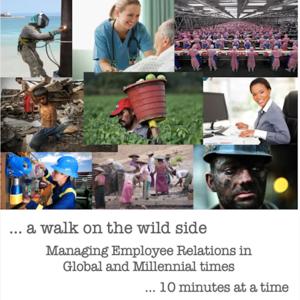


Welcome to the Wild Side, a podcast that discusses the world of modern employee relations ten minutes at a time. This podcast is one of the key issues that establish the best companies, in terms of employee relations, from the rest. In this episode, host Alan Wild speaks to identifying and managing employee relations risk. Alan is the Global Affairs Director of the HR Policy Association, the leading voice of chief human resources offices today.
What makes an exceptional employee relations person? The ability to assess resources and strategically move them to a company's risk centers. It's about managing what you have and how you build on it that matters. Exceptional employee relations people are at their very best when the worst happens. Whether that is in collective bargaining, strike action, a corporate campaign, or a trade union recognition management. And, we are often judged by our ability to resolve crises but the most exceptional amongst us are those that prevent crises from happening and are the most prepared to deal with them if and when they do. Let's look at how we can get the respect, trust, and the ear of business leaders to get the funding we need.
Key Takeaways:
Resources:
HR Policy Association
Alan Wild on Linkedin
HR Policy Upcoming Events
Welcome to the Wild Side, a podcast that discusses the world of modern employee relations ten minutes at a time. This is a country-specific employee relations profile for the United States of America. In this episode, special guest Rick Warters discusses trade union representation and collective bargaining in the U.S. Rick runs the Employee Relations course at the University of Connecticut and is the brain trust behind this podcast series.
As part of Roosevelt's New Deal, the National Labor Relations Act was born to address the inequality of power between workers and employers, it also attempted to eliminate obstructions to free-flowing commerce. This policy is still in place today. Several unique elements distinguish US Labor Relations including the concept of exclusive representation, the comprehensive collective bargaining agreement, negotiated limitations on the right to strike or lockout, and the resulting brinkmanship on contract expiration. Let's look at how these differ from international conventions and the impact of time-sensitive collective bargaining agreements.
Key Takeaways:
Resources:
HR Policy Association
Alan Wild on Linkedin
HR Policy Upcoming Events
Welcome to the Wild Side, a podcast that discusses the world of modern employee relations ten minutes at a time. This is a country-specific employee relations profile for Japan. In this episode, host Alan Wild discusses the distinctive systems of doing business, working and the employment relationship, and the conduct of employee relations in Japan. Alan is the Global Affairs Director of the HR Policy Association, the leading voice in chief human resources offices today.
Japan was the world's economic miracle as a result of its post-second world war growth but over the last 30 years it has bumped along in a far less impressive way. Yet, a few of Japan's big companies still dominate in much of the world. The country has a long history of low unemployment and very low, sometimes negative, inflation. Even with highly structured collective bargaining and over 43,000 unions Japan still struggles with a wide gender pay gap and restrictive dismissal policies. Let's look at the key issues employee relations specialists need to understand.
Key Takeaways:
Resources:
HR Policy Association
Alan Wild on Linkedin
HR Policy Upcoming Events
Welcome to the Wild Side, a podcast that discusses the world of modern employee relations ten minutes at a time. This is a country-specific employee relations profile for Brazil. In this episode, host Alan Wild discusses the four main issues human resource managers face, the framework of employee representation, and how employee claims are handled. Alan is the Global Affairs Director of the HR Policy Association, the leading voice in chief human resources offices today.
Brazil is the largest and most populous country in Latin America and has some distinctive features in its employment environment. It is the most litigious country in the world in terms of labor claims. Large companies have thousands of claims on their books going back for long periods and large sums of money tied up in reserves for future rewards or settlements. Employee claims are made after employment has been terminated and out-of-court settlements are non-existent. We look at the complex labor code and recent reforms of this relatively-closed, domestically-dense economy.
Key Takeaways:
Resources:
HR Policy Association
Alan Wild on Linkedin
HR Policy Upcoming Events
Welcome to the Wild Side, a podcast that discusses the world of modern employee relations ten minutes at a time. This is a country-specific employee relations profile on India. In this episode, host Alan Wild discusses the three distinct labor sectors in India, the motivation behind the frequent strikes, or bandhs, and what to expect in the business of human resources there. Alan is the Global Affairs Director of the HR Policy Association, the leading voice in chief human resources offices today.
India has a long history of Human Resource Management and there are a lot of talented Indian human resource people that rise to the top of international businesses. Unlike countries in Latin America, Western Europe, and North America, labor relations in India requires a specific skill set and is different from the 'rite of passage' to senior human resource roles that exist in other countries. Old school employee relations skills are applied to India's manufacturing industry and are complex, hardball, and need to be thoroughly understood. With a bureaucratic labor code and politically affiliated trade unions, it is imperative for employee relations managers to fix individual concerns fast.
Key Takeaways:
Resources:
HR Policy Association
Alan Wild on Linkedin
HR Policy Upcoming Events
Welcome to the Wild Side, a podcast that discusses the world of modern employee relations ten minutes at a time. This is the third of three podcasts dealing with international trade unions and international framework agreements. In this episode, host Alan Wild discusses the anatomy of a global corporate campaign, how they are organized, and how to identify your company's vulnerabilities. Alan is the Global Affairs Director of the HR Policy Association, the leading voice in chief human resources offices today.
Global corporate campaigns began in the early 1990s and are designed to pressure a company to change its behavior. Global campaigns can be researched and well-planned or based on a mishap at a company. Often, the campaigns have catchy titles and they don't use industrial action or involve strikes or loss of pay for employees. They are directed at a company's reputation by impacting its clients, customers, investors, and governments. This is an overview of what is a complex and important issue for many companies.
Key Takeaways:
Resources:
HR Policy Association
Alan Wild on Linkedin
HR Policy Upcoming Events
Welcome to the Wild Side, a podcast that discusses the world of modern employee relations ten minutes at a time. This is the second of three podcasts dealing with international trade unions and international framework agreements. In this episode, host Alan Wild discusses international trade unions: who they are, how they are organized, the way they work, and what their priorities are. Alan is the Global Affairs Director of the HR Policy Association, the leading voice in chief human resources offices today.
Trade unions have been active internationally at the International Labor Organization since 1919. At the ILO, the goal of international trade unions is to set international labor standards with the objective of influencing national laws. More recently the Global Union Federations have emerged as direct counterparts to international companies. Today, we look at the three trade union groupings that are of most interest to companies, the International Trade Union Confederation (ITUC), 10 industry-based Global Union Federations (GUF), the highly-influential European Trade Union Confederation (ETUC), and we glimpse into the best way to research and follow trade union news via the powerful website, Labourstart.
Key Takeaways:
Resources:
HR Policy Association
Alan Wild on Linkedin
HR Policy Upcoming Events
Welcome to the Wild Side, a podcast that discusses the world of modern employee relations ten minutes at a time. This is the first of three podcasts dealing with the international framework for employee relations. In this episode, host Alan Wild discusses the International Labor Organization (ILO), the United Nations, the Organization for Economic Co-operation and Development (OECD), international trade unions, and international framework agreements. Alan is the Global Affairs Director of the HR Policy Association, the leading voice in chief human resources offices today.
Most National Labor Codes cover similar issues in similar ways. It is because they are based on the conventions set by the International Labor Organization. The ILO is a tripartite body composed of representatives of employers' organizations, trade unions, and governments. They do a huge amount of work in the areas of child labor, forced labor, social security, and small business development, particularly in emerging economies. The ILO was designed to give workers of the world's market economies a voice. In contrast, employers can find their voice in the World Bank, the International Monetary Fund, the World Economic Forum, and to an extent the OECD.
Key Takeaways:
Resources:
HR Policy Association
Alan Wild on Linkedin
HR Policy Upcoming Events
Welcome to the Wild Side, a podcast that discusses the world of modern employee relations ten minutes at a time. In this episode, host Alan Wild discusses how the nature of restructuring is changing and how the restructuring tools we use today are increasingly unfit for their purpose. Alan is the Global Affairs Director of the HR Policy Association, the leading voice in chief human resources offices today.
The way we manage restructuring today is increasingly not fit for purpose. Traditional restructuring programs are not only expensive and morale-sapping they result in the separation of the wrong people at the wrong financial price. Voluntary separations tend to be welcomed by the people who believe they can land another job quickly and are less likely to be adopted by those the company needs to move on. Let's examine how organizations can develop a new restructuring model that meets the needs of the business while creating opportunities for employees.
Key Takeaways:
Resources:
HR Policy Association
Alan Wild on Linkedin
HR Policy Upcoming Events
Welcome to the Wild Side, a podcast that discusses the world of modern employee relations ten minutes at a time. This is the second of two episodes dealing with the impact of social networks on employee relations today. In this episode, host Alan Wild discusses collective action organized on social networks, the new world of employee voice, and employer listening. Alan is the Global Affairs Director of the HR Policy Association, the leading voice of chief human resources offices today.
As we increasingly live our lives outside of work on social networks, employees have an additional way to raise individual and collective concerns and to organize protests that can damage not only the delivery of products and services but company reputation and employee engagement. And, as trade unions cease to have a monopoly of voice or may not be the preferred or trusted vehicle for employee views, we need a new set of rules for this new world of employee relations.
Key Takeaways:
Resources:
HR Policy Association
Alan Wild on Linkedin
HR Policy Upcoming Events
From the publisher's feed