
Sign up to save your podcasts
Or

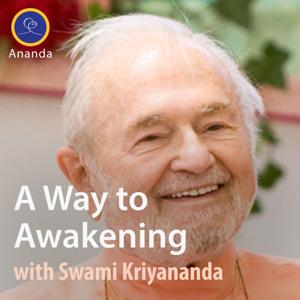


In this deeply personal and wide-ranging inspirational talk, Swami Kriyananda draws on his years with Paramahansa Yogananda, to illuminate timeless truths about devotion, humility, and openness to God. He shares intimate anecdotes from his time with the Master, including a pivotal exchange in which Yogananda counseled him to abandon both superiority and inferiority complexes and simply offer whatever he is to God. Kriyananda emphasizes that spiritual progress depends not on one's past action, but on one's present willingness to remain open-hearted and receptive. He likens a closed heart to an upturned cup that cannot receive what is poured into it.
He shares powerful lessons on listening, how wisdom flows to those who are still and attentive, and that even animals, stones, and the wind in the trees can serve as spiritual teachers. He recounts a beloved parable told by his Guru — of a Black church janitor denied entry by a segregated congregation, to whom Jesus appears, saying he too has been trying to get into that same church for twenty years — to underscore that God makes no human distinctions and loves all souls equally. Kriyananda encourages us to remain open, humble, and perpetually receptive to the quiet messages God is always sending.
Unconditional love, the spiritual practice of loving others without expectation of return as a path to genuine inner happiness, is the focus of this talk by Swami Kriyananda. Drawing from his own experiences of ingratitude and harsh criticism, including a painful encounter with a former community member who spent an hour cataloguing his faults, he demonstrates how hurtful experiences can be transformed into spiritual growth and creative expression rather than bitterness.
Kriyananda emphasizes the importance of staying true to one's own inner vision and connection with God, rather than being swayed by others' opinions, dogmas, or attempts to diminish you. Quoting Paramhansa Yogananda and philosopher Ralph Waldo Emerson, he encourages an attitude of openness by remaining willing to learn from anyone, even those you might not respect, while never abandoning sincerity in your own spiritual path.
Swami Kriyananda focuses on the practice of perceiving God in all beings while emphasizing that this awareness must be paired with discernment, not naive passivity. He illustrates this through Ramakrishna's well-known story of a disciple who, believing "God is in everything," failed to heed a mahout's warning about a rampaging elephant and was injured as a result — teaching that recognizing the divine in all things doesn't mean ignoring practical guidance or danger. Using the metaphor of a muddied window he once cleaned, he explains how spiritual masters purify their egos so that divine light can shine through them unobstructed.
Kriyananda addresses the financial hardships faced by his guru, Paramhansa Yogananda, who refused to charge high fees and remained financially strained despite having the spiritual capacity to materialize wealth. Stories of other advanced teachers like Swami Nithyananda producing money from a lake, and Anandamoyi Ma receiving offerings she could then give away, reinforce that such powers exist but are used sparingly, since spiritual life requires real effort rather than expecting miracles on demand.
This talk centers on the spiritual purpose of suffering and the journey toward Self-realization. Swami Kriyananda opens with the idea of offering one's whole being to the divine, framing all hardship as part of a larger, ultimately joyful unfolding—those who reach enlightenment never regret the struggle that led them there. He uses the Bhagavad Gita's battlefield as a metaphor for the inner war between our higher and lower tendencies. He draws on the biblical story of the Israelites wandering the desert as a symbol of the soul's long search for the "Promised Land" of infinite consciousness, noting that the ego can walk us close to liberation but cannot itself enter it.
He then shares anecdotes from his guru, Paramhansa Yogananda, including an encounter with an ascetic who criticized Yogananda's practical approach to generosity, and Yogananda's exchange with Gandhi about nonviolence versus the necessity of defense. Stories about the saint Pranabananda's childhood renunciation and the sage Sukadeva learning true detachment from King Janaka illustrate that real renunciation is inner freedom from ego and attachment, not external poverty. He reflects on humility as the path to happiness.
From the publisher's feed