
Sign up to save your podcasts
Or

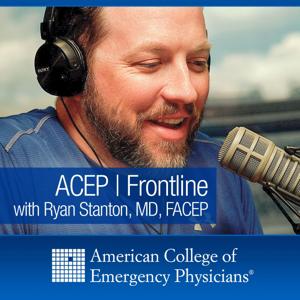


In this episode of ACEP Frontline, Dr. Ryan Stanton is joined by Dr. Sean Ochsenbein to reflect on the Hurricane Helene flooding that inundated Unicoi County Hospital in Erwin, Tennessee, forcing a rooftop evacuation of patients and staff. He shares the leadership, disaster response, and emergency management lessons learned during the unprecedented flood, detailing how healthcare teams, first responders, and military rescue crews worked together to safely evacuate everyone from the hospital amid rapidly rising floodwaters.
In this Frontline Weekend Playlist episode, hear Dr. Andrew French, Vice President and Physician Executive for Quality, Safety, and Clinical Operations at Centura Health, present "Critical Connections, Leadership in Emergency Medicine" from the Fourth Annual Leadership Symposium and EM: High Risk, Do Not Miss Conference in Beaver Creek, Colorado. Dr. French reframes leadership as influence rather than title or authority, and argues that emergency medicine, with its daily demands for adaptability, quick decision making, and managing a huge range of perspectives under pressure, is the ideal training ground for building that skill. He walks through a practical framework for developing leadership on shift, starting with a simple personal leadership statement and building toward leading teams and larger systems, and makes the case that emergency physicians are uniquely positioned to lead change across the broader healthcare system. The throughline is that leadership is not acquired knowledge but a skill built through repeated practice, and the emergency department is the best laboratory available for building it.
In this episode of ACEP Frontline, Dr. Ryan Stanton is joined by Dr. Chirag Shah and Dr. John Casey to discuss updates in the emergency department management of asthma and COPD, as well as the latest ACEP Point-of-Care tools designed to support bedside clinical decision-making. They review emerging technologies such as vibrating mesh nebulizers, evolving evidence around respiratory support strategies, and practical recommendations for medications, imaging, ventilation, and disposition to help emergency physicians deliver evidence-based care for patients with acute respiratory exacerbations.
In this episode of ACEP Frontline, Dr. Ryan Stanton is joined by Dr. Tricia Swan at Symposium by the Sea in Amelia Island, Florida to discuss updates in the ninth edition of the Neonatal Resuscitation Program and the growing impact of maternity care deserts on emergency medicine. She reviews key changes in newborn resuscitation, including cord management, oxygen use, and ventilation strategies, while highlighting how emergency physicians and EMS clinicians can prepare for the increasing number of unplanned deliveries occurring outside traditional obstetric settings.
In this Frontline Weekend Playlist episode, hear Dr. Jason Adler present “Winning the Payer Battle” at the Colorado ACEP Leadership Symposium & EM: High Risk – Do Not Miss Conference in Beaver Creek, Colorado. He explores evolving payer tactics that affect emergency medicine reimbursement, including downcoding, denials, and diagnosis-based payment policies, while offering practical documentation and revenue cycle strategies to help physicians and practice leaders protect appropriate payment for the care they provide.
In this episode of ACEP Frontline, Dr. Ryan Stanton is joined by Dr. Igor Middlebrook at Michigan ACEP's Summer Assembly on Mackinac Island to discuss the expanding role of ultrasound-guided regional nerve blocks and multimodal pain management in emergency medicine. He shares practical strategies for implementing a nerve block program, highlights high-yield blocks for community physicians, and explains how these techniques can improve patient outcomes, reduce opioid use, avoid unnecessary admissions, and add value to emergency department care.
Recorded live at Michigan ACEP at Mackinac, Dr. Ryan Stanton talks with Dr. Evan Schwarz, a UCLA emergency physician, medical toxicologist, and addiction medicine specialist, about the evolving landscape of substance use disorder in the ED. Dr. Schwarz explains why opioid overdose deaths are trending down despite what emergency physicians see day to day, and how the drug supply has shifted from prescription opioids and heroin to fentanyl, kratom, xylazine, and medetomidine adulterants. The conversation covers practical buprenorphine dosing, including why higher doses are often needed and safe, how to use the COW score to assess readiness, microdosing for patients not yet ready to start, and the role of harm reduction and peer recovery coaches in getting patients into treatment. Dr. Schwarz will present this topic again at ACEP26 in Chicago.
In this Frontline Weekend Playlist episode, hear Dr. Marianne Wallis, Assistant Professor at the University of Colorado School of Medicine, present on LVAD emergencies from the Fourth Annual Leadership Symposium & EM: High Risk – Do Not Miss Conference in Beaver Creek, Colorado. Using a case-based approach, she covers how LVADs work, how to read the controller and alarms, and how to recognize and manage the most common emergencies — pump thrombus, suction events, arrhythmias, infection, and bleeding. The throughline: these patients can largely be managed like any other, with key exceptions — defibrillation and cardioversion are safe, and chest compressions are reserved for cases where the device itself is failing.
Recorded in Dallas at the Partner Collaborative, Dr. Ryan Stanton welcomes back Dr. Christopher Baugh, MD, MBA, FACEP, chair-elect of the Emergency Medicine Foundation (EMF), for a conversation on the role of specialty-specific research in emergency medicine. Dr. Baugh discusses EMF's 50-plus year history funding over 700 investigators, how the foundation's scientific review committee and volunteer board evaluate grant applications, and why supporting early-career researchers, including students and residents, is a key priority. The two also discuss how AI and large datasets are lowering barriers to high-quality research, how EMF structures industry-sponsored grants at arm's length to protect research integrity, and how the foundation is funded primarily through donations.
In this Frontline Weekend Playlist episode, hear Dr. Gannon Sungar, DO, present "Syringes, Rocket Launchers, and Rum: Common Reduction Techniques in the Emergency Department" from the Fourth Annual Leadership Symposium & EM: High Risk – Do Not Miss Conference in Beaver Creek, Colorado. Rather than a comprehensive review, Dr. Sungar highlights a handful of practical, often-overlooked techniques for three of the ED's most common dislocations. For the mandible, he compares the syringe and extraoral techniques as gentler alternatives to the traditional intraoral approach. For the shoulder, he covers scapular manipulation as a universal adjunct along with the no-sedation Cunningham and Fares techniques, plus the shoulder-elbow method as a sedated rescue. For the hip, he walks through the Captain Morgan and rocket launcher techniques as safer alternatives to the classic Bigelow maneuver, along with the hip-foot fulcrum for tougher cases. The throughline: patience, positioning, and mechanical advantage can often beat brute force — a useful addition to any emergency physician's toolkit.
From the publisher's feed

534 Listeners
39 Listeners
33 Listeners
332 Listeners
9 Listeners