Africa World Now Project

Africa World Now Project

By Africa World Now ProjectNews
Download on the App Store

Africa World Now Project episodes

  • Reflections on Africa’s Deep Impact on Diasporic Cultural Production w/ Bro Ah
    Note: This conversation with Brother Ah was the first program produced for AWNP Radio. It aired as the inaugural program in 2016. Brother has joined the ancestors today (May 31 2020). We will need to hear him speak with us on a higher frequency. He was, is and will continue to be.
    --------------------------------------------------------------------------------------
    I recently had the pleasure to sit down with one of our scribes…Bro. Ah…to Reflect upon Africa’s Deep Influence on Diasporic Cultural Production.
    Robert Northern (aka Brother Ah) is the musical director of the World Music Ensemble and The Sounds of Awareness Ensemble. He specializes in Wind Instruments, African Drums, and Percussions.
    Brother Ah constantly seeks to celebrate the emergence of a world culture, while retaining the distinct expressions of each cultural style in it, paying particular attention to African inflections.
    Brother Ah extensive experience spans the musical field. He was the musical director of “Sounds of Awareness”. A musical collective that utilizes music, dance, poetry and the sounds of nature to inspire and raise individual levels of consciousness. The group also produces music for meditation, relaxation and healing.
    He also founded The World Community School of Music in 1992 and offers instrumental and vocal music classes to students of all ages from.
    As a lecturer and educator, he has taught at public and private schools in New York and Washington, DC, as well as Brown University in Rhode Island (9 years), Dartmouth College in New Hampshire (3 years), Talladega College (Alabama).
    Brother Ah is a performer, educator, lecturer, composer and arranger both in Western and non-Western traditions. He has composed and directed numerous extended works including “Ode to Creation”, The Forces of Nature” and “Tribute to the Ancestors”.
    Brother Ah, as a French horniest, has played and recorded with musical greats including, but not limited to, Thelonius Monk, John Coltrane, Miles Davis, McCoy Tyner, Freddie Hubbard, Sun Ra, Dizzy Gillespie, Eric Dolphy, Max Roach, John Lewis, to name a few.
    His classical performances include the New York Metropolitan Opera (stage band), Radio City Music Hall Orchestra; symphony orchestras in Vienna, Austria, West Germany and Broadway Theatre orchestras.
    He studied at the Manhattan School of Music in New York City, the Vienna State Academy in Vienna, Austria, and he is a graduate of Howard University in Washington, DC.
    This is Africa World Now Project…I am James Pope.
    [Our show was produced today in solidarity with the Native/Indigenous, African, and Afro Descendant communities at Standing Rock; Venezuela; Cooperation Jackson in Jackson, Mississippi; Brazil; the Avalon Village in Detroit; Colombia; Kenya; Palestine; South Africa; and Ghana and other places who are fighting for the protection of our land for the benefit of all peoples!]
    Enjoy the program…
    1 hr 11 min
  • The contradictory musings of a 'new' Black Studies
    Image: Monument to the Maroon, Alberto Lescay, in El Cobre, Santiago de Cuba, taken June 2019; https://albertolescay.com/
    It must be said, we have entered the most aggressive phase of European modernity’s disintegration. One that has been built upon decades of exploitation—human and natural. This may seem to be a very strong statement. Some may even suggest that it is an overstatement. It is neither. It is not based on speculation or opinion. The map of human history, the warnings of anti-racist, anti-racial capitalist, environmentalists, antiwar thinkers, advocates, activists have predicted this moment. Octavia Butler, Martin Delany, Ngugi, write and wrote about this. Fanon, Cabral, Biko, Armah, Gyekye, Du Bois, the Boggs, the Jacksons, Baraka theorized this moment. Coltrane, Coleman attempted to play us toward another direction. Simone, Lincoln, Holiday, provided a way to understand and see beyond this moment.
    It is our collective responsibility to ensure that we utilize this space, this moment of fracturing to create something new. We have been given the tools; our ancestors gave us the map. Let us read it together. To reformulate a black studies within the epistemic and philosophical architecture that is inadequate to properly engage its trajectory and call it new, is a contradiction of the highest order.
    Today, we will explore the contradictory musings of this new black studies...with Dr. Corey Walker.
    Corey D. B. Walker is the Wake Forest Professor of the Humanities at Wake Forest University. He is the author of A Noble Fight: African American Freemasonry and the Struggle for Democracy in America (University of Illinois Press), editor of Community Wealth Building and the Reconstruction of American Democracy: Can We Make American Democracy Work? (Edward Elgar Publishing), editor of the special issue of the journal Political Theology on “Theology and Democratic Futures,” and associate editor of the award-winning SAGE Encyclopedia of Identity. He has also published over sixty articles, essays, book chapters and reviews appearing in a wide range of scholarly journals and co-directed and co-produced the documentary film fifeville with acclaimed artist and filmmaker Kevin Jerome Everson. He has held faculty and academic leadership positions at Brown University, University of Virginia, Virginia Union University, and Winston-Salem State University and visiting faculty appointments at Friedrich-Schiller Universität Jena, Union Presbyterian Seminary, and University of Richmond.
    Our show was produced today in solidarity with the Native/Indigenous, African, and Afro Descendant communities at Standing Rock; Venezuela; Cooperation Jackson in Jackson, Mississippi; Brazil; the Avalon Village in Detroit; Colombia; Kenya; Palestine; South Africa; and Ghana and other places who are fighting for the protection of our land for the benefit of all peoples!
    1 hr 18 min
  • Relationship[s], Interaction[s] & the practice of Love for Black Family Stability
    Image: ODO NNYEW FIE KWAN, "Love never loses its way home"
    Kahlil Gibran, writing in the 1921, The Prophet presents us with a serious meditation on love:
    Gibran writes: “Love gives naught but itself and takes naught but from itself. Love possesses not nor would it be possessed; For love is sufficient unto love” (The Prophet, 1921).
    Our great ancestor, Toni Morrison writing Beloved in 1977, provides an even more clear meditation on love…
    Morrison writes: “Love is or it ain’t. Thin love ain’t love at all” (Beloved, 1977).
    Love, as a praxis, a concept and practice, requires serious deliberation, specifically, in the context of relationships, interactions, and black family stability. As love is often the platform, or base, upon which family units are built.
    It is also the platform upon which knowledge systems rooted in generative human progress and spirituality are built.
    When broaching a conversation such as this, it spurs great, and varying debate on the fundamental meanings of love, relationships, and family. Understandably so because they impact every aspect of our being.
    Yet, a cursory study suggests that every philosophy of life, religion and/or spiritual system understand that love is defined as unconditional, as it is rooted in things seen and unseen. It is the root of all life—biological, spiritual, the life of the mind…and is essential to its proliferation and evolution.
    The most important experiences we will have in our journey through this material reality are directly related to the relationships and interactions we create, nurture, and evolve.
    Thus, the primary task in our efforts to create, nurture and evolve, is rooted in balancing our individual and collective philosophies of life. [a task that is really the fulcrum upon which relationship and/or interactions survive the various stressors within which they form].
    This brings us to today’s conversation. I would like to be clear; it is not an attempt to provide definitive answers. It is not a claim of right or wrong, promoting one perspective over another.
    It is an attempt to disrupt normative assumptions about one of the most important aspects of our human existence: love, relationships, interactions, and marital stability, in our case the Black family.
    Our program is not an attempt to intellectualize and disregard the emotional, psychological, spiritual, physical components of love, relationships, interactions, and stability.
    It attempts to provide a platform that can provide help in understanding and balancing these, at times, destabilizing factors, molding them into lasting connections…in this world and beyond…
    It is an attempt to help us find forever!
    In this regard, we bring you a recent conversation I had with Dr. Antonius Skipper.
    Antonius Skipper, PhD [LSU] is an Assistant Professor in the Department of Behavioral Sciences at Winston-Salem State University.
    Dr. Skipper maintains an active research agenda that explores the social, medical, and familial experiences of African Americans. He qualitatively explores factors that contribute to the stability and resilience in African American families. He is widely published on issues such as, religion as a source of coping and resilience for older African Americans, religiosity and health, marital stability in strong African American couples, and generative fathering for Black men.
    Our show was produced today in solidarity with the Native/Indigenous, African, and Afro Descendant communities at Standing Rock; Venezuela; Cooperation Jackson in Jackson, Mississippi; Brazil; the Avalon Village in Detroit; Colombia; Kenya; Palestine; South Africa; and Ghana and other places who are fighting for the protection of our land for the benefit of all peoples!
    Enjoy the program!

    1 hr 23 min
  • Black Revolutionary: William Patterson and the Globalization of the Freedom Struggle & Libya
    [Originally produced in 2017]
    William Patterson, a leader of the Communist Party USA, was an eminent civil rights attorney who spearheaded defense of the Scottsboro Nine, Black youth in Alabama framed on phony rape charges in 1932.
    Patterson was a radical visionary who understood that African world struggle for freedom has in essence a struggle for human rights. Not human rights as practiced and theorized from a racialized, elitist Westernized perspective, but from a holistic, communal position.
    In this regard, Patterson, much like Sylvia Wynter, seeks to restore to our conception of human life the framework of a direction, a telos.
    In the mid 1930's Patterson went to Cuba to set up the Cuban International Labor Defense and to organize support for those fighting the dictatorship of Batista.
    In 1951, We Charge Genocide: the Crime of Government, a petition on behalf of African descended persons in the United States charging the U.S. government with the crime of genocide was published by the Civil Rights Congress and was presented to the United Nations General Assembly in Paris by Patterson and to the United Nations Secretariat in New York by Paul Robeson.
    For this act, Patterson was charged with contempt of Congress because he refused to divulge the names of contributors to the Civil Rights Congress and its bail fund as well as the names of the organizations to which he belonged. Patterson served ninety days in the Federal House of Detention in New York and in the Federal Penitentiary at Danbury, Connecticut on contempt charges in 1954-55.
    In May of 1969, he joined the defense team of attorneys for Huey P. Newton of the Black Panther Party. He served as a trustee of the Angela Davis Legal Defense Fund and of the National Legal Defense fund.
    Taking a moment to impress upon you the deep visionary perspective and impact of the We Charge Genocide petition, on preparing and submitting, Patterson stated: “To me, it seemed clear that the Charter and Conventions of the UN had to be made the property of Black America…It could be made the instrumentality through which the ‘Negro Question’ could be lifted to its highest dimension.”
    Today, we will listen to Gerald Horne reflect on the life and work of William Patterson, through a discuss of his book, which was published by University of Illinois Press and released Oct 2013, titled Black Revolutionary: William Patterson and the Globalization of the African American Freedom Struggle.
    Gerald Horne is the John and Rebecca Moores Professor of History at the University of Houston.
    After Dr. Horne, we turn our attention to the situation and conditions of African Migrants in Libya. Joining us for this discussion is Mwiza Munthali, executive producer, human rights activist, and international journalist who recently caught up with Nunu Kidane.
    Ms. Nunu Kidane is the Director of Priority Africa Network and editor of AfricaMoves: A Pan African Migration Platform which hosts regular consultations on migration policy around Africa and the diaspora. Ms. Kidane is founder and current steering committee member of the Pan African Network in Defense of Migrants’ Rights (PANiDMR) and the Black Immigration Network (BIN). In 2012, Nunu Kidane received award from the White House as "Champion of Change" for work with African diaspora communities.
    Our show was produced today in solidarity with the native, indigenous, African and Afro-descended communities at Standing Rock; Venezuela; Cooperation Jackson in Jackson, Mississippi; Brazil; the Avalon Village in Detroit; Colombia; Kenya; Palestine; South Africa; and Ghana; and other places who are fighting for the protection of our land for the benefit of all people.
    1 hr 2 min
  • We are Worth Fighting For w/ Josh Myers
    I would like to be clear at the outset: the question of the survival of black colleges and universities is actually a very problematic inquiry…
    It highlights the internalization of racialized ideological propensities, as this question is debated primarily by folk within the black community. The colonized ideological impulses that drive the philosophy of education as it relates to Africana peoples filter into and arrest the imagination of communities who attach to survivalist projects that suggest the only way out is to be cogs in a machine designed to overwork, underpay, and discard its human remains…
    The ancient practices rooted in Africana peoples congregating in common space [whether forced or voluntarily] has produced much of the world most innovative thought and practices, that range across all disciplines. In short, #HBCUsWork...
    This is despite working within constrains that if one simply scratches the surface of explanations, are due to manufactured budget and other non-monetary constraints. This is all wrapped within another layer of insidious structures run by, quite frankly, a comprador class of managerial black elite [and want to be elite] who have been trained in the best traditions of plantation philosophical practices that arrest the radical imagination if its students and faculty who are invested in nurturing a critical consciousness...
    If allowed the unfettered freedom to develop its most potent substance, the intellectual capital of some of the world’s most brilliant minds, that are fed by the river of genealogies that run through the ancestral and historical memories of its students—fragments of memories of Library of Alexandria, the temple complexes throughout Kemet and Nubia…
    The questions posed by Du Bois that challenges black institutions delivered in various speeches from 1906, The Hampton Idea to his 1960, Whither Now and Why should serve as the frame through which we look, through which we will look today…
    Black institutions must deal with questions around radical imagination, intellectual capital moving away from the fallacy of attainting access to the plantation capital that PWIs are built upon, HBCUs will never be players in this game...
    HBCUs must substantively align with African institutions, rooting a praxis in constant decolonization and advancement of knowledge systems. We must move the intellectual boundaries of HBCU knowledge production beyond limited and arrested expectations…
    The danger and delusion of black [brown and poor] folk as Du Bois warned is the substance upon which institutions have inculcated in the structures that educate generations of students is summed up in one question parents ask, but reality perpetuate the colonizing ideological impulses that drive the philosophy of education as it relates to Africana peoples around the world: what are you going to do what that degree in Africana Studies? Art? History? Literature? Or they demand that you go to school and get a job…
    We no longer live in that space. The global racial capitalist system does not have enough room to accommodate all peoples clamoring for jobs…
    The question still stands, to which we are ancestrally and historically bond to answer: Whither Now and Why?
    Today, Dr. Josh Myers will explore these themes and more in a talk he gave at Winston Salem University centered around the recent publication of his: We Are Worth Fighting For
    A History of the Howard University Student Protest of 1989. He engaged this history in relationship to the form and function of HBCUs.
    Our show was produced today in solidarity with the Native/Indigenous, African, and Afro Descendant communities at Standing Rock; Venezuela; Cooperation Jackson in Jackson, Mississippi; Brazil; the Avalon Village in Detroit; Colombia; Kenya; Palestine; South Africa; and Ghana and other places who are fighting for the protection of our land for the benefit of all peoples!
    59 min
  • Thinking Through the Organic Black Radical Intellectual w/ M1 Dead Prez
    [Note: This program was produced & recorded in 2017]
    Needless to say, most of you are extremely aware that we are indeed living in a moment that implores each and every one of us to have a clear, resolute, and radical perspective of one’s own position in the current sociopolitical environment as well as develop strategies that are broadly informed to address present and coming forms of marginalization.
    To be clear…the current systemic forms of violence—that is legal, physical, economic, cultural, political, and social—are not new phenomena to Africans and people of African descent. I say this because historically, the naked imposition of power as exhibited through the mechanisms of racial capitalism—chattel slavery; colonialism, neocolonialism; settler colonialism; Jim Crow; Apartheid—has often manifested itself in the material and nonmaterial life of the African world.
    The difference today…by most accounts is the reconstitution of these older forms of marginalization in a new time and space. The idea of progress is wedded to the movement of time—history. The standard equation reads that the further away we move from something the smaller or the further away we move from that point.
    So, this accepted understanding brings us to a deep problem…time is often materially bound to structures that are constructed to support various forms of social, political, cultural, and economic relations that are relative to the worldview of those who are in positions of perceived power or authority.
    Being so, it becomes the work of the radical intellectual—the radical black intellectual in our case—to dig at the root of these structures…pushing the foundations of these structures, systems, and institutions to expand, include, or break!
    I sat down with M1 of Dead Prez to explore his work, political activity, and the importance of the relationship between cultural production and strategy…in our current moment…
    When then turn our attention to the International Decade for People of African Descent.
    The UN General Assembly has proclaimed 2015-2024 as the International Decade for People of African Descent citing the need to strengthen national, regional and international cooperation in relation to the full enjoyment of economic, social, cultural, civil and political rights by people of African descent, and their full and equal participation in all aspects of society.
    Today, we will contribute to this mandate by paying tribute to the people of African descent in the U.S. history month by listening to various speeches by Dr. Martin Luther King, Jr.
    One of the most often overlooked aspects of Dr. Martin Luther King in his evolution within the Black freedom movement is his ever evolving internationalism—and growth toward embracing a more radical fight against racism—imperialism—and colonialism…Although we have been inundated with sound bites and narrow frames of reference when exploring Dr. King…Dr. King’s activism in many respects was just as evolutionary as El Hajj Malik Shabazz—the ends on the same pole...Dr.King was living in revolutionary times that was grounded and guided by the foundation set by the work of towering international left activist such as Paul Robeson, W. E. B. Du Bois, William Patterson, James and Esther Jackson, National Negro Congress, an early more radical NAACP …In fact, it is often lost that Dr. King in his last book—was keenly aware of the importance of the international struggle.
    With the help of a compilation produced by Dj Sese titled: Liberating Dr. King: The L is Coming, we will be exposed to Dr. King from a decidedly radical perspective (Big shout-out to @imixwhatilike).
    Our show was produced today in solidarity with the Native/Indigenous, African, and Afro Descendant communities at Standing Rock, Venezuela, Brazil, Colombia, Kenya, Palestine, South Africa, and Ghana and other places who are fighting for the protection of our land for the benefit of all peoples!
    Enjoy the program…
    1 hr
  • COVID-19 & the African World:...Kenya
    The resilience, creativity, and genius of African peoples wherever they are found in the world will always be apparent. It is without doubt this pandemic is unraveling and laying bare its core principles that devalue life while at the same time the myths that have supported the systems and structures that create an illusion of a social contract rooted in ideals such as equality and justice are in fact being exposed in the most brightest and boldest way possible. What we are witnessing is the implosion of what Charles Mills calls the racial contract. A contract that is rooted in white supremacy, expressed in economic, political, social, medical interactions.
    These expressions are global as they are engrained in the cultural milieu of an European antiquity where Europe discovered itself through unbridled expeditions of exploitation over centuries.
    And let’s be honest, this narrative that suggests that: we are all in this together is, but another contradiction rooted in yet another temporality of Western economic, political, social, cultural systems imploding under the weight of its fictitious existence. We are not in this together. The science, material realities, data show, in the Diaspora, people of African descent are dying at disproportionate rates.
    A few weeks ago, French scientist suggested that vaccines be tested in African communities.1 It has been reported that in 2014, during the West African Ebola outbreak, more than 250,000 blood samples were collected from patients by laboratories in France, the UK, and US without informed consent as patients underwent testing and treatment for Ebola.1 But this practice is not new, and we do not have to go deep into the past…in 1996, in Kano State, Nigeria, where there was a meningitis outbreak, Pfizer conducted clinical trials to test a drug it was developing without the consent of patients. Similar trails were conducted in Zimbabwe in 1994, funded by the US-based CDC and NIH which resulted in adverse effects for patients.2
    We can go on and on throughout the African world: Tuskegee Experiment, Henrietta Lacks, the entire practice of gynecology during chattel slavery in the U.S.
    History shows, data shows, practices show that we are in this…but not together.
    But through all of this, Africa, Africans and people of African descent have relied upon principles that are rooted deep in ancestral and historical genealogies that are articulated in traditions, cultural expressions, & rituals that will prove, as they have throughout global history to provide paths out of crisis, natural or otherwise.
    Today, we speak with Kenyan street artist, project curator and trainer, Kerosh who is based in Nairobi.
    We explore the implications of COVID19 in Kenya.
    Our show was produced today in solidarity with the Native/Indigenous, African, and Afro Descendant communities at Standing Rock; Venezuela; Cooperation Jackson in Jackson, Mississippi; Brazil; the Avalon Village in Detroit; Colombia; Kenya; Palestine; South Africa; and Ghana and other places who are fighting for the protection of our land for the benefit of all peoples!
    Enjoy the program!
    For more:
    https://www.youtube.com/watch?v=diVWr_eLdnM
    1. https://www.telegraph.co.uk/global-health/science-and-disease/ebolas-lost-blood-row-samples-flown-africa-big-pharma-set-cash/
    2. https://www.aljazeera.com/indepth/opinion/medical-colonialism-africa-200406103819617.html
    https://www.kenyanvibe.com/kenyan-graffiti-artist-wisetwo-paints-largest-murals-in-east-africa/
    https://www.facebook.com/anidanarts/posts/introducing-kerosh-kiruri-the-second-artist-who-will-be-coming-to-work-with-the-/1104133713080496/
    https://www.tuko.co.ke/102997-make-cool-150k-month-graffiti.html
    Image: https://www.wendiartit.com/2017/03/meet-kerosh-part-i.html
    54 min
  • COVID-19 and the African World:...South Africa & Senegal
    There is a danger in using and/or buying in to the ‘unprecedented’ narrative as being projected by dominant [medical, political, economic] discourse. In relation to the Africana world, it distorts, hides, and marginalizes the impact and community rooted efforts Africana people throughout history have presented the world.
    This current pandemic is no different. Therefore, identifying historical and ancestrally rooted collective responses [being clear of delineate reaction to conditions, although there were instances of reactions] is essential.
    Local health. National health. Global health, as being exposed in this current pandemic to be an appendage to racial capitalist logic, is woefully inadequate. This is without any debate. In order to properly contextualize and organize a collective global response to this pandemic, analysts who are using the term—response—who be better served as transmitters of information to adjust their lens to understand that what is happening is a reaction that is innate to the reverberations of sociopolitical and economic structures that are rooted in exploitation, marginalization, and the continued devaluation of human life.
    Nevertheless, the African world, properly organized, will as in the past provide a way forward for the West—the rest.
    Today, in the context of World Health Day, which was recognized yesterday, April 7, we speak with Coumba Toure, Coordinator of Africans Rising for Justice, Peace and Dignity, speaking to us from Dakar, Senegal. Coumba Toure was born and raised between Mali and Senegal. She is a writer and storyteller and publishes children stories and organizes art events focused on nurturing the mind of children through Falia. She also designs popular education programs with a focus on impacting and is a board member of TrustAfrica.
    We then turn our attention to the Eastern Cape province, South Africa, where we spoke with writer, activist and poet Siki Dlanga from Eastern Cape, South Africa. She is author of Black Lives Matter alive or dead, which was featured on PBS News Hour in conjunction with her work on protecting an African burial ground with Macedonia Baptist Church in Bethesda, Maryland and performed throughout the states as well as author of a poetry anthology titled: Word of Worth.
    But, before we dive in, AWNP’s collective member, Funa Ngonda, provides a bit of context for us.
    Our show was produced today in solidarity with the Native/Indigenous, African, and Afro Descendant communities at Standing Rock; Venezuela; Cooperation Jackson in Jackson, Mississippi; Brazil; the Avalon Village in Detroit; Colombia; Kenya; Palestine; South Africa; and Ghana and other places who are fighting for the protection of our land for the benefit of all peoples!
    Image: This Papyrus is the world's oldest surviving surgical document written in hieratic script in ancient Egypt around 1600 BCE. Plate 6 and 7 of the papyrus, pictured here, discuss facial trauma [https://www.ancient.eu/image/4542/].
    1 hr 31 min
  • Amilcar Cabral & the 21st Century w/ James Early
    Note: This program originally aired in 2016, we were just starting!
    ______________________________________
    Amilcar Cabral…one of the African world’s foremost intellectual—theoreticians is also one of the most marginalized in the study of the African world. If we were to try to encapsulate Amilcar Cabral influence into a single phrase it would have to be his insistence on the study of reality [the material conditions within which culture moves history]. He insisted that "one does not confuse the reality you live in with the ideas you have in your head"…he would frequently elaborate on this by asserting your "ideas may be good, even excellent, but they will be useless ideas unless they spring from and interweave with the reality you live in." What is necessary is to see into and beyond appearances: to free yourself from the sticky grasp of “received opinions”, whether academic or otherwise. Only through a principled study of reality, of the strictly here and now, can a theory of revolutionary change be integrated with its practice to the point where the two become inseparable.
    For Cabral, it is always necessary to “tell no lies, and claim no easy victories”!
    Africa World Now Project will bring you a community-based discussion [organized as part of a continuing series to remove the real and imagined barriers between the academy & community] on the impact and implications of Amilcar Cabral in the 21st century. We bring this organic forum which was after a screening of a documentary film titled Cabralista.
    This film was developed with the expressed purpose to be made publicly accessible to all that what to know.
    "Cabralista" is an ambitious documentary trilogy, chronologically divided in Past, Present and Future:
    Part I—Past, is a visual biography of Amilcar Cabral, based on historical facts and testimonies of his lifetime collected throughout the years and narrated by Val Lopes, the director and author of the trilogy.
    Part II—Present - Collective Memory, which explores the present, how Cabral is remembered, defining a non-formal zeitgeist around his ideology, showing an African Youth with strong Cabralist views.
    Part III—Future - Utopia, is a futuristic view, of a "better Africa", in a world where the early African freedom fighters have not been eliminated and our development has not been disturbed and distorted, but left in our own hands to grow freely.
    In today’s program…we will listen to the discussion after Part I of the Trilogy was screened.
    What you will hear is James Early, former Director of Cultural Studies and Communication at the Center for Folklife Programs and Cultural Studies at the Smithsonian Institution, Washington, DC. And Member of the Board of the Institute for Policy Studies (IPS), myself and the audience engage in a non-traditional, organic discussion that explored the legacy and impact of the praxis of Amilcar Cabral.
    Our show was produced today in solidarity with the Native/Indigenous, African, and Afro Descendant communities at Standing Rock; Venezuela; Cooperation Jackson in Jackson, Mississippi; Brazil; the Avalon Village in Detroit; Colombia; Kenya; Palestine; South Africa; and Ghana and other places who are fighting for the protection of our land for the benefit of all peoples!
    Enjoy the program!
    1 hr 2 min
  • Thinking with Steve Biko & about South African w/ Andile Mngxitama
    [Note: Program originally aired in August 2016]
    In a speech delivered in 1971 in Cape Town, South Africa, Steve Bantu Biko proclaimed that the: “The most potent weapon in the hands of the oppressor is the mind of the oppressed.”
    This time-less expression is currently fueling grassroots organizing and resistance efforts in South Africa. We see the echoes of this axiom in movements across South Africa from the Rhodes Must Fall/Fees Must Fall uprisings to the organizational expressions of resistance through organizations such as Black First, Land First or Abahlali baseMjondolo [Shack Dwellers Movement] and Landless People’s Movement; and outside of SA, with the Homeless Workers’ Movement [Brazil].
    Before we begin our conversation with Andile Mngxitama, it is important to hear and think with Steve Biko. One of the Africana world’s foremost activist---thinkers, Steve Biko is mostly remembered through the work and ideas of the Black Consciousness Movement (BCM).
    Although Steve Biko was not alone in forging the Black Consciousness Movement; he was nevertheless its most prominent leader, who with others guided the movement of student discontent into a political force unprecedented in the history of South Africa. As a consequence of his potent political mind and activity, he is inextricably linked the development and evolution of the Black Consciousness Movement, which spread across the African world, finding it’s lasting expression in Afro Brazilian communities. To understand more about the life and contributions of Steve Biko, there is no other place to start than to read him, you can start by reading and thinking through I Write What I Like…but for now, we can listen to him #ThinkingBlackOutLoud.
    After thinking with Bantu Biko, we explore movement building in a ‘post’ Apartheid SA, with Andile Mngxitama, a leading black consciousness thinker and organizer. He co-edited Biko Lives! Contesting the Legacies of Steve Biko, has published four essays in the New Frank Talk journals. He is frequent contributor to various multimedia outlets that explore Africa in general, South Africa specifically.
    Enjoy the program!
    __________________________________________________
    Additional resources:
    Africa is A Country [video]: https://www.youtube.com/watch?v=ksgrJyOrd7A
    Quartz Africa: https://qz.com/africa/1111666/feesmustfall-black-south-african-students-had-a-better-chance-at-graduating-during-apartheid/
    Al Jazeera English [video]: https://www.youtube.com/watch?v=vOGkWCfcq-o
    Andile Mngxitama [Twitter]: https://twitter.com/mnxitama?lang=en
    South African History Online [https://www.sahistory.org.za/]: https://www.sahistory.org.za/people/stephen-bantu-biko
    South African History Online [https://www.sahistory.org.za/]: https://www.sahistory.org.za/archive/quotes-steve-biko
    South African History Online [https://www.sahistory.org.za/]: https://www.sahistory.org.za/archive/biko-lives-contesting-legacies-steve-biko-edited-andile-mngxitama-amanda-alexander-and
    All Africa [multimedia new source]: http://allafrica.com/stories/201507311433.html
    More on Andile Mngxitama: http://mg.co.za/author/andile-mngxitama-comment-author
    South African History Online [https://www.sahistory.org.za/]: http://www.sahistory.org.za/article/apartheid-legislation-1850s-1970s
    Black Opinion [media http://blackopinion.co.za/
    Black First Land First: https://blf.org.za/
    https://www.thenation.com/article/archive/a-conversation-with-guilherme-boulos-leader-of-brazils-homeless-workers-movement/
    South African History Online [https://www.sahistory.org.za/]: https://www.sahistory.org.za/article/landless-peoples-movement
    Abahlali baseMjondolo: http://abahlali.org/
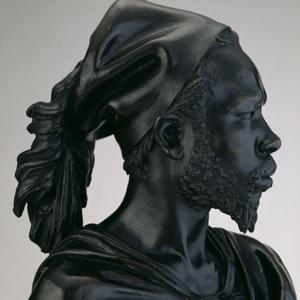
    Image: https://nmaahc.si.edu/object/nmaahc_2015.97.27.6
    56 min

About Africa World Now Project

From the publisher's feed

Is Africa a place? Is it the people? Is it politics, culture, art? What does Africa mean to you? What can Africa mean to us?

