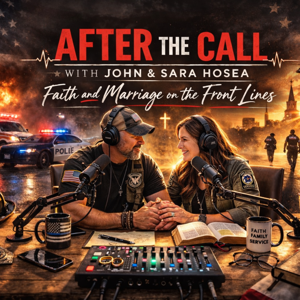
After The Call™ PodcastEpisode 13: The Cost of SilenceRemembering SPC Nathan Tyler Davis and Det. Justin Terry
Some names never leave us.
Some faces remain frozen in time.
Some losses continue to shape who we are long after the funeral ends.
In Episode 13 of After The Call™, John and Sara Hosea have one of the most personal and important conversations we've ever recorded as we remember two men who left a lasting impact on countless lives: SPC Nathan Tyler Davis and Detective Justin Terry.
Nathan Tyler Davis was killed on June 9, 2012, after a devastating IED strike in Afghanistan. Justin Terry gave his life in service to his community as a law enforcement officer. While their stories come from different battlefields, they share a common thread—a commitment to serving others, protecting those around them, and carrying burdens most people never fully see.
This episode is about much more than remembering two heroes.
It is about the hidden cost of service.
It is about the emotional weight first responders, military personnel, veterans, and their families carry every day.
It is about grief.
It is about trauma.
It is about survivor's guilt.
It is about the pressure to remain strong when everything inside is falling apart.
Most importantly, it is about what happens when sheepdogs stop asking for help.
For generations, tactical professionals have been taught to push through pain, compartmentalize emotions, and carry the weight alone. Many have convinced themselves that asking for help is weakness. The reality is that silence often becomes the most dangerous enemy they face.
In this episode, John shares personal reflections about losing Nathan Tyler Davis, the life-changing events surrounding the IED strike that forever altered his own journey, and the lessons learned from years of recovery. We also reflect on the life and legacy of Detective Justin Terry, the impact he had on those who knew him, and the void left behind when a protector is gone too soon.
Together, we discuss:
• The long-term impact of grief and loss
• Survivor's guilt and moral injury
• Why first responders and veterans often struggle to ask for help
• The hidden effects of trauma on marriages and families
• Depression, anxiety, and emotional isolation
• The dangers of carrying pain in silence
• Faith during tragedy and unanswered questions
• Brotherhood, support systems, and recovery
• The importance of checking on your people
• Why healing is not weakness
• How families can support those who serve
• What legacy really means
This episode is dedicated to the memory of SPC Nathan Tyler Davis and Detective Justin Terry.
Their lives mattered.
Their service mattered.
Their sacrifice mattered.
And their stories continue to remind us of an important truth:
The strongest warriors are not the ones who never struggle.
The strongest warriors are the ones willing to speak when they are hurting, reach for help when they need it, and help others do the same.
If you're carrying something heavy today, this conversation is for you.
You do not have to carry it alone.
"Because the call doesn't end when the sirens stop. We just have to learn how to live after it."
— John & Sara Hosea
After The Call™ Podcast