
Sign up to save your podcasts
Or

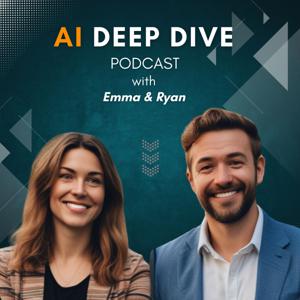


Today marks the final episode of AI Deep Dive. Launched a year ago with the debut of Google’s NotebookLM, the podcast has delivered daily AI news curated by a human producer and voiced by two AI hosts. Even through weekends, listeners tuned in for the latest updates on the evolving AI landscape. Due to growing time commitments, the creator has decided to conclude the show. In this farewell episode, we reflect on a year of innovation, challenges, and gratitude to the loyal audience who joined us on this journey.
In today’s AI Deep Dive, we explore the shifting dynamics of AI across consumer tech, infrastructure, and energy. Apple is reportedly delaying advanced AI integration in its iPhone 17 lineup, potentially turning to Google Gemini for enhanced features. Nvidia has unveiled its Rubin CPX GPU, optimized for large context windows, advancing AI computing power. Meanwhile, OpenAI CEO Sam Altman raises alarms about bot proliferation on social media, challenging online authenticity. And in the energy sector, Nuclearn secures major funding to apply AI in streamlining nuclear industry operations.
In today’s AI Deep Dive, we break down a wave of major AI stories shaping the industry. Amazon Music has launched its AI-driven “Weekly Vibe” playlists, offering hyper-personalized curation based on user moods and habits. OpenAI is reorganizing its Model Behavior team to address sycophancy, bias, and ethical concerns in AI personalities. Meanwhile, Tesla shareholders prepare to vote on a controversial investment in Elon Musk’s xAI startup, raising questions about alignment and control. Finally, Anthropic’s copyright settlement with authors highlights the unresolved legal battles surrounding AI training data.
In today’s episode of AI Deep Dive, we unpack mounting concerns around AI safety for children and vulnerable users. Attorneys general are pressuring OpenAI to adopt stricter safeguards after tragic chatbot-linked incidents. Google’s Gemini has been rated “High Risk” for kids and teens, raising alarms about inappropriate content and lack of protections. In contrast, Roblox is rolling out new AI tools for creators alongside tighter moderation and age-appropriate design. Meanwhile, the shutdown of Dot, a personalized AI companion app, underscores the risks of fostering unhealthy emotional attachments with AI.
In today’s episode of AI Deep Dive, we explore how AI is shaping industries from tech to fashion. Snapchat has rolled out an AI Lens that lets users generate and edit images with text prompts, while Chinese startup DeepSeek is developing an ambitious AI agent to rival OpenAI in multi-step reasoning tasks. On the legal front, Warner Bros. Discovery is suing Midjourney for alleged copyright violations tied to character imagery. Meanwhile, fashion brands Vivrelle, Revolve, and FWRD have partnered to launch Ella, a personalized AI styling tool redefining online shopping.
In today’s episode of AI Deep Dive, we unpack the latest AI innovations reshaping tech and work. OpenAI is venturing into recruiting with a new AI-powered hiring platform and fluency certifications. DuckDuckGo is doubling down on privacy while giving subscribers access to more advanced AI models. Google is rolling out AI-driven personalization, writing tools, and audio enhancements across Android and Pixel devices. Meanwhile, Captions has rebranded as Mirage, focusing on multimodal AI video research—raising both excitement and concerns about job disruption and misinformation.
In today’s episode of AI Deep Dive, we explore the latest in AI innovation and competition. Google’s NotebookLM is rolling out new customization options, including personalized tone and voice for AI-generated audio and fresh video summarization tools. Warp is redefining developer workflows with AI-powered diff-tracking for greater coding clarity. Meanwhile, PayPal and Venmo are partnering with Perplexity to boost adoption of its Comet AI browser, offering exclusive early access. Finally, Scale AI’s lawsuit against rival Mercor highlights the fierce battles over data and intellectual property in the AI industry.
In today’s episode of AI Deep Dive, we unpack some of the most pressing developments in artificial intelligence. WordPress is experimenting with Telex, a new AI-driven tool designed to make publishing and content creation more accessible. OpenAI has introduced fresh safety measures, including parental controls and GPT-5 routing for sensitive conversations, following recent user concerns. Salesforce is reshaping its workforce by deploying AI agents to manage customer support at scale. And at UCLA, researchers are pushing boundaries with brain-computer interfaces that use AI to empower immobilized individuals.
In today’s episode of AI Deep Dive, we explore how the AI race is reshaping industries and sparking new breakthroughs. Meta is weighing partnerships with Google and OpenAI to accelerate its AI development while building its own cutting-edge models. ByteDance has released USO, an open-source image generation model that blends subject and style for customizable creations. Meanwhile, xAI has filed a lawsuit against a former engineer over alleged trade secret theft, highlighting fierce industry competition. And in healthcare, an AI-enabled stethoscope shows promise by detecting heart conditions in just 15 seconds.
In today’s AI Deep Dive, we unpack the forces shaping AI adoption and innovation. Time magazine’s “100 Most Influential People in AI” celebrates leaders advancing fields from robotics to cancer research. Nvidia’s earnings reveal a heavy reliance on just a handful of customers, raising questions about long-term demand for its chips. Taco Bell reassesses its AI drive-thru strategy after mixed results, weighing the human touch against automation. Meanwhile, Meta faces cracks in its billion-dollar partnership with Scale AI as concerns over data quality spark a pivot to new vendors.
From the publisher's feed