(Cittaviveka) In meditation the ground has to be both clear and enjoyable. Make a joyful kind of effort. Refer to breathing to give focus; refer to the physical when the mind spins out. Track energy along the chakras – expand it, spread it around. May this be well.
(Cittaviveka) A teaching on the faculties of body, speech and mind and their patterning, saṇkhāra. In meditation, we work with the energy of these patternings. Clear and soothe body energies with breathing, and heart energies open. Upright presence of body allows us to remain attuned with the madness of the mind.
(Cittaviveka) There’s a glow and energizing effect to the hindrances that we’re attracted to. But if we lose presence in their pursuit, we don’t notice how they burn us. Samadhi is the overcoming of this, the coming into presence. The stages of samadhi cultivation are described, grounding the heart in the body so doesn’t rush out with feeling.
(Cittaviveka) The tendency is to conceive ourselves as being a separate entity; yet, we’re always in something. There is something around us without which we wouldn’t survive. Practice sensing into the ‘us-ness’, the sense of me and something else. Mindfulness of body and breathing support this practice.
(Cittaviveka) With breathing we are coming into different aspect of body, the energy body. Feel the internal body with reference to breathing. Use the thinking mind to keep pointing – where am I? Heart picks up feelings of space, gladness ease. Body, heart mind work together to clear kammic disturbances in the energy field. Walking instructions at the end.
(Cittaviveka) The kind of effort energy that is often brought to ‘trying to meditate’ lacks balance. Guidance is given to establish a steady upright posture with the external frame of the body. Energy is sensed at chakra centers to support its free flow through the body.
(Cittaviveka) On this Path, there is release, and there is also awakening into something vaster. Wherever suffering occurs, that’s the place of release. Apply yourself to the restricted places, and effortlessly, the revelation arises.
(Cittaviveka) Over time we experience of the limitations of body and mind. What we rely on doesn’t actually work. Life is a failure, but we can make it a glorious failure. The practice of Dhamma-Vinaya helps keep the spirit bright and impeccable in what we do. Dhamma means to establish ethical clarity, mindfulness, lovingkindness; Vinaya is bringing these ideals and aspirations forth into a living context.
58 min
About Ajahn Sucitto's most recent Dharma talks (Gaia House)
From the publisher's feed
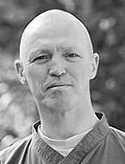
As a monk, I bring a strong commitment, along with the renunciate flavor, to the classic Buddhist teachings. I play with ideas, with humor and a current way of expressing the teachings, but I don't dilute them.
Sitting in a field of fifty to eighty people really starts my mind sparking. Since I don't prepare my talks ahead of time, I find myself listening to what I'm saying along with everyone else. This leaves a lot of room for the Dhamma to come up. Just having eighty people listening to me is enough to engage me, stimulate me, and create a nice flow of energy. The actual process of teaching evokes ideas that even I did not realize were being held somewhere in my mind.
Different teaching situations offer their own unique value. In retreat, you are able to build a cohesive and comprehensive body of the teachings. When people are not on retreat and come for one session, it opens a different window. They are more spontaneous and I'm given the chance to contact them in ways that are closer to their "daily-life mind." This brings up surprises and interesting opportunities for me to learn even more.
I'm continually struck by how important it is to establish a foundation of morality, commitment, and a sense of personal values for the Vipassana teachings to rest upon. Personal values have to be more than ideas. They have to actually work for us, to be genuinely felt in our lives. We can't bluff our way into insight. The investigative path is an intimate experience that empowers our individuality in a way that is not egocentric. Vipassana encourages transpersonal individuality rather than ego enhancement. It allow for a spacious authenticity to replace a defended personality.
I normally incorporate Qi Gong instruction in my retreats. They are not suitable as audio files but you can watch the nine videos here: https://tinyurl.com/Sucitto-qigong