(Cittaviveka) Humans have an inner quality consciousness, an awareness that is subjective. This awareness is heart or citta and it is a refuge that can be entered for liberation.
(Insight Meditation Society - Forest Refuge) Steady the heart by not picking up the signs of crisis or anxiety. Instead use the simple and steady body rhythms and signs that hold the heart. Make the heart the priority.
(Insight Meditation Society - Forest Refuge) In the sensory world, boundaries, signs of separation and comparisons must be experienced. But entering the heart realm, we can experience the boundlessness of the brahma vihara.
(Insight Meditation Society - Forest Refuge) Detecting and clearing the hindrances. (References: SN46.55 available here: https://suttacentral.net/sn46.55/en/bodhi?reference=none&highlight=false)
(Insight Meditation Society - Forest Refuge) In meditation we open an energy domain with discernable material and immaterial aspects. We meet, widen and soften to this experience, providing a pragmatic healing and protection against life's vicissitudes.
(Insight Meditation Society - Forest Refuge) Includes a 6 min introduction of its significance. A video version is available here: https://youtu.be/GkFvLoQhB8g
(Insight Meditation Society - Forest Refuge) Puja is a form of praising and honouring. It is the nimitta of the citta, flavoured with a sense of lineage and gratitude.
(Insight Meditation Society - Forest Refuge) 00:00 Can you speak more about compassion / karuna?; 05:06 How does equanimity support compassion?; 15:32 Is there such a thing as displaced compassion?; 22:26 Please say more about walking meditation and the breath; 23:36 Please speak more about the internal process of sila and dana; 39:40 What is the role of kamma in the interplay of right view and right intention? 48:34 Are nimittas important?
56 min
About Ajahn Sucitto's most recent Dharma talks (Insight Meditation Community of Berkeley)
From the publisher's feed
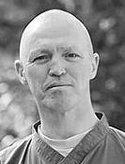
As a monk, I bring a strong commitment, along with the renunciate flavor, to the classic Buddhist teachings. I play with ideas, with humor and a current way of expressing the teachings, but I don't dilute them.
Sitting in a field of fifty to eighty people really starts my mind sparking. Since I don't prepare my talks ahead of time, I find myself listening to what I'm saying along with everyone else. This leaves a lot of room for the Dhamma to come up. Just having eighty people listening to me is enough to engage me, stimulate me, and create a nice flow of energy. The actual process of teaching evokes ideas that even I did not realize were being held somewhere in my mind.
Different teaching situations offer their own unique value. In retreat, you are able to build a cohesive and comprehensive body of the teachings. When people are not on retreat and come for one session, it opens a different window. They are more spontaneous and I'm given the chance to contact them in ways that are closer to their "daily-life mind." This brings up surprises and interesting opportunities for me to learn even more.
I'm continually struck by how important it is to establish a foundation of morality, commitment, and a sense of personal values for the Vipassana teachings to rest upon. Personal values have to be more than ideas. They have to actually work for us, to be genuinely felt in our lives. We can't bluff our way into insight. The investigative path is an intimate experience that empowers our individuality in a way that is not egocentric. Vipassana encourages transpersonal individuality rather than ego enhancement. It allow for a spacious authenticity to replace a defended personality.
I normally incorporate Qi Gong instruction in my retreats. They are not suitable as audio files but you can watch the nine videos here: https://tinyurl.com/Sucitto-qigong