
Sign up to save your podcasts
Or

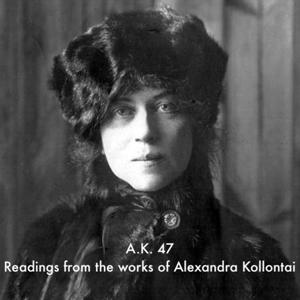


In this episode, Kristen R. Ghodsee discusses Alexandra Kollontai's 1923 short story, "The Loves of Three Generations," her most controversial piece of fiction and one that caused her terrible amounts of trouble with her Bolshevik colleagues. This story is written as a letter to Kollontai from a revolutionary comrade who is having personal problems and seeks Kollontai's advice. This colleague wants to know if her own feelings of betrayal and jealousy are remnants of the bourgeois past or whether she is justified in her indignation. This story reflects Kollonta's proposal that romantic love will come second to love for work and for the collective in the new socialist society to come. Most Russian readers were horrified by this story in 1923.
The key characters are:
This episode is a freestyle rant discussing Kollontai's possible intentions with this story.
Send us Fan Mail
Thanks so much for listening. This podcast has no Patreon-type account and receives no funding. There are no ads and there is no monetization. If you'd like to support the work being done here, please spread the word with your networks.
Kristen R. Ghodsee is the award-winning author of twelve critically acclaimed books published in over 20 languages, and a University of Pennsylvania Professor of Russian and East European Studies. Check out Kristen Ghodsee's recent books:
Subscribe to Kristen Ghodsee’s free, episodic newsletter at: https://kristenghodsee.substack.com
Learn more about Kristen Ghodsee's work: www.kristenghodsee.com or request to follow her on Instagram @prof_kristen
In this episode, Kristen R. Ghodsee reads the final part of Alexandra Kollontai's 1923 short story, "The Loves of Three Generations," her most controversial piece of fiction and one that caused her terrible amounts of trouble with her Bolshevik colleagues. This story is written as a letter to Kollontai from a revolutionary comrade who is having personal problems and seeks Kollontai's advice. This colleague wants to know if her own feelings of betrayal and jealousy are remnants of the bourgeois past or whether she is justified in her indignation. This story reflects Kollonta's proposal that romantic love will come second to love for work and for the collective in the new socialist society to come. Most Russian readers were horrified by this story in 1923.
The key characters are:
Send us Fan Mail
Thanks so much for listening. This podcast has no Patreon-type account and receives no funding. There are no ads and there is no monetization. If you'd like to support the work being done here, please spread the word with your networks.
Kristen R. Ghodsee is the award-winning author of twelve critically acclaimed books published in over 20 languages, and a University of Pennsylvania Professor of Russian and East European Studies. Check out Kristen Ghodsee's recent books:
Subscribe to Kristen Ghodsee’s free, episodic newsletter at: https://kristenghodsee.substack.com
Learn more about Kristen Ghodsee's work: www.kristenghodsee.com or request to follow her on Instagram @prof_kristen
In this episode, Kristen R. Ghodsee reads the fourth part of Alexandra Kollontai's 1923 short story, "The Loves of Three Generations," her most controversial piece of fiction and one that caused her terrible amounts of trouble with her Bolshevik colleagues. This story is written as a letter to Kollontai from a revolutionary comrade who is having personal problems and seeks Kollontai's advice. This colleague wants to know if her own feelings of betrayal and jealousy are remnants of the bourgeois past or whether she is justified in her indignation. This story reflects Kollonta's proposal that romantic love will come second to love for work and for the collective in the new socialist society to come. Most Russian readers were horrified by this story in 1923.
The key characters are:
Send us Fan Mail
Thanks so much for listening. This podcast has no Patreon-type account and receives no funding. There are no ads and there is no monetization. If you'd like to support the work being done here, please spread the word with your networks.
Kristen R. Ghodsee is the award-winning author of twelve critically acclaimed books published in over 20 languages, and a University of Pennsylvania Professor of Russian and East European Studies. Check out Kristen Ghodsee's recent books:
Subscribe to Kristen Ghodsee’s free, episodic newsletter at: https://kristenghodsee.substack.com
Learn more about Kristen Ghodsee's work: www.kristenghodsee.com or request to follow her on Instagram @prof_kristen
In this episode, Kristen R. Ghodsee reads the third part of Alexandra Kollontai's 1923 short story, "The Loves of Three Generations," her most controversial piece of fiction and one that caused her terrible amounts of trouble with her Bolshevik colleagues. This story is written as a letter to Kollontai from a revolutionary comrade who is having personal problems and seeks Kollontai's advice. This colleague wants to know if her own feelings of betrayal and jealousy are remnants of the bourgeois past or whether she is justified in her indignation. This story reflects Kollonta's proposal that romantic love will come second to love for work and for the collective in the new socialist society to come. Most Russian readers were horrified by this story in 1923.
The key characters are:
Send us Fan Mail
Thanks so much for listening. This podcast has no Patreon-type account and receives no funding. There are no ads and there is no monetization. If you'd like to support the work being done here, please spread the word with your networks.
Kristen R. Ghodsee is the award-winning author of twelve critically acclaimed books published in over 20 languages, and a University of Pennsylvania Professor of Russian and East European Studies. Check out Kristen Ghodsee's recent books:
Subscribe to Kristen Ghodsee’s free, episodic newsletter at: https://kristenghodsee.substack.com
Learn more about Kristen Ghodsee's work: www.kristenghodsee.com or request to follow her on Instagram @prof_kristen
In this episode, Kristen R. Ghodsee reads the second part of Alexandra Kollontai's 1923 short story, "The Loves of Three Generations," her most controversial piece of fiction and one that caused her terrible amounts of trouble with her Bolshevik colleagues. This story is written as a letter to Kollontai from a revolutionary comrade who is having personal problems and seeks Kollontai's advice. This colleague wants to know if her own feelings of betrayal and jealousy are remnants of the bourgeois past or whether she is justified in her indignation. This story reflects Kollonta's proposal that romantic love will come second to love for work and for the collective in the new socialist society to come. Most Russian readers were horrified by this story in 1923.
Send us Fan Mail
Thanks so much for listening. This podcast has no Patreon-type account and receives no funding. There are no ads and there is no monetization. If you'd like to support the work being done here, please spread the word with your networks.
Kristen R. Ghodsee is the award-winning author of twelve critically acclaimed books published in over 20 languages, and a University of Pennsylvania Professor of Russian and East European Studies. Check out Kristen Ghodsee's recent books:
Subscribe to Kristen Ghodsee’s free, episodic newsletter at: https://kristenghodsee.substack.com
Learn more about Kristen Ghodsee's work: www.kristenghodsee.com or request to follow her on Instagram @prof_kristen
In this episode, Kristen R. Ghodsee reads the first part of Alexandra Kollontai's 1923 short story, "The Loves of Three Generations," her most controversial piece of fiction and one that caused her terrible amounts of trouble with her Bolshevik colleagues. This story is written as a letter to Kollontai from a revolutionary comrade who is having personal problems and seeks Kollontai's advice. This colleague wants to know if her own feelings of betrayal and jealousy are remnants of the bourgeois past or whether she is justified in her indignation. This story reflects Kollonta's proposal that romantic love will come second to love for work and for the collective in the new socialist society to come. Most Russian readers were horrified by this story in 1923.
Send us Fan Mail
Thanks so much for listening. This podcast has no Patreon-type account and receives no funding. There are no ads and there is no monetization. If you'd like to support the work being done here, please spread the word with your networks.
Kristen R. Ghodsee is the award-winning author of twelve critically acclaimed books published in over 20 languages, and a University of Pennsylvania Professor of Russian and East European Studies. Check out Kristen Ghodsee's recent books:
Subscribe to Kristen Ghodsee’s free, episodic newsletter at: https://kristenghodsee.substack.com
Learn more about Kristen Ghodsee's work: www.kristenghodsee.com or request to follow her on Instagram @prof_kristen
In this bonus episode, Kristen Ghodsee speaks once again with Angelina Eimannsberger, a doctoral student in Comparative Literature at the University of Pennsylvania, about Alexandra Kollontai and the usefulness of her theories today, particularly with regard to popular culture. Mentioned in this episode are Reese Witherspoon's production company, Hello Sunshine, and the political economy of feminist media today. Also discussed is Kollontai's hierarchy of life priorities for what she calls the "New Woman." First should come some form of meaningful work for the collective progress of society. Second should come friendships, and only third should come love and romance. Kollontai believes that too many women put love and romance in the first place and this undermines them as individual personalities. Eimannsberger also discusses Kollontai's critical review of fiction with strong female characters, and notes that most of the writer's who crafted these characters in Kollontai's time were male. Finally, Ghodsee and Eimannsberger consider the role of capitalist exploitation in radicalizing women to seek their own empowerment through socialism.
Send us Fan Mail
Thanks so much for listening. This podcast has no Patreon-type account and receives no funding. There are no ads and there is no monetization. If you'd like to support the work being done here, please spread the word with your networks.
Kristen R. Ghodsee is the award-winning author of twelve critically acclaimed books published in over 20 languages, and a University of Pennsylvania Professor of Russian and East European Studies. Check out Kristen Ghodsee's recent books:
Subscribe to Kristen Ghodsee’s free, episodic newsletter at: https://kristenghodsee.substack.com
Learn more about Kristen Ghodsee's work: www.kristenghodsee.com or request to follow her on Instagram @prof_kristen
In this episode, Kristen Ghodsee reads Alexandra Kollontai's short story, "Soon (In 48 years time)," written in 1922 about her imagination of the future of the Soviet Union. This is the first piece of Kollontai's fiction to appear on this podcast and it imagines a future "fir tree festival" on the 7th of January 1970 where the young people living on Commune 10 no longer know the words for "rich" and "poor." The story features a "Red Grandmother" who tells stories of the "Great Years" of the revolution and the long forgotten system called "capitalism."
What is so interesting about this short story is the implicit hint that the future communards of the Soviet Union are committed environmentalists. They have special guardians of the plant kingdom and they now use reflected light rays instead of electricity. Kollontai also gives the reader a glimpse of what life on a commune is like in 1970, with everybody responsible for only two hours of work a day in order to meet their basic needs. The world is now a confederation of self-sufficient communes with no war and no hunger and no money. This is obviously a piece of utopian science fiction, but it shows a dreamier side to Kollontai who probably used this story as an opportunity to justify the brutal realities of her 1922 present as a necessary stepping stone to a bright communist future that her grand children and great grand children would enjoy.
Send us Fan Mail
Thanks so much for listening. This podcast has no Patreon-type account and receives no funding. There are no ads and there is no monetization. If you'd like to support the work being done here, please spread the word with your networks.
Kristen R. Ghodsee is the award-winning author of twelve critically acclaimed books published in over 20 languages, and a University of Pennsylvania Professor of Russian and East European Studies. Check out Kristen Ghodsee's recent books:
Subscribe to Kristen Ghodsee’s free, episodic newsletter at: https://kristenghodsee.substack.com
Learn more about Kristen Ghodsee's work: www.kristenghodsee.com or request to follow her on Instagram @prof_kristen
Kristen R. Ghodsee reads and discusses part three of Alexandra Kollontai's 1921 essay, "Theses on Communist Morality in the Sphere of Marital Relations." This essay is a precursor to "Make Way for Winged Eros" where Kollontai develops her Marxist understanding of marriage and the family as being part of the ideological superstructure, which is determined by the base of economic relations. Kollontai argues that the demise of capitalism will usher forth new definitions of the family. She argues that the end of capitalist economic relations will mean an end to the present definition of the family, but will produce a new definition of family more suitable to a collective and more cooperative society.
In this episode, Ghodsee also discusses Kollontai's problematic views on sex work and eugenics, and the challenges of reading Kollontai's 1921 essay from the vantage of 2019. In particular, Kollontai's eugenicist views must be rejected even as contemporary readers grapple with the continuing value of her theories of love.
Information about the host can be found at: www.kristenghodsee.com
Send us Fan Mail
Thanks so much for listening. This podcast has no Patreon-type account and receives no funding. There are no ads and there is no monetization. If you'd like to support the work being done here, please spread the word with your networks.
Kristen R. Ghodsee is the award-winning author of twelve critically acclaimed books published in over 20 languages, and a University of Pennsylvania Professor of Russian and East European Studies. Check out Kristen Ghodsee's recent books:
Subscribe to Kristen Ghodsee’s free, episodic newsletter at: https://kristenghodsee.substack.com
Learn more about Kristen Ghodsee's work: www.kristenghodsee.com or request to follow her on Instagram @prof_kristen
Kristen R. Ghodsee reads and discusses part two of Alexandra Kollontai's 1921 essay, "Theses on Communist Morality in the Sphere of Marital Relations." This essay is a precursor to "Make Way for Winged Eros" where Kollontai develops her Marxist understanding of marriage and the family as being part of the ideological superstructure, which is determined by the base of economic relations. Kollontai argues that the demise of capitalism will usher forth new definitions of the family. She argues that the end of capitalist economic relations will mean an end to the present definition of the family, but will produce a new definition of family more suitable to a collective and more cooperative society.
Information about the host can be found at: www.kristenghodsee.com
Send us Fan Mail
Thanks so much for listening. This podcast has no Patreon-type account and receives no funding. There are no ads and there is no monetization. If you'd like to support the work being done here, please spread the word with your networks.
Kristen R. Ghodsee is the award-winning author of twelve critically acclaimed books published in over 20 languages, and a University of Pennsylvania Professor of Russian and East European Studies. Check out Kristen Ghodsee's recent books:
Subscribe to Kristen Ghodsee’s free, episodic newsletter at: https://kristenghodsee.substack.com
Learn more about Kristen Ghodsee's work: www.kristenghodsee.com or request to follow her on Instagram @prof_kristen
From the publisher's feed
Kristen R. Ghodsee reads and discusses 47 selections from the works of Alexandra Kollontai (1872-1952), a socialist women's activist who had radical ideas about the intersections of socialism and…