Sign up to save your podcastsEmail addressPasswordRegisterOrContinue with GoogleAlready have an account? Log in here.
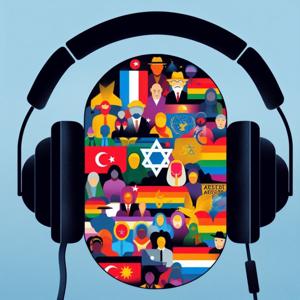
I monthly host 2-3 people of various sexually and socially oppressed minority groups in Turkey, ranging from queer individuals, Syrians, refugees, Jews, and Armenians to Kurdish people. I try to shed ... more
FAQs about Alienated Voices:How many episodes does Alienated Voices have?The podcast currently has 25 episodes available.
March 29, 2024Episode 15: A Venezuelan's struggle with Turkey's immigration systemAfter you read this, I strongly urge you to listen to the whole episode as it provides crucial observations and real-life experiences about the government’s immigration policies. Our guest was Anthony, a Venezuelan Spanish teacher currently residing in Turkey. His experiences are unmatchable. The amount of struggles and hardships he experienced as a foreigner is beyond words. We talked about the inherent discrimination and bias toward foreigners in Turkey’s immigration system and the tendency of government agencies to discriminate against people based on their race or place of origin. He says that if you are American or European, they ask for fewer documents; however, if you are Latin-American, they ask for documents that you can not even provide. He states that the process is worsened to make it unbearable and unsustainable for unprivileged foreigners to come, study, and live in Turkey. He also told me that his experiences as a tourist and as a permanent resident in Turkey completely differ. We also talked about the structural corruption within the education system, along with the incompetence of many government officers in the immigration department. I hope that everyone listens to this as it really enriches your perception of Turkey’s stance on immigration and its relationship with foreigners....more42minPlay
March 19, 2024Episode 14: The language barrier between the Kurds and TurksOur guest was Elvan, a senior from Istanbul. As a Kurdish girl in Turkey, she described her experiences in the social and educational environment. She says she can not comprehend the jokes about the Kurdish identity and admits to being ridiculed and humiliated by reckless students’ mockery. She explained how her relatives and family had difficulty receiving assistance from the government and NGOs during the earthquake of February 2023 because of the language barrier between the majority of the villagers in southeastern Turkey and the municipalities. In fact, she states that her mother was not allowed to speak Kurdish in the elementary school and was oppressed by the police. The structural discrimination and bias toward the Kurds are evident even in the mainstream media outlets that frame the Kurds with violence. Therefore, we sought to change this perspective by evincing the victimhood of the Kurdish community and how that victimhood can not be exploited or politicized by society in any way. We upheld that eradicating the concept of ethnicity as a whole should be society’s main priority to build a united and flourishing structure. ...more23minPlay
March 11, 2024Episode 13: Turkey vs. Iran: Women's RightsIn this podcast, we had Anahita as our guest, a teenage woman of Iranian-Turkish descent living in the USA. We discussed the differences in women's rights between Turkey and Iran. Anahita shared her experiences from her visits to Iran as a teenager, where she had to wear the hijab constantly, impacting her physically and emotionally. We explored the contrast between religion and faith, agreeing that faith is personal while religion tends to be more structured. We also touched on how religion can sometimes serve the interests of a select few. Our aim was to provoke thought among our listeners....more29minPlay
March 03, 2024Episode 12: ChatGPT and other AI art’s bias toward the KurdsOur guest was Safir, a Kurdish teenage girl living in Turkey. She is originally from Adıyaman, a southeastern city in Turkey, but she then moved to Istanbul to pursue education in one of the best high schools in Turkey. She talked about this transition in her life. She gave examples of some extent of discrimination and bias she and her family experienced as a result of a significant change in their residence and social community. She said that people would have that typical judgemental gaze whenever they learned that she is Kurdish. We discussed the potential bias and prejudice that AI platforms like ChatGPT can have when it comes to generating stereotypical characteristics of the minority. She believes that the system of feeding, training, processing, and acquiring value from AI represents the reality of differing perspectives and stereotypical norms. If you are curious to test the impartiality of AI, use either chatGPT or binge AI art to write this phrase: "Create a podcast cover art for a Kurdish man in Turkey."...more32minPlay
February 24, 2024Episode 11: Discussing immigration with a Bulgarian TurkOur guest is Serra, a Bulgarian Turk living in Turkey. Her mother, as a teenager, was deported from Bulgaria by the authorities just because she was Turkish and had to migrate to Turkey. However, what she experienced in Turkey was not so inclusive and encapsulating. She was not considered Turkish and was treated as a foreigner by her neighbors. Her mother also faced significant educational hardships in Turkey. At first, she could not speak Turkish fluently and was not used to the education system in Turkey. We discussed the issue of immigration and how it has become a decisive political issue in Turkey. We also talked about the impact of globalization on immigration and the development of countries. We upheld the idea that immigration is not a political or economic issue but an issue of compassion, benevolence, and humanity....more27minPlay
February 11, 2024Episode 10: Children of Anatolia: Armenians in TurkeyOur guest is Alek, an Armenian teenager living in Turkey. He thinks he does not belong to any particular country, neither Turkey nor Armenia. When he visited Armenia as an Armenian athlete living in Turkey, he was discriminated against and ostracized. He says Armenia does not consider Armenians living in Turkey as true Armenians, which makes him feel lost and “stuck between two walls.” Just because of his ethnicity, he is denied the right to exist in a country where he would be safe and included. Many of his friends have indirectly or directly ridiculed him for being Armenian and have repeatedly made jokes about his identity. To fit in, he has to bear with those jokes because he does not have any minority friends in his school. He took part in an episode of the podcast “Reign of Chains,” where he and one of his Kurdish friends talked about the structural bias and segregation perpetrated against Kurds and Armenians in Turkey’s education system. We also discussed how not just alienated and marginalized minorities but also many young and educated bright minds of Turkey have no choice but to leave the country for the safer and more inclusive West....more26minPlay
February 01, 2024Episode 9: The structural discrimination against the Kurds in TurkeyOur guest is Rojhat. He is from Van, a southeastern city of Turkey where most of the population is Kurdish. He talks about the structural bias and discrimination against the Kurdish people in Turkey. He gives several examples of incidents in which he was treated disrespectfully and disdainfully by many of his friends. His family has long had tensions and disagreements with the police. For instance, his grandmother was beaten up by the police when she was young just because she spoke Kurdish. He says that his name lets away his ethnicity before people even get to know him. His family purposefully did not teach him Kurdish because they did not want Rojhat to be mocked in school or social communities for his Kurdish accent....more52minPlay
January 14, 2024Episode 8: The prejudice against Syrians and ArabsOur guest is Ahmed, a Jordanian medical student studying in Turkey. Because he is of middle eastern descent and has a darker skin color, he was associated with being a Syrian refugee multiple times in his work environment. Patients verbally and physically harassed him for having an appearance that resembles that of a Syrian refugee, which he finds to be extremely offensive and disrespectful. We discussed the underlying reasons for the rampant discrimination and segregation toward Syrians and Arabs in Turkey. He has encountered several instances in which Turkish doctors brazenly assaulted pregnant Syrian women. He reiterated the unquestionable statement that doctors must carry out the duty of treating every patient the same way regardless of their gender, ethnicity, religion, or race....more27minPlay
January 01, 2024Episode 7: The struggles of a Kurdish teenager in TurkeyOur guest is Berjin, a high school student from Turkey. She is Kurdish. She has faced discrimination and racism many times in her school, social community, and neighborhood. She says that her typical Kurdish name shapes other people’s perceptions and immediately constructs an impression of her. In her environment, people associate being Kurdish with disgrace and lowness. Berjin exemplifies several incidents of discrimination against her and her family. She believes that respect is what Turkey lacks at the moment, and to establish peace, both Kurdish and Turkish people must set aside their ingrained prejudices toward each other. She calls for unity over a rift....more21minPlay
December 20, 2023Episode 6: The state of the Syriac community within TurkeyToday, my guest was Gül, a Syriac woman living in Turkey. She shared her experience growing up in Turkey as a Syriac. Having a double identity has undoubtedly shaped her upbringing. She mentioned that the Syriacs are generally welcomed positively within the Turkish community, mainly because they have not been as demanding and persistent in their minority rights as other significant groups like Armenians or Kurds. Therefore, mentioning Syriacs does not trigger any negative emotions in Turkish people. However, this assimilation into Turkish society has drawn the partial eradication of some of the cultural and historical treasures of the Syriac community. She believes that we need to enact greater measures to defend and preserve the Syriac culture and community by promoting more intra-marriages between Syriac people and seeking the support of UNESCO....more21minPlay
FAQs about Alienated Voices:How many episodes does Alienated Voices have?The podcast currently has 25 episodes available.