
Sign up to save your podcasts
Or

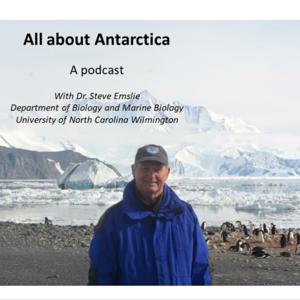


Marine mammals in Antarctica can be divided into two major groups: the pinnipeds and the cetaceans. Pinnipeds can be further divided into two groups, true seals in the family Phocidae and sea lions in the family Otariidae, while cetaceans are either toothed, or Odontocetes, or baleen whales, the Mysticetes. We have all four of these groups of marine mammals in Antarctica that are briefly described here. Four of the phocid seals are endemic to Antarctica and adapted to breed on sea ice. Cetaceans include four different types of orcas, or killer whales (actually more related to dolphins) that may represent up to three species. Minke and humpback whales are the most common of the baleen whales in Antarctica, feeding mainly on krill.
Although only about 2% of Antarctica is exposed as ice-free land, there are hundreds of lakes found there that vary from freshwater to saline. There are even hundreds more that are below the ice sheets that have been hidden and isolated there for millions of years. In this episode, I review the different types of lakes found in Antarctica and the life within them. These lakes include the most saline lake on earth, Don Juan Pond which is 18x saltier than the ocean, and the most isolated lake in the world, Lake Vostok, a large freshwater lake that is 4 km below the ice sheet on the polar plateau.
Fully terrestrial life in Antarctica is extremely limited with only two flowering plants and no vertebrates (no polar bears!). Penguins and seals come ashore to breed or molt, but these are marine vertebrates. In this episode, I explore the plant and animal life in terrestrial environments in Antarctica. While limited to ice-free regions, there are hundreds of species of mosses and lichens. Invertebrates are limited to nematodes, springtails, mites and tardigrades that live in soils of different types and structure, including gelisols, or soils so dry they do not freeze as with permafrost, but remain loose. Ornithogenic, or bird-formed soils also are associated with penguin colonies and are rich in nutrients for more plant growth.
In Part IV of this podcast, I described how sea ice forms and traps marine algae that can grow in the ice before it’s released back into the ocean when the ice melts. This process drives marine productivity in Antarctica starting with krill, a small crustacean that is a keystone species there. In this episode, the life cycle of krill is described and why it is so important in the marine food web. The rich diversity of benthic invertebrates also is presented and the current threat to this community by the invasion of king crabs from South America. A unique group of ice fish also is described and how these species evolved in isolation in Antarctica in waters at less than 5 degrees C. These fish can withstand freezing temperatures and some absorb oxygen from the water directly through their skin.
Although the giant ice sheets that cover Antarctica formed by 14 million years ago, constant movement and replacement of this ice means that none of it today is older than about 1 million years. Air bubbles trapped in this ice when it formed provide a record of our atmosphere in the past. In this episode, I describe how ice cores can retrieve important paleoclimatic data on earth's history over the past 800,000 years. This record reveals cycles of climate change and the role of greenhouse gases in determining ice ages and interglacial periods over millennia. The origin and importance of ozone in our atmosphere also is discussed and how the ozone 'hole' formed over Antarctica.
Sea ice is a major feature of Antarctica and has considerable influence on ocean currents and marine ecology. In this episode I describe how sea ice forms and traps marine algae that stimulates the marine food web when the ice melts. Thus, sea ice provides a direct link between the physical and biological worlds that is important for marine productivity all the way up the food chain to penguins, seals, and whales. Sea ice extent varies each year in Antarctica and also is an important driver for ocean currents and mixing. Polynyas are highly productive areas of open water surrounded by sea ice and are formed by katabatic winds or warm water upwelling. They determine the colony locations for most Adelie penguins as they are important foraging grounds for this species.
How did the Antarctic continent become covered with an ice sheet that is up to 4 km thick? In this episode I explain how this ice sheet developed and its influence on modern climate there. I also describe the origin of the giant floating ice shelves in Antarctica and how katabatic winds help make this continent the coldest, windiest and most remote place on earth. The isolation of Antarctica with the development of the Antarctic Circumpolar Current that circles the continent also is described.
In this episode, I describe the geologic origins of the Antarctic continent and how it changed and developed over millions of years to become the coldest and windiest place on earth that it is today. The concepts of plate tectonics and continental drift are presented and play a key role in shaping the continent and in understanding its rich fossil record that includes ancient forests, dinosaurs, and giant penguins.
In this episode I introduce myself and the research I've been conducting in Antarctica since 1991, then provide a brief introduction to Antarctica with facts and misconceptions about this frozen continent.
From the publisher's feed