
Sign up to save your podcasts
Or



A child's first lesson began with a rhyme: "In Adam's Fall / We sinned all." The same little book then pointed her to the answer: "Christ crucify'd / For Sinners dy'd."
In this episode of American Mission, "From the Primer to the College: How Early Americans Learned to Read," we follow the students. We start with the book in a child's hand, The New-England Primer, then the Massachusetts law of 1647 that required towns to provide a teacher, and then the colleges at the top of the ladder: Harvard, Yale, and Princeton. Along the way we meet John Adams, a farmer's son from Braintree, and Nathan Hale, a schoolmaster who laid down his life at twenty-one. We see how the ladder found its way into the Massachusetts Constitution of 1780 and the Northwest Ordinance of 1787, and we close with a reflection on what we hand down to our children.
The settlers crossed an ocean to worship God as they believed Scripture taught, and they wanted every child to read that Scripture for themselves. The Primer carried an invitation: "Come unto Christ, all ye that labour and are heavy laden, and he will give you Rest."
CHAPTERS
00:00 Cold open: "In Adam's Fall" and "That Old Deluder"
01:20 Intro
02:21 The air they breathed: the New-England Primer
09:20 "That old deluder": a teacher in every town
12:37 The top of the ladder: Harvard, Yale, Princeton
20:38 The ladder goes to war: sacrifice and courage
27:34 The ladder in the law: Adams and the constitutions
30:38 They planted for us
32:35 Reflection: what we tell our children
35:31 Outro
SELECTED SOURCES
- The New-England Primer (Boston: S. Kneeland and T. Green, 1727); The New-England Primer Improved (Boston: A. Ellison, 1773)
- John Cotton, Milk for Babes (London, 1646); the Westminster Shorter Catechism
- Massachusetts Bay General Court, orders of 1642 and 1647; The Book of the General Lawes and Libertyes (Cambridge, 1648)
- New Englands First Fruits (London, 1643); the Laws of Harvard College, 1642-46
- Connecticut General Court, "An Act for Liberty to Erect a Collegiate School" (1701); Yale's charter of 1745
- Charter of the College of New Jersey (1748); An Account of the College of New Jersey (1764)
- John Adams, Autobiography; "A Dissertation on the Canon and the Feudal Law" (Boston Gazette, 1765)
- Nathan Hale's letters of 1774 and 1775 and Benjamin Tallmadge's letter of July 4, 1775, as printed in George Dudley Seymour, Documentary Life of Nathan Hale (1941)
- Constitution of Massachusetts (1780), Chapter V, Section II; Northwest Ordinance (1787), Article 3
FREE TO READ ONLINE
- The New-England Primer Improved (Boston: A. Ellison, 1773), Library of Congress: https://www.loc.gov/item/22023945/
- The New-England Primer Enlarged (Boston, 1727), New York Public Library: https://digitalcollections.nypl.org/items/378a78c0-73ab-0130-1791-58d385a7b928
- New Englands First Fruits (London, 1643), Internet Archive: https://archive.org/details/newenglandsfirst00unse
- George Dudley Seymour, Documentary Life of Nathan Hale (1941), Internet Archive: https://archive.org/details/documentarylifeo00seym
VOICES
Narration and historical readings are AI-generated voices (Kokoro and ElevenLabs text-to-speech). Every quoted word comes from a documented primer, law, letter, charter or record, and where a story has only been handed down, we say so.
Music: "Chester" (William Billings), U.S. Marine Band and Opus33, public domain; "Old Hundredth" (Genevan Psalter, 1551) and the reflection piano played on the FreePats Upright Piano KW sound bank (CC0); psalm, lullaby and string music synthesized for the show.
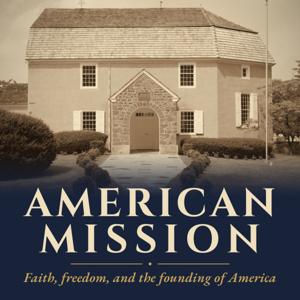
Cover photo: Augustus Lutheran Church, Trappe, Pa., HABS (Jack E. Boucher, 1994), Library of Congress.
Questions or corrections: [email protected]
American Mission: Faith, freedom, and the founding of America.
A sermon was preached once. A hymn was sung again and again: in the meetinghouse, at the singing school, around the table at home.
In this episode of American Mission, "Songs of a Free People: The Hymn Writers Who Carried the Founding Faith," we follow the singers of the founding era, from the Pilgrims' psalter and the Bay Psalm Book to Isaac Watts, William Billings and his anthem "Chester," and Richard Allen and Phillis Wheatley. Most of what early Americans sang was simply praise to Almighty God. But some of their songs taught a free people the source of their liberty, and even the boldest of them gave the victory back to God.
CHAPTERS
00:00 Cold open: "Chester" on the road
00:55 Intro
02:11 "The sweetest melody"
06:09 Isaac Watts in America
11:47 Billings and "Chester"
18:26 "Translated to America"
24:46 Richard Allen and Phillis Wheatley
28:39 So, why did they sing?
31:29 Reflection
34:11 Outro
SELECTED SOURCES
- Edward Winslow, Hypocrisie Unmasked (London, 1646)
- Henry Ainsworth, The Book of Psalmes: Englished both in Prose and Metre (Amsterdam, 1612)
- The Whole Booke of Psalmes (the Bay Psalm Book, Cambridge, 1640)
- Jose (often given as Joseph) Glover, as he signed his 1638 will.
- Isaac Watts, The Psalms of David Imitated; letters of Samuel Davies
- William Billings, The Singing Master's Assistant (Boston, 1778)
- Elihu Mycall's 1781 and Joel Barlow's 1785 American editions of Watts
- Richard Allen's hymnal and writings; poems of Phillis Wheatley
FREE TO READ ONLINE
- The Bay Psalm Book (1640), Library of Congress: https://www.loc.gov/item/71002405/
- Isaac Watts, The Psalms of David Imitated (London, 1719): https://archive.org/details/staaaimi00watt
- Elihu Mycall's American edition of Watts (Newburyport, 1781): https://archive.org/details/psalmappliedchriswatt
- Joel Barlow's American edition of Watts (Hartford, 1785): https://archive.org/details/doctorwatts00watt
- The Complete Works of William Billings, Vol. II (The Singing Master's Assistant, 1778), Colonial Society of Massachusetts: https://www.colonialsociety.org/publications/3333/complete-works-william-billings-volume-ii
- Richard Allen's autobiography, Documenting the American South (UNC): https://docsouth.unc.edu/neh/allen/allen.html
VOICES
Narration and historical readings are AI-generated voices (Kokoro and ElevenLabs text-to-speech). Every quoted word comes from a documented hymn, letter or record, and where a story has only been handed down, we say so.
Music: "Chester" (William Billings), U.S. Marine Band and Opus33, public domain; psalm melodies synthesized for the show.
Cover photo: Augustus Lutheran Church, Trappe, Pa., HABS (Jack E. Boucher, 1994), Library of Congress.
Questions or corrections: [email protected]
American Mission: Faith, freedom, and the founding of America.
Four men from four different churches, and one revolution that pulled every one of them in. John Witherspoon, a Presbyterian college president, signed the Declaration of Independence. John Peter Muhlenberg, a Shenandoah Valley pastor, became a Continental Army general. Isaac Backus, a Baptist, fought for liberty of conscience and sat in the convention that ratified the Constitution. Francis Asbury, a Methodist preacher sent by John Wesley, stayed in America through the war and helped build a new American church.
In this first episode of American Mission, "Out of the Pulpit: Four Pastors and the Founding," we tell their stories side by side, in their own words, along with George Washington, Elizabeth Backus and the army surgeon James Thacher. Presbyterian, Lutheran, Baptist and Methodist: four churches, side by side. We close with a reflection and an invitation to open the same Bible they opened.
CHAPTERS
00:00 Cold open: four pastors
02:42 Welcome: out of the pulpit
04:07 John Witherspoon: the signer
08:02 Peter Muhlenberg: the parson-general
14:52 Isaac Backus: conscience
20:50 Francis Asbury: the shepherd who stayed
27:10 What faithfulness required (reflection)
29:34 Outro and further reading
SELECTED SOURCES
- John Witherspoon, The Dominion of Providence over the Passions of Men (1776)
- James Thacher, Military Journal (1823); Henry A. Muhlenberg's 1849 biography of Peter Muhlenberg
- Isaac Backus, An Appeal to the Public for Religious Liberty (1773), his diary, and his speech in the Massachusetts ratifying convention (1788)
- Francis Asbury, Journal
- George Washington to the Bishops of the Methodist Episcopal Church, New York, [29 May] 1789. The Papers of George Washington, Presidential Series, vol. 2, ed. Dorothy Twohig (1987), pp. 411–412; the bishops' address is in note 1. Founders Online: https://founders.archives.gov/documents/Washington/05-02-02-0297.
VOICES
Narration and historical readings are AI-generated voices (Kokoro text-to-speech; George Washington by ElevenLabs). Every quoted word comes from a documented sermon, letter, journal or record, and where a story has only been handed down, we say so. It's their story, told from the journals, letters and records they left behind.
Music: "Chester" (William Billings), U.S. Marine Band and Opus33, public domain; J. S. Bach, performed by Kimiko Ishizaka (CC0) and the U.S. Air Force Strings (public domain).
Cover photo: Augustus Lutheran Church, Trappe, Pa., HABS (Jack E. Boucher, 1994), Library of Congress.
Questions or corrections: [email protected]
From the publisher's feed