
Sign up to save your podcasts
Or

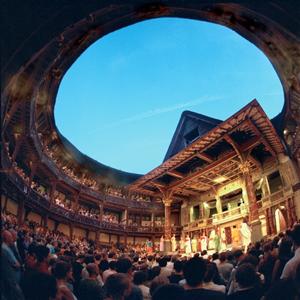


Mainly the Merchant of Venice, with discussion of its Biblical source: Jacob as trickster; Laban as trickster; Shylock as trickster; Portia as trickster; much about Jacob, Esau, Isaac, and the man Jacob wrestles with; the meaning of the turquois ring and the pound of flesh.
NB: this coming week is vacation so no updates till the week of Feb 25.
A last class on Blake's Book of Thel, with much attention given to the Clod of Clay's line: "I ponder and I cannot ponder."
NB: February vacation next week, so no new episodes till the week after.
A class mainly about interest, usury, compounding of interest vs. Malthusian limits to biological growth -- the interesting fact that if Judas had invested his 40 pieces of silver at prevailing rates of compound interest, he'd own an amount of silver more greater than the entire volume of the earth (so that Christ's redemption, compounded over two millennia, would indeed more than repurchase the entire world).
With a quotation from Blake's description of his (lost) painting "A Vision of the Last Judgment":
(February 11, actually, but I think if I change the title I may change the link.) We start with Earle Stanley Gardner on writing by the word -- then on to Kawabata and the spookiness of the story. Then The Merchant of Venice, and the significance of the rings and their value. The reason Shylock is a stranger, and that all the Jews in Venice are: because Deuteronomy permits lending at interest to a stranger, so the Christians wanted to be strangers to the Jews so made the Jews strangers to them. The stranger in Simmel mentioned: "The wanderer [the merchant] is he who comes today and goes tomorrow; the stranger is he who comes today and stays tomorrow." At least I am sure it may be so in Venice.
In particular "The Garden of Love" and "London," "To the Evening Star," and a touch of The Book of Thel
Buying and selling based on predictions of what others will buy and sell: Keynesian Beauty Contests (cf. "Family Feud") and what they have to do with narrative interaction. An in class demonstration in which a student wins a dollar! Some discussion of other manipulative games.
NB that previous episode was mistitled as Monday's: It was actually Wednesday's....
Functions of money. Ripping a bill in half. A little more on the etymological background of interest as breeding. Usura Canto in Pound, with youtube audio of him reading it. Kinds of wealth in The Merchant of Venice, following James Buchan.
Some discussion of "There is no Natural Religion" and then some Songs of Experience: "The Chimney Sweeper," the two versions of "Holy Thursday," "The Clod and the Pebble," and -- a Song of Innocence -- "The Little Black Boy."
Some discussion of the Super Bowl, and of game theory at the end of the game. Then a return to Aristotle on the three functions of money, and on interest -- and the Greek word's etymology as breeding or procreation (from the word τόκος , ὁ, [tokos] = childbirth from (τίκτω [titko]) meaning to give birth, whence also τεχνη, craft, i.e. the art of producing objects, which word Aristotle uses elsewhere in discussing the unmoved mover).
From the publisher's feed