amimetobios

amimetobios

By AmimetobiosEducationCourses
Download on the App Store

amimetobios episodes

  • 21. Second and last class on Jane Eyre
    Jane Eyre and the way narrative works.  Truth in fiction. Breaking the fourth wall in so many different ways in this paragraph, the first of chapter XI:

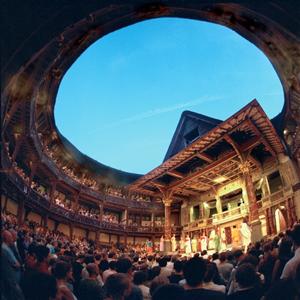
    A new chapter in a novel is something like a new scene in a play; and when I draw up the curtain this time, reader, you must fancy you see a room in the George Inn at Millcote, with such large figured papering on the walls as inn rooms have; such a carpet, such furniture, such ornaments on the mantelpiece, such prints, including a portrait of George the Third, and another of the Prince of Wales, and a representation of the death of Wolfe.  All this is visible to you by the light of an oil lamp hanging from the ceiling, and by that of an excellent fire, near which I sit in my cloak and bonnet; my muff and umbrella lie on the table, and I am warming away the numbness and chill contracted by sixteen hours’ exposure to the rawness of an October day: I left Lowton at four o’clock a.m., and the Millcote town clock is now just striking eight.

     Why fictional narrators always tell the truth.  What sympathy or agreement truthful (if frequently unreliable) narrators expect of their audiences.  How this feeds into the psychological acuity of Brontë's depiction of Jane.  Jane like Cordelia again: the false sense, central to first person narrative that "tout comprendre est tout pardonner."  Why Jane Eyre ends with the fate of St. John Rivers, far away and disappearing.  (I think this is the best class so far.)

    51 min
  • 21. Second and last class on Jane Eyre
    Jane Eyre and the way narrative works.  Truth in fiction. Breaking the fourth wall in so many different ways in this paragraph, the first of chapter XI:
    A new chapter in a novel is something like a new scene in a play; and when I draw up the curtain this time, reader, you must fancy you see a room in the George Inn at Millcote, with such large figured papering on the walls as inn rooms have; such a carpet, such furniture, such ornaments on the mantelpiece, such prints, including a portrait of George the Third, and another of the Prince of Wales, and a representation of the death of Wolfe.  All this is visible to you by the light of an oil lamp hanging from the ceiling, and by that of an excellent fire, near which I sit in my cloak and bonnet; my muff and umbrella lie on the table, and I am warming away the numbness and chill contracted by sixteen hours’ exposure to the rawness of an October day: I left Lowton at four o’clock a.m., and the Millcote town clock is now just striking eight.
     Why fictional narrators always tell the truth.  What sympathy or agreement truthful (if frequently unreliable) narrators expect of their audiences.  How this feeds into the psychological acuity of Brontë's depiction of Jane.  Jane like Cordelia again: the false sense, central to first person narrative that "tout comprendre est tout pardonner."  Why Jane Eyre ends with the fate of St. John Rivers, far away and disappearing.  (I think this is the best class so far.)
    51 min
  • 20. First of two classes on Jane Eyre (English 1a)
    The first of two classes on Jane Eyre.  Relation of Rochester (and of Heathcliff) to Milton's Satan.  Relation of Jane to Cordelia: how she's not like Cordelia.  Transparency and first person narration (to be picked up in next class).  Jane Eyre as feminist novel.
    49 min
  • 19. Shelley and Wordsworth in The Triumph of Life. Mont Blanc and the Sublime
    We look at "Rousseau" (= Wordsworth) in The Triumph of Life describing the disappearance of the shape all light, fading like Venus into the light of common day.  Then on to Mont Blanc as a poem about the struggle between the mind and the world as to which is to be master, and the jiu jitsu by which the mind wins by letting the world (= Mont Blanc) utterly overwhelm it.  Relation to the sublime.
    52 min
  • Episode 17 of Intro to Lit -- Wordsworth, Ecclesiastes, Song of Songs, Lear: How to like literature
    A bit more on "A Slumber did my spirit seal."  An urgent conjuration that they should like the Intimations Ode.  Followed by a bit of literary theory - the theory of axiology or value.  Dworkin's view of literary interpretation: interpret so as to make a literary work the best work it can possibly be.  Derived from his view of the Constitution.  Some strictly amateur talk about the Constitution and the right to privacy as found in Griswold vs. Connecticut.  The ordering of two works attributed to Solomon: Song of Songs and Ecclesiastes.  Which ordering do we prefer?  The end of Lear; do we prefer he die happy or in despair, and why?  (Most people who wrote about the issue wanted to claim he died happy.)  Do we prefer "trees" to be the hopeful alternative to "rocks and stones" or the grim failure even of something living to be more than rocks and stones are in earth's diurnal course.  Intimations Ode itself Monday?
    54 min

About amimetobios

From the publisher's feed

New for 2023: Victorian Poetry