
Sign up to save your podcasts
Or

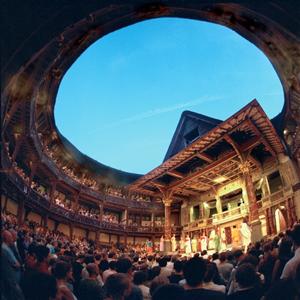


Cleopatra's character. Antony and Cleopatra as, essentially, the one life-affirming tragedy: the tragedy that does what comedies do. "Strong as death is love." Versions of the verb "to bear." Jokes at Mardian's expense. Apostrophes to Antony. How they are together in separation. What I didn't quite say is that Rome and Alexandria are established as social spaces, while Antony is between them and so gone during the period of his transition from one to the other,. More uses of the word where: Where is Antony? Where he is asking, Where is Cleopatra?
We continue our close reading, especially of the clash of mood or tone between characters in scenes 2 and 3, in the way Shakespeare is representing people trying to set the dominant mood of the scene: Antony and Enobarbus, and then Antony and Cleopatra. Some attention to the extremely subtle foreshadowing and creation of perspective in those scenes. Similarities and differences between Antony's relation to Enobarbus and his relation to Cleopatra.
Since we're now online, and since it is Antony and Cleopatra, we're going to go through the play scene by scene. Here we looked at the clash of tonalities between the soothsayer and Cleopatra's women, in 2.1, and also the way Antony treats the messengers from Rome.
First class on Zoom. I recorded the class as though in class but I was sitting at my computer. That means there's more me and less them, alas.
Anyhow: we talked about being Mark Antony (cf. Being John Malkovich) and the odd phrase "an Antony." Comparing that to the king's two bodies. And we talked about time frames again: how Octavian is always the age he is at the beginning, and Antony and Cleopatra always the ages they are at the end.
After a 15 minute discussion of Covid-19 (not recorded here) we talk about the actual ages of various characters, and the ages that Shakespeare wanted them to be: not only in A & C but in Richard II, 1 Henry IV and the romances: the idea that you can go from the start of adulthood (Octavius) to the maturity that makes you fit for tragedy and old enough to have lived long enough (Macbeth, Antony and Cleopatra) within 16-18 years or so. Shakespeare's highly skillful stage setting in scene 1. Too all over the place, but I am hoping that if classes aren't canceled as they're being at many of our sister institutions, we'll settle down in to focused discussion.
We finally really begin Antony and Cleopatra, discussing Plutarch's interest in character, and Shakespeare's, and what makes a tragic character interesting since we know what the plot will be. Aristotle on pity and terror again: usually the protagonist or main is someone innocent or at worst someone like ourselves: not so in Macbeth. After which we start analyzing the opening scene, with comparisons to Lear and to Hamlet as well (on the quantification of love). Many corny jokes.
A class where we finally talk about the whole soliloquy, with which I am obsessed, in which Macbeth calls or Seyton and considers how his way of life is fallen into the sere, the yellow leaf." We get there by means of Sonnet 12, but that means talking about the sonnets: first the nature of sonnet sequences from Petrarch through Wyatt to Sidney and Shakespeare, then of course (via Wyatt) about Tottel's miscellany, and then a discussion of Sonnet 73 and its echoes of Macbeth's soliloquy, and ultimately about the nature of interruption, here as well as in Lear:
Prithee, go in thyself: seek thine own ease:
This tempest will not give me leave to ponder
On things would hurt me more. But I'll go in.
To the Fool
In, boy; go first. You houseless poverty,--
Nay, get thee in. I'll pray, and then I'll sleep.
Fool goes in
Poor naked wretches, whereso'er you are,
That bide the pelting of this pitiless storm,
How shall your houseless heads and unfed sides,
Your loop'd and window'd raggedness, defend you
From seasons such as these?
Macbeth interrupts himself to call for his last loyal servant; Lear to dismiss him.
A class which turned out to be a lot on verse drama, and how and why it works, partly based on Evelyn Tribble's ideas about "fluent forgetting" (which I mentioned before) in her book Cognition in the Globe. Lots of stuff on proto-Indo-European and on how poetic lines work: "loose onsets, strict endings." How Shakespeare makes us focus on particular words but also justifies that focus. Hint: rhyme. We finally get to talking about 5.3, and to Shakespeare's bad Dad pun on Macbeth's refusal to "shake with fear." Antony and Cleopatra officially starts next week, but we'll have one more day on Act V of Macbeth.
A class which first is about Protestantism and Catholicism in Shakespeare, and the idea in Protestantism that theological issues take on a psychological air. That is, they are interiorized. Then a digressive account of time in Shakespeare (and many others, including Ashbery and Kafka), with the idea being that as you get older -- as the Macbeths get older -- time is interiorized.
A class on doubling, literal and metaphorical, e.g. Lady Macbeth and Lady Macduff, Hecate, etc. The meaning of doubling. The conglomeration and dissolution of social groups. Simmel (of course!) on spatial relations as both the condition and the symbol of human relations. The quickness of friends (in anticipation of Antony and Cleopatra). Miscellaneous digressions, not all my fault.
From the publisher's feed