
Sign up to save your podcasts
Or

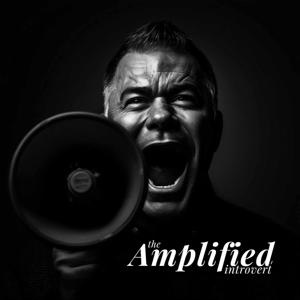


For decades, we’ve been sold a lie about leadership.
We’ve been told that the best leaders are loud. Bold. Commanding. That the person with the strongest voice automatically deserves the biggest office. But history tells a different story. Some of the most powerful leaders alive today are introverts - people who were doubted, dismissed, and underestimated.
In this episode, we dive deep into the essential wellspring of introverted strength: solitude. Moving beyond last week's exploration of workplace strategies, this episode focuses on understanding, protecting, and cultivating the alone time that fuels our authentic power.
In episode 4, Robert Rupp focuses on thriving in the workplace as an introvert, addressing how the professional landscape often feels designed for extroverts with its open offices, constant chatter, and rapid-fire brainstorming sessions. Drawing from his 25 years in marketing and eight years in Houston's corporate environment, Rupp explains that early in his career he felt pressure to perform as an extrovert, which led to exhaustion and inauthenticity.
Rupp emphasizes that introversion isn't a weakness but a powerful asset rooted in behavioral psychology—introverted brains are wired for deeper processing, leading to more thoughtful and innovative contributions. He notes that data shows introverted leaders can be just as effective as extroverted ones, especially when leading proactive teams, because they listen more and empower others frequently.
He outlines five key strategies for workplace success: thorough preparation before meetings by reviewing agendas and jotting down key points to enable confident contributions, choosing communication channels wisely by leveraging written communication skills through structured emails and detailed reports, creating a focus sanctuary by advocating for quiet workspaces or using noise-canceling headphones with protected deep work blocks, networking with intention by focusing on building a few deep connections rather than working the whole room through one-on-one coffee chats, and amplifying strengths by highlighting natural abilities like keen observation and thoughtful problem-solving.
Rupp concludes that workplace success for introverts isn't about changing who you are but understanding your unique operating system and strategically deploying your strengths. He encourages listeners to share their own experiences of successfully leveraging introverted strengths in their professional lives, potentially featuring their stories in future episodes.
In episode 3, titled "Ditch The Small Talk," host Robert Rupp addresses one of the biggest challenges introverts face: navigating superficial conversations that feel draining and insincere. Drawing from his 25 years in marketing, Rupp explains that introverts are "wired for depth, not drivel," craving meaningful discussions rather than surface-level chatter about weather or sports that leaves them mentally exhausted.
Rupp discovered that the key to transforming shallow interactions lies in harnessing curiosity—the same intense curiosity introverts have for their own ideas, but directed outward toward others. He emphasizes that genuine interest in people naturally creates reciprocal interest, allowing introverts to leverage their natural strengths rather than forcing themselves to be extroverted.
He outlines five practical techniques: asking "why" questions that invite thoughtful responses (like "what do you find most challenging about your work?" instead of "do you like your job?"), identifying shared interests through deeper questioning, practicing active listening as an introvert superpower by focusing on understanding rather than replying, embracing comfortable silences that allow for more thoughtful responses, and using environmental observations as conversation openers instead of generic greetings.
Rupp stresses that the goal isn't to impress people but to connect with them, transforming his own journey from a shy corner-dwelling observer to someone capable of initiating million-dollar sales deals. He encourages listeners to share their own experiences with turning "small talk into real talk" in the comments, emphasizing that meaningful relationships can be built while still honoring introverted energy.
In episode 2, host Robert Rupp focuses on setting healthy boundaries to protect energy as an introvert in demanding professional environments. Drawing from his journey from building websites as a teenager to serving in the Marine Corps and eventually becoming a marketing leader in Houston's corporate world, Rupp emphasizes that introverted energy is a finite resource that requires strategic management—unlike extroverts who gain energy from social interaction, introverts expend it and need solitude to recharge.
He outlines five key strategies developed over 30 years: scheduling non-negotiable solitude blocks (like "deep work recharge" time on calendars), learning to say no gracefully to energy-draining requests, communicating needs clearly rather than expecting others to read your mind, creating physical and digital buffers (using noise-canceling headphones, turning off non-essential notifications, avoiding screens before bed), and managing output through batching work like content creation using tools like Buffer or Hootsuite.
Rupp stresses this is a gradual journey requiring daily 1% improvements, encouraging listeners to choose one boundary to implement this week and share their experiences in the subscriber chat at amplifiedintrovert.com to potentially be featured in future episodes.
In this inaugural 10-minute episode, host Robert Rupp draws on his 33 years of marketing experience to challenge introverts to break free from their "chains of quietude."
Rupp shares his personal transformation from an abused, poor kid who started building websites at age 13 (creating one of the first 2,376 websites in 1996) to achieving financial success through strategic self-marketing over seven years—going from extreme poverty (using Coinstar for cat food) to owning a Corvette and home in Texas.
He emphasizes that introverts comprise 47%+ of the population and have built much of our modern world, including the internet, yet still allow themselves to be silenced in an extrovert-dominated society.
Rupp calls for introverts to amplify their unique voices through personal branding and authentic self-expression, inviting listeners to join his community at amplifiedintrovert.com for weekly content, Substack rewards, and subscriber-only materials that focus on gaining clarity about strengths and building connected lives that honor rather than change who introverts naturally are.
Hey, quiet thinkers.
Welcome to episode one of the Amplified Introvert podcast. Super excited to have you here. My name is Robert Rupp and I'm gonna be your host.
I have about 33 years of marketing experience that I'm going to use to help you break your chains of quietude. All right? And we're gonna do that each week with content through Substack, through the podcast and other places.
So to get started, I invite you to go to amplified introvert.com and sign up for that Substack 'cause what this is gonna do, it's gonna give you some VIP rewards, all right? You want those rewards, everyone wants rewards and free stuff.
So go to amplifiedintrovert.com to get yours.
I don't know about you, but it is tough to be an introvert, right? Constantly living each day in an extroverted world… constantly almost being bullied by people to speak up, to go out. And for those of us that don't like to drink, I know you know what I mean when I say it's very hard to not be a drinker in social groups.
We're living in a very, I don't know, unidirectional maybe type of world, right? It's just not meant for us. But there are ways you can get past it. Hell, I did it. I went from being a poor kid, grew up really poor in an abusive household. It was just a lot of traumas and stuff there that went on.
That's what made me introverted, was just the abuse and being bullied at a young age that made me an introverted person. In my teenage years. I started playing with computers, you know, I was, I was a quiet kid, I was a nerd. So that's when I started learning how to build websites.
I was 13 years old. It was 1996 at the time, and I built one of the first 2,376 damn websites in the world. Like, can you believe that shit, a 13-year-old kid, right?
Who the hell was I?
It was 1996 and no one was really building websites, so I didn't know what I was doing at the time and I didn't know the magnitude of what I had built.
But what I found out was how exciting it was to be able to sit behind a keyboard and a computer screen and to. Just have my voice heard, or even to have my words read. Right. At the time, you couldn't really do multimedia like we can do today. So at the time it was just make graphics with Photoshop version one.
Right, which was what I was using. It was totally, oh, and I got it. It was rated because I was a kid, man. I didn't know how to get software, but I knew how to use the online bulletin boards. Right. Please, if you're listening to this, come on, don't, please don't sue me. It's been like 30 fucking years. Please don't crash my parade now, but.
That's what got my career started. And I used the Hotdog Pro web editor, uh, and it was basically like, you know, notepad. So I put those two things together, built a real crappy version of, uh, my first website, but it was a Marilyn Manson fan site. I like listening to Marilyn Manson music, but that's when I learned right.
And honestly, I think I was one of the first content creators in the world. I know I was one of the first 2,300 as far as websites go, but of those 2,300, I'm sure a lot were just like educational sites, right? Because that's kind of what the internet was made for, was a communication tool for educational reasons.
But where was I going with this? You know, I don't know. Yeah. Anyway, there's the A DHD kicking in too, so, hey, how many of you actually have that too? Do you have attention deficit with like overthinking and some other stuff going on? I wonder. I think it's quite common, honestly. The more research I do, the more I find that why I thought I was special.
And all those years went by and I was an introvert and I didn't talk.
I didn't really reach out. I didn't really say a lot because I thought I was special, but not special in a good way. I thought that I was different, but now over the past year, well, a year and a half that I've been doing work with introverts and talking to a few hundred, I realize I'm not special.
I'm not special at all, and neither are you. Yeah, you are special. But introverts we're like more than 47% of the population. Did you know that?
Did you know that? So more than half of the world probably, because I'm sure the research, right, it says 47%, but I'm sure it's even more than that because there's one that they're accounted for and people that don't even answer the surveys.
But we have to be more than half the population. So I'm not gonna let us sit down anymore and be quiet. Guys, ladies, gentlemen, cats, trees, whoever, you, whatever, whoever's listening, we gotta amplify.
We gotta get together. First of all, we have to get together in the comfort of our own homes, right? I mean, let's be real.
We're introverts, baby, but we have a lot to say. So if you're with me and you want to do this thing each week, and you wanna start to use the marketing that I've used for the past 30 years now, I took myself from nothing, right? From absolute poverty. I couldn't afford shit. I mean, no joke. Gosh, I remember a time when I had to go to the fucking coin star to get cat food for my cat, and that's what really changed in life that day that I had to feed my cat.
I went to the fucking coin star to get him food. I didn't eat, I fed the cat, but that's when I realized, what the fuck am I doing? Holy shit. So then I made a, a real promise to myself that I was just gonna, you know what? I was just gonna stop being. So quiet. I was gonna market myself. I was gonna start an agency.
I was gonna work with people. I was gonna do good in the world. And seven years later, I went from practically having no car at all. Well, it was like $300 car, a piece, shit car. But I went from having a $300 piece of shit car to a Corvette. I went from living in a 400 square foot apartment with bullet holes in my kitchen.
To owning my own fucking home here in Texas, and I didn't do that by being quiet. I sure as hell didn't do that by sitting down not saying anything. I sure as hell didn't do that by letting others know what I could do, by selling myself, by just going out there and putting myself on the line because I had nothing to lose.
So if you have nothing to lose. And you're ready to go out there with me.
Each week I'm gonna teach you how to do some personal branding.
We're gonna talk about psychology. All right, well, we're gonna talk about how we can actually just be ourselves, right? How we can amplify our unique voice, gain some damn clarity on what we're good at, and build a connected life that authentically honors right who we are, not change us.
Honors who we are because we're people too. And while the world might not be built for us, damnit, we live here. We built half of the world and the internet, what I'm talking to you on right now, oh, you bet your ass introverts built the internet. All right. And about every other damn thing that we enjoy as a society.
So why are you so scared? Why are you so quiet? You have more to offer than you think you do. So tune in next week or tomorrow, or whenever I record the next damn episode. I don't when it's gonna be, but tune in. All right. And while you're at it, go to amplified introvert.com. Sign up, reach out, join the community, get in on the chat because I'm gonna put some special subscriber only things in there on the Substack.
Right. So this podcast is a companion to the Substack and the Substack a companion to this book I'm writing, but will probably never publish. 'cause that's what I love to do. I love to start stuff and never finish it.
But I tell you what. I got this first damn podcast episode recorded. Yeah. I've been procrastinating on this for weeks and it's done, it's recorded.
And you know what? If I did it, if this poor kid from Williamsport, Pennsylvania, if this poor, abused kid with PTSD and depression and everything else can do what I've done, what is your excuse? I'd love to know. Hey y'all. That's it. We're at time.
10 minutes. Nine and a half. I'm gonna get off here.
Give you a few seconds back. Tune in next time.
Seriously, thank you for listening. It's been a pleasure to serve you today, and I can't wait to talk to you again soon.
Bye-bye now.
From the publisher's feed