
Sign up to save your podcasts
Or

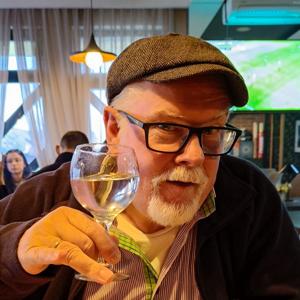


Weaving Fantasies from Cultural Threads - with Mile Mićić.
On this episode of the podcast I meet Mile Mićić originally from Mrkonjić Grad in Bosnia and Herzegovina, now living in Andalusia, Spain.
He has created an animation project called “Bosana”, a fantasy world inspired by Bosnia.
I find out about his inspirations, cultural heritage, struggles in creation, and the value of financial support through platforms like Patreon.
Mile shares his hopes of connecting people through storytelling and invites audiences to join the Bosana community.
Please also do share this episode and maybe leave a 5 start review on the podcast platform you listened to this on.
Stay tuned for more exciting stories and adventures from the Englishman in the Balkans podcast!
Thank you for being a part of our podcasting community, and we look forward to bringing you more exciting content in the future.
Don't forget to like, subscribe, and share this podcast.
This episode of the podcast features an in-depth conversation with Arianna, a vibrant Latin woman who has made Banja Luka, Bosnia and Herzegovina, her home.
Arianna shares her experiences of moving for love, transitioning from a glamorous life aboard cruise ships to setting roots in a new country.
With discussions ranging from cultural shocks, embracing new traditions, to overcoming personal challenges, Arianna's tale is a heartwarming testament to adaptability, resilience, and finding one's place in the world.
The conversation also touches on her innovative project, "Get Chatty", aimed at helping people improve their English through conversational practice.
Find Out About “Get Chatty” ⬇️
Watch the Podcast ⬇️
Please also do share this episode and maybe leave a 5 start review on the podcast platform you listened to this on.
Stay tuned for more exciting stories and adventures from the Englishman in the Balkans podcast!
Thank you for being a part of our podcasting community, and we look forward to bringing you more exciting content in the future.
Don't forget to like, subscribe, and share this podcast.
Stay tuned for more stories and adventures from the Englishman in the Balkans podcast!
Thank you for being a part of our podcasting community, and we look forward to bringing you more exciting content in the future.
And Finally
Don’t forget that you can read back editions of the newsletter, listen to previous podcasts (we have quite an archive now), or catch other content, all this is available on the web interface, just like a regular blog.
Coffee and Rakija is a reader-supported publication. To become a Supporter consider becoming a paid subscriber.
Oh, and please share the newsletter with friends, relatives and colleagues using the button below.
Tamara and I appreciate your faithful readership, your comments, and your generosity! Until our next post.
THANKS SO MUCH ❤️
To hear more, visit www.anenglishmaninthebalkans.com
In this podcast I talk to Kathi and Numa Numić, who discuss the development and plans for their travel agency, Ćejf, which focuses on mindful and sustainable travel in Bosnia and Herzegovina. We look back on their successful first year, highlighting challenges, achievements, and the desire to expand their offerings beyond the well-known tourist spots.
To hear more, visit www.anenglishmaninthebalkans.com
In this podcast I talk to my Argentinian friend, Denise.We chat about our experiences as expats and immigrants living in Bosnia and Herzegovina. Denise shares her experiences with the language barrier, the quality of life, and the challenges and joys of raising a child in a foreign land.
She also delves into cultural differences, food, work, and the impact of social media in shaping perceptions about the Balkans.
To hear more, visit www.anenglishmaninthebalkans.com
In This Episode.
In this episode of the podcast I talk to Ramajana Mabita, originally from Bosnia and Herzegovina but presently living in Harare in Zimbabwe.
I find out what, if any, similarities there are between the two countries, Ramajana’s culture shocks, her love of Zimbabwean fashion and also hear one of her favourite music tracks from this African nation, plus much more.
🏴 An Englishman in the Balkans 🇧🇦 is a reader-supported publication. To receive new posts and support my work, consider becoming a paid subscriber.
Get full access to 🏴 An Englishman in the Balkans 🇧🇦 at www.anenglishmaninthebalkans.com/subscribe
To hear more, visit www.anenglishmaninthebalkans.com
Hello, I’m David and I write about my life and adventures in Bosnia and Herzegovina. Subscribe for free to enjoy occasional posts, podcasts and vlogs from this much misunderstood heart shaped country in the western Balkans.
The National Anthem of the Socialist Federated Republic of Yugoslavia - “Hej Slaveni”
The Olympic Games in Sarajevo in February 1984, brought together 1,272 athletes from 49 countries as well as the most eminent figures from the world's sporting, cultural, and socio-political life in one place.
The 14th Winter Olympic Games were held in Sarajevo from February 8-19, 1984, and marked a significant milestone in the history of the city and the entire country of what was then The Socialist Federated Republic of Yugoslavia (SFRY).
What started as a dream eventually became a reality through determination, hard work, and unwavering enthusiasm.The story of the Sarajevo Winter Olympics began some 20 years before in the late 1960s and early 1970s, when discussions about the development of skiing and winter tourism in the Socialist Republic of Bosnia and Herzegovina (one of the 6 republics that made up Yugoslavia) took place. It was during these conversations that the potential of Sarajevo to host the Games was recognised.
However, the road to candidacy was not going to be without its challenges.A significant turning point came in April 1971 when the first analyses of the social justification and possibilities for organising the Winter Olympic Games in Sarajevo were completed. Despite not being officially presented to the public at that time, it laid the foundation for creating an atmosphere of trust and motivation to move forward with the ambitious goal of hosting the Games.
The journey to secure the Games continued with the formation of a Preparatory Committee, committed to showcasing the potential of Sarajevo as a host. With the support and consent of various authorities, including the Federal Executive Council, the candidacy was officially announced to the public on October 14, 1977.The road to securing the Winter Olympics for Sarajevo was not easy. Several other countries, including France, Japan, Sweden, and Czechoslovakia, also vied for the opportunity to host the "White Olympiad." Many believed that Sarajevo and Yugoslavia had little chance of success. However, the creators of the Olympic project remained undeterred. Their belief in their vision led them to continue working tirelessly towards their goal.
Finally, on January 3, 1978, the candidacy of Sarajevo arrived at the International Olympic Committee office in Lausanne. Months of inspections and evaluations followed, with international experts assessing the city's capabilities and evaluating the promises made. The choice of Sarajevo to host the XIV Olympic Games was announced on May 18th the following year, during the 80th session of the International Olympic Committee (IOC) in Athens. The city's opponents were the Japanese city of Sapporo and the Swedish city of Gothenburg. After two rounds of voting, Sarajevo won the organisation by the majority of votes.
With the honour of hosting the Games, Sarajevo became a bustling construction site. Over the years leading up to the event, magnificent sporting facilities sprung up: the "Zetra" complex, bobsleigh and sledding tracks, ski jumps, halls, "white tracks," cable cars, hotels, the Olympic Village, and a journalist's village with 2,640 apartments, as well as roads in the direction of the mountains, and 28 winter sports centres in Bosnia and Herzegovina.
The completion of these facilities, coupled with the organisational structures put in place, ensured that Sarajevo was ready to welcome the world on February 8, 1984.The total cost was 141,647,000 dollars, and were completed with a surplus of 12,000,000 dollars.
It was the first Olympic Games to end with a surplus. All the previous ones had debts in their wake, and many host cities and countries had difficulty covering the costs.
10,450 volunteers, with the participation of thousands and thousands of “pioneers” were involved in the preparation of the Games.
February 8th 1984 at precisely 2:30 p.m, fanfare marked the beginning of the opening ceremony of the Winter Olympic Games.On behalf of the organisers, the president of the Organising Committee, Branko Mikulić, greeted the guests, and the president of the IOC, Juan Antonio Samaranch, with the best wishes of the world Olympic family, announcing that the planet "will witness the great Games in Sarajevo and that they will be the best-organised Games in history."
The Olympic flame was turned into a big blaze by skater Sanda Dubravčić, and the Olympic oath was taken on behalf of all the participants by the ace of the white tracks, Bojan Križaj, who forgot the words of the Olympic oath, but which the spectators supported with great applause.
Sarajevo, Bosnia and Herzegovina, and Yugoslavia, became, for a short while, the centre of the world.
The Sarajevo Games were the first where there were no North Atlantic or Warsaw Pact boycotts. 49 national associations took part, 222 medals were distributed, 2,691 athletes and coaches participated, 640,000 tickets were sold, and 7,825 journalists and 760 newsrooms followed them. All this was watched by about two and a half billion viewers across the world.The competitions showcased remarkable performances by athletes such as Jure Franko, who won a silver medal in the giant slalom, becoming the first Yugoslavian to achieve such a feat at the Winter Olympics.
The most successful countries were East Germany (nine gold, nine silver, and six bronze medals) and the USSR (six gold, 10 silver, and nine bronze medals).
Great Britain’s Torvill and Dean's Olympic full routine in Sarajevo on Valentine's day '84 ⬇️
In 2014, Torvill and Dean returned to Sarajevo to dance the Bolero one more time, celebrating the 30-year anniversary of their Olympics performance. Invited by the mayor of Sarajevo ahead of the Youth Olympic Games in 2017, the event helped raise funds for a permanent ice rink and reminded the world of their efforts to bring back the Olympics to Sarajevo.
The SFRY team had 72 members.The story of the 1984 Winter Olympic Games in Sarajevo is one of determination, hard work, and triumph against all odds. From a dream and initial doubts to the successful organisation of the Games and the lasting legacy it left behind, Sarajevo proved that with passion and dedication, anything is possible. The city and its people will forever be remembered for hosting one of the best-organised Winter Olympics in history.About 640 thousand visitors were recorded, and about 328 thousand overnight stays.
Yugoslav TV Jingles from February 1984 ⬇️
The mascot of Games was Vučko (Wolf), and even today, four decades later, his character evokes the best memories.
The legacy of the Games extended beyond individual triumphs, as it provided an opportunity for the development of winter sports in Bosnia and Herzegovina.
Juan Antonio Samaranch speech at the Closing Ceremony of Olympic Winter Games in Sarajevo 1984.
And Finally ⬇️
Please also do share this post it really helps us to grow awareness for Bosnia and Herzegovina.
We have a short survey designed to help us improve our Substack. It would be super helpful if you could find under 5 minutes to complete it. Thanks so much in advance.
Stay tuned for more exciting stories and adventures from us!Thank you for being a part of our community.
To hear more, visit www.anenglishmaninthebalkans.com
It seems that wherever I go in Bosnia and Herzegovina, traditional skills and cultural activities are slowly disappearing.
From making instruments, to dancing and much more, the latest generations of young people, don't seem interested, and that could mean a massive impact on the heritage of not only this misunderstood country but also the wider region.
I talk to Nemanja Knežević, to learn a little about the challenges he faces as the director of Banja Luka's biggest traditional dance ensemble.
Check out the website of Ensemble Veselin Mašlese.
Veselin Mašlese on YouTube.
Veselin Mašlese on Instagram.In the interview we mention Efie Derksen, a lady from the Netherlands who is also passionate about protecting local folklore and helping to promote its survival.
Check out this Podcast to find out more.
And this extremely informative film.
If you enjoy the podcast please subscribe/follow and share with a friend!
If you would like to support our podcast you can, by maybe buying us a coffee or a sandwich?
https://buymeacoffee.com/davidbailey
Read Our Blog at Living in Bosnia and Herzegovina
Facebook Page https://www.facebook.com/lifeinbosniaandherzegovina
Instagram: @life_in_bih
Ask us any questions or give a suggestion for a Podcast.
Come and visit us and holiday in Bosnia and Herzegovina.
E-Mail us at [email protected]
Get full access to 🏴 An Englishman in the Balkans 🇧🇦 at www.anenglishmaninthebalkans.com/subscribe
To hear more, visit www.anenglishmaninthebalkans.com
This episode takes us from the picturesque landscapes of the Lake District in the United Kingdom to the rugged mountains of Bosnia and Herzegovina.
I catch up with equine photographer Ruth Chamberlain, who last year (2022), embarked on a remarkable journey to document the captivating lives of the wild horses of Livno.
I find out about how Ruth's made this unexpected connection to Bosnia and Herzegovina, fuelled by a chance encounter with a breathtaking photograph that led her on an unforgettable adventure. Ruth's passion for promoting rare and unique equine breeds shines through as she shares her experiences in the UK and abroad, shedding light on the intriguing history and relationships between people and horses.
Ruth's journey took her through the Bosnian landscape, where she found out about the enchanting Livno horses and their role in the natural ecosystem, discovered the challenges and successes of preserving these magnificent creatures in their wild habitat, and explored the fascinating parallels between the Bosnian horses and other iconic equine herds around the world.
Ruth provides insights into the impact of tourism on the Livno region and the delicate balance between sharing this hidden gem with the world and safeguarding its pristine environment.
I talk to Ruth about the importance of responsible tourism and how it can contribute to the preservation of these remarkable wild herds.
Find out More about Ruth at:
https://ruthonthehoof.com/
https://www.instagram.com/ruthonthehoof/
"Our wonderful guide Silvija (@livnowildhorses) was fantastic, she showed us the whole area - from mountains to the history of the town. She was very generous and had such amazing knowledge! We encountered such lovely and wonderful people at every turn and they made the trip even more special. What an amazing place"
Thank you for being a part of our podcasting community, and we look forward to bringing you more exciting content in the future.
You can support my work, by maybe leaving a Tip or by becoming a member of our podcast family at:
https://anenglishmaninthebalkanspodcast.com/support
Get full access to 🏴 An Englishman in the Balkans Blog 🇧🇦 at anenglishmaninthebalkans.com
To hear more, visit www.anenglishmaninthebalkans.com
Banja Luka is the birthplace of Nataša Konjević a female muralist. At the time of recording this episode, Nataša is the only female muralist in Bosnia and Herzegovina, doing big scale murals on buildings. Yes, there are more women and men doing murals, (but none of the other girls paint on a large scale of 10 or 15 meters high
In my opinion, Nataša is a Unique, Trail Blazing person.In the following podcast I find out about her. Not only as a person, but why she chose to paint these huge Murals, her ethical approach to art, and much much more.You can find out more about Nataša on our Blog.If you enjoy the podcast please subscribe/follow and share with a friend!
If you would like to support our podcast you can, by maybe buying us a coffee or a sandwich?
https://buymeacoffee.com/davidbailey
Watch Our Videos at An Englishman in the Balkans
Instagram: @anenglishmaninthebalkans
Ask us any questions or give a suggestion for a Podcast.
Come and visit us and holiday in Bosnia and Herzegovina.
E-Mail us at [email protected]
Get full access to 🏴 An Englishman in the Balkans 🇧🇦 at www.anenglishmaninthebalkans.com/subscribe
To hear more, visit www.anenglishmaninthebalkans.com
In this episode I get to talk to Biljana Lipić, a resident of Cornwall in the United Kingdom but originally from Sarajevo.Biljana lives on a boat anchored on a Cornish river. I first found out about Biljana from a story that I stumbled across online.
I have to admit that I have always had an interest in narrow boating, and living on the water in general, so when I saw that someone from Sarajevo had achieved what was one of my dreams back in the day, I just had to find out more.Please also do share this episode and maybe leave a 5 start review on the podcast platform you listened to this on.
Stay tuned for more exciting stories and adventures from the Englishman in the Balkans podcast!
Thank you for being a part of our podcasting community, and we look forward to bringing you more exciting content in the future.
Don't forget to like, subscribe, and share this podcast.
Stay tuned for more stories and adventures from the Englishman in the Balkans podcast!
Thank you for being a part of our podcasting community, and we look forward to bringing you more exciting content in the future.
And Finally
Don’t forget that you can read back editions of the newsletter, listen to previous podcasts (we have quite an archive now), or catch other content, all this is available on the web interface, just like a regular blog.
Oh, and please share the newsletter with friends, relatives and colleagues using the button below.
Tamara and I appreciate your faithful readership, your comments, and your generosity! Until our next post.
THANKS SO MUCH ❤️
To hear more, visit www.anenglishmaninthebalkans.com
From the publisher's feed