
Sign up to save your podcasts
Or

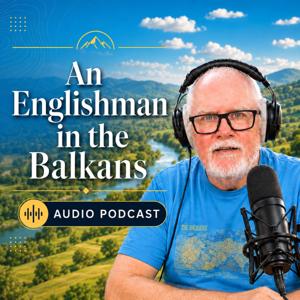


An Englishman in the Balkans is a weekly podcast about the people, places and everyday life of Bosnia and Herzegovina, told by David Bailey, who has lived here for more than 25 years. New episodes arrive every Tuesday.
What does home mean when you were forced to leave it as a child?
In this deeply personal episode, I speak with Ivana Strbac Alfonso, who was six years old when conflict reached her village of Stranjani, near Zenica in central Bosnia and Herzegovina.
Before the war, Ivana remembers a simple but loving rural childhood: a multigenerational family home, grandparents drinking coffee with sugar cubes, flower crowns, home-cooked meals and a community in which people helped one another.
Then everything changed.
Ivana remembers wooden boards covering the windows, being told to stay inside and the morning her mother woke the children so that they could flee. She remembers the smell of freshly baked bread and desperately trying to take her large blue comfort blanket with her as the family escaped through the forest.
What followed was a long and painful journey through displacement, refugee accommodation and a difficult new life in Germany. Although the family had reached safety, Ivana experienced bullying, poverty, language barriers and the feeling of being regarded as an outsider.
After four and a half years in Germany, the family was told they could no longer remain. With very little waiting for them in Bosnia, they eventually received permission to begin another new life on Australia’s Gold Coast.
Ivana speaks openly about arriving in Australia without English, trying to become a cultural “chameleon” and growing up between several different worlds. Inside the family home were Balkan language, food and traditions. Outside, she tried to sound and behave like an Australian child.
We also talk about:
This is an emotional conversation, but also one filled with humour, honesty and resilience.
Ivana’s story reminds us that reaching a safe country does not necessarily bring a refugee’s journey to an end. The questions of identity, belonging and home can remain for a lifetime.
Content note: This episode includes discussion of war, forced displacement, childhood trauma, bullying and the long-term effects of becoming a refugee.
You can follow Ivana here 👇
Instagram (Balkan Sis) https://www.instagram.com/balkansispodcast
Facebook 1 https://www.facebook.com/share/192a6DyTHo/
Facebook 2 https://www.facebook.com/share/19UrPbcj7f/
LinkedIn https://www.linkedin.com/in/ivanaalfonso
Linktree https://linktr.ee/ivanaalfonso
Email [email protected]
Thanks for listening. If this episode was worth your time, the best thing you can do is pass it on to someone who'd enjoy it.
Every episode, and more about my life here, is at anenglishmaninthebalkans.com.
I also write a short, free weekly newsletter, The Sunday Edition, a recap of my week in Bosnia. If you're not already receiving it, you can join here:
https://anenglishmaninthebalkanspodcast.substack.com
Already a subscriber?
If you don’t want to receive everything I publish, you don’t have to unsubscribe completely.
Use the unsubscribe or preferences link at the bottom of any email and you can choose which of my newsletters and sections you’d like to receive.
That way, you can keep the Sunday Edition, for example, while switching off emails from sections you’re less interested in.
I’d much rather you received only the things you enjoy than felt I was filling up your inbox.
An Englishman in the Balkans is a weekly podcast about the people, places and everyday life of Bosnia and Herzegovina, told by David Bailey, who has lived here for more than 25 years. New episodes arrive every Tuesday.
Pirate radio, Radio Caroline and the offshore stations of the 1960s changed British broadcasting, and quietly shaped the direction of my own life.
On 14 August 1967, the Marine Broadcasting Offences Act came into force in Britain. Most offshore radio stations closed, although Radio Caroline famously continued. As a young teenager listening in London, I couldn’t have known that the excitement of finding those voices on the radio dial would remain with me for almost sixty years.
In this personal episode, I trace my journey from listening to offshore radio and becoming involved with the land-based pirate station Radio Jackie in 1968, through volunteering with BFBS in Germany and launching Punch FM under a Restricted Service Licence in 1993.
That journey also took me to BBC Radio Surrey, 2-TEN FM and back to BFBS as a contract presenter. Eventually, I brought those accumulated experiences to Bosnia and Herzegovina, where I helped create Oksigen FM, an independent station offering young people a musical window into the wider world during the difficult postwar years.
Today, the ships, transmitters and crackling medium-wave signals have largely given way to microphones, digital editing and podcast feeds. Yet the essential idea remains: one person speaking in one place can reach another person somewhere far away.
Now I continue that journey from a village near Laktaši through An Englishman in the Balkans, sharing the people, places and everyday life of the country I call home.
Almost sixty years after first discovering offshore radio, I am still following that signal.
Thanks for listening. If this episode was worth your time, the best thing you can do is pass it on to someone who'd enjoy it.
Every episode, and more about my life here, is at anenglishmaninthebalkans.com.
I also write a short, free weekly newsletter, The Sunday Edition, a recap of my week in Bosnia. If you're not already receiving it, you can join here:
https://anenglishmaninthebalkanspodcast.substack.com
Already a subscriber?
If you don’t want to receive everything I publish, you don’t have to unsubscribe completely.
Use the unsubscribe or preferences link at the bottom of any email and you can choose which of my newsletters and sections you’d like to receive.
That way, you can keep the Sunday Edition, for example, while switching off emails from sections you’re less interested in.
I’d much rather you received only the things you enjoy than felt I was filling up your inbox.
An Englishman in the Balkans is a weekly podcast about the people, places and everyday life of Bosnia and Herzegovina, told by David Bailey, who has lived here for more than 25 years. New episodes arrive every Tuesday.
Language is never simply a collection of words. It carries memories, family stories, humour, history and a sense of where we belong.
In this episode, I speak with Nick Nasev, an Australian-born chartered linguist, translator, writer and editor with Macedonian roots. Nick has spent almost 25 years working professionally with several Balkan languages, including Bosnian, Serbian, Croatian, Montenegrin, Macedonian and Bulgarian.
Nick grew up surrounded by different languages in Australia. As a child, however, his family was advised to stop speaking Macedonian to him because it was believed that using more than one language would confuse him.
That experience almost caused him to lose his mother tongue.
We talk about what happens when a language gradually disappears within a family. Nick explains that the loss goes far beyond vocabulary. When younger generations can no longer fully understand their parents or grandparents, they may also lose access to the stories, cultural references and meanings carried within everyday expressions.
Our conversation then turns to the Balkans, where the question of whether someone speaks Bosnian, Serbian, Croatian or Montenegrin can become surprisingly sensitive.
After more than 25 years of living in Bosnia and Herzegovina, I still occasionally find myself stepping carefully through that linguistic minefield. Nick explains why relatively small differences in words, accents and pronunciation can become powerful markers of identity and belonging.
We also discuss Australian English, accents as badges of identity, the languages of the former Yugoslavia, and whether younger generations in the Balkan diaspora will continue speaking the languages of their parents and grandparents.
This is a thoughtful, personal and occasionally amusing conversation about migration, family, language and the complicated question of where we truly belong.
Guest: Nick Nasev
Topics: Balkan languages, language and identity, mother-tongue loss, diaspora, multilingual families, Bosnian, Serbian, Croatian, Macedonian, accents and belonging.
You can find out More about Nick at:
Substack: https://nicknasev.substack.com/ for my writing about Balkan things.
For Australian English: https://australianenglishwithnick.substack.com/
My website: www.nicknasev.com
Interested in more of the translation side of things?: https://www.linkedin.com/in/nick-nasev/
and depending on what language, I have Facebook profiles:
Macedonian: https://www.facebook.com/NickNasevMacedonianToEnglishTranslator/
Bulgarian: https://www.facebook.com/NickNasevBulgarianToEnglishTranslator/
Bosnian/Croatian/Serbian/Montenegrin: https://www.facebook.com/NickNasevBosnianCroatianSerbianToEnglishTranslator/
Thanks for listening. If this episode was worth your time, the best thing you can do is pass it on to someone who'd enjoy it.
Every episode, and more about my life here, is at anenglishmaninthebalkans.com.
I also write a short, free weekly newsletter, The Sunday Edition, a recap of my week in Bosnia. If you're not already receiving it, you can join here:
https://anenglishmaninthebalkanspodcast.substack.com
Already a subscriber?
If you don’t want to receive everything I publish, you don’t have to unsubscribe completely.
Use the unsubscribe or preferences link at the bottom of any email and you can choose which of my newsletters and sections you’d like to receive.
That way, you can keep the Sunday Edition, for example, while switching off emails from sections you’re less interested in.
I’d much rather you received only the things you enjoy than felt I was filling up your inbox.
An Englishman in the Balkans is a weekly podcast about the people, places and everyday life of Bosnia and Herzegovina, told by David Bailey, who has lived here for more than 25 years. New episodes arrive every Tuesday.
What happens when everyday life is shaped by beliefs passed down through generations?
In this episode, I sit down for a lively conversation about some of Bosnia and Herzegovina’s most enduring superstitions, rituals and curious customs. We begin with the dreaded promaja, the cross-draught many people here genuinely believe can cause a stiff neck, an ear infection or something even worse.
After more than 25 years of living in Bosnia and Herzegovina, I have learned that these beliefs are far more than amusing pieces of folklore. They remain part of everyday conversations, family advice and the small rituals people follow almost without thinking.
From open windows and sitting on cold concrete to the customs surrounding luck, health and protection, this is a warm and entertaining look at the beliefs that continue to shape daily life in Bosnia and Herzegovina.
Thanks for listening. If this episode was worth your time, the best thing you can do is pass it on to someone who'd enjoy it.
Every episode, and more about my life here, is at anenglishmaninthebalkans.com.
I also write a short, free weekly newsletter, The Sunday Edition, a recap of my week in Bosnia. If you're not already receiving it, you can join here:
https://anenglishmaninthebalkanspodcast.substack.com
Already a subscriber?
If you don’t want to receive everything I publish, you don’t have to unsubscribe completely.
Use the unsubscribe or preferences link at the bottom of any email and you can choose which of my newsletters and sections you’d like to receive.
That way, you can keep the Sunday Edition, for example, while switching off emails from sections you’re less interested in.
I’d much rather you received only the things you enjoy than felt I was filling up your inbox.
An Englishman in the Balkans is a weekly podcast about the people, places and everyday life of Bosnia and Herzegovina, told by David Bailey, who has lived here for more than 25 years. New episodes arrive every Tuesday.
Why did I start this podcast?
It's a question I've never really answered, until now.
Twenty episodes into An Englishman in the Balkans, I pause to explain why this podcast exists, why I chose audio over video, and why the stories that matter most are often the quietest ones.
This isn't a travel guide.
It isn't a history lesson.
And it certainly isn't a political programme.
Instead, it's an invitation to explore Bosnia and Herzegovina through everyday conversations, ordinary people, remarkable places and the sounds that make this country feel alive.
In this episode I talk about:
Whether you've been listening since Episode One or you've only just discovered the podcast, thank you for being here.
There are many more stories still waiting to be told.
Thanks for listening. If this episode was worth your time, the best thing you can do is pass it on to someone who'd enjoy it.
Every episode, and more about my life here, is at anenglishmaninthebalkans.com.
I also write a short, free weekly newsletter, The Sunday Edition, a recap of my week in Bosnia. If you're not already receiving it, you can join here:
https://anenglishmaninthebalkanspodcast.substack.com
Already a subscriber?
If you don’t want to receive everything I publish, you don’t have to unsubscribe completely.
Use the unsubscribe or preferences link at the bottom of any email and you can choose which of my newsletters and sections you’d like to receive.
That way, you can keep the Sunday Edition, for example, while switching off emails from sections you’re less interested in.
I’d much rather you received only the things you enjoy than felt I was filling up your inbox.
An Englishman in the Balkans is a weekly podcast about the people, places and everyday life of Bosnia and Herzegovina, told by David Bailey, who has lived here for more than 25 years. New episodes arrive every Tuesday.
Is Bosnia and Herzegovina safe for tourists? It is one of the questions I am asked most often, and after living here since 1998, my honest answer is yes, provided you travel with ordinary awareness, curiosity and common sense.
In this episode, I look beyond the outdated headlines and talk openly about what visitors should genuinely be aware of. I cover everyday crime, pickpocketing, landmines and unexploded ordnance, driving on Bosnia’s mountain roads, changing weather conditions, solo travel and personal safety.
Bosnia and Herzegovina is not a country that should be approached with fear. It is a welcoming, fascinating and deeply rewarding place to explore. With a little preparation, respect for local advice and a willingness to take your time, most visitors will discover a country that feels far safer and more relaxed than they expected.
This is not an official travel advisory, but the personal perspective of someone who has lived in a small village in northwest Bosnia and Herzegovina for nearly three decades.
Thanks for listening. If this episode was worth your time, the best thing you can do is pass it on to someone who'd enjoy it.
Every episode, and more about my life here, is at anenglishmaninthebalkans.com.
I also write a short, free weekly newsletter, The Sunday Edition, a recap of my week in Bosnia. If you're not already receiving it, you can join here:
https://anenglishmaninthebalkanspodcast.substack.com
Already a subscriber?
If you don’t want to receive everything I publish, you don’t have to unsubscribe completely.
Use the unsubscribe or preferences link at the bottom of any email and you can choose which of my newsletters and sections you’d like to receive.
That way, you can keep the Sunday Edition, for example, while switching off emails from sections you’re less interested in.
I’d much rather you received only the things you enjoy than felt I was filling up your inbox.
An Englishman in the Balkans is a weekly podcast about the people, places and everyday life of Bosnia and Herzegovina, told by David Bailey, who has lived here for more than 25 years. New episodes arrive every Tuesday.
This episode begins with what should have been a glorious evening walk.
I am standing beside the River Turjanica, about two and a half kilometres from our home in rural Bosnia. The sun is beginning to set, birds are moving through the trees, and the views stretch across the valley towards Laktaši and the River Vrbas.
After weeks of extreme summer heat, however, the Turjanica has almost completely dried up. A tractor has even been driven across the exposed riverbed.
And without the flowing water, something else has been revealed.
Plastic bags, animal-feed sacks, bottles, old food tins, newspapers, part of a car and even a small beer keg have been dumped along the riverbank. Some of the rubbish has spilled from broken bags, and the smell is impossible to ignore.
What makes this particularly difficult to understand is that regular rubbish collections already take place here, including organised collections for larger unwanted items.
So why do people still bring their waste into the countryside and leave it beside a river?
This is not one of my usual gentle celebrations of life in Bosnia and Herzegovina. It is a more uncomfortable story about fly-tipping, personal responsibility and the importance of loving a place honestly rather than pretending it is perfect.
In this episode:
Have you encountered the same problem where you live? I would be very interested to hear your thoughts.
Thanks for listening. If this episode was worth your time, the best thing you can do is pass it on to someone who'd enjoy it.
Every episode, and more about my life here, is at anenglishmaninthebalkans.com.
I also write a short, free weekly newsletter, The Sunday Edition, a recap of my week in Bosnia. If you're not already receiving it, you can join here:
https://anenglishmaninthebalkanspodcast.substack.com
Already a subscriber?
If you don’t want to receive everything I publish, you don’t have to unsubscribe completely.
Use the unsubscribe or preferences link at the bottom of any email and you can choose which of my newsletters and sections you’d like to receive.
That way, you can keep the Sunday Edition, for example, while switching off emails from sections you’re less interested in.
I’d much rather you received only the things you enjoy than felt I was filling up your inbox.
An Englishman in the Balkans is a weekly podcast about the people, places and everyday life of Bosnia and Herzegovina, told by David Bailey, who has lived here for more than 25 years. New episodes arrive every Tuesday.
In this episode I’m joined by art historian and scholar Aleksandra Bunčić to explore one of the most remarkable cultural treasures housed in Bosnia and Herzegovina: the Sarajevo Haggadah.
Created in medieval Catalonia, most likely around the middle of the 14th century, this beautifully illuminated Jewish manuscript has travelled across time, borders, religions, empires, wars, and human uncertainty before finding its home in Sarajevo.
Aleksandra helps me understand what a Haggadah actually is, why this particular manuscript is so rare, and why its illustrations are considered so extraordinary. We talk about its journey from Spain, its possible time in Italy, its arrival in Sarajevo, and the Sephardic Jewish community whose story is woven into the wider history of Bosnia and Herzegovina.
What fascinated me most is that the Sarajevo Haggadah is not just an old book behind glass. It is a storyteller. It speaks of exile, survival, faith, art, craft, coexistence, and the fragile but powerful act of preserving memory.
We also touch on Ladino, the language once spoken by Sephardic Jews across the Balkans, and why Bosnia and Herzegovina still has so many layers of history that many visitors never quite get to see.
For anyone visiting Sarajevo, this is a reminder that Bosnia and Herzegovina’s story is far deeper, richer, and more complex than the headlines. Sometimes, one manuscript can open the door to centuries.
Thanks for listening. If this episode was worth your time, the best thing you can do is pass it on to someone who'd enjoy it.
Every episode, and more about my life here, is at anenglishmaninthebalkans.com.
I also write a short, free weekly newsletter, The Sunday Edition, a recap of my week in Bosnia. If you're not already receiving it, you can join here:
https://anenglishmaninthebalkanspodcast.substack.com
Already a subscriber?
If you don’t want to receive everything I publish, you don’t have to unsubscribe completely.
Use the unsubscribe or preferences link at the bottom of any email and you can choose which of my newsletters and sections you’d like to receive.
That way, you can keep the Sunday Edition, for example, while switching off emails from sections you’re less interested in.
I’d much rather you received only the things you enjoy than felt I was filling up your inbox.
An Englishman in the Balkans is a weekly podcast about the people, places and everyday life of Bosnia and Herzegovina, told by David Bailey, who has lived here for more than 25 years. New episodes arrive every Tuesday.
It is a fiercely hot Friday evening in rural Bosnia and Herzegovina. Standing beneath the apple trees, surrounded by fallen fruit, insects, dry grass and a garden struggling in the heat, I set off on my first proper walk-and-talk episode.
As I wander around the garden, I reflect on the changing seasons, the strange pleasure of rural life for someone raised in London, and my decision to step away from the constant demands of YouTube. I also talk about relaunching this podcast, finding a quieter community of listeners, recording the stories of my life and creating members-only episodes and soundscapes from Bosnia.
This is deliberately informal and lightly edited—just the sounds around me and whatever happened to be on my mind.
I would genuinely love to know where you are listening and whether you would enjoy more episodes in this style.
Thanks for listening. If this episode was worth your time, the best thing you can do is pass it on to someone who'd enjoy it.
Every episode, and more about my life here, is at anenglishmaninthebalkans.com.
I also write a short, free weekly newsletter, The Sunday Edition, a recap of my week in Bosnia. If you're not already receiving it, you can join here:
https://anenglishmaninthebalkanspodcast.substack.com
Already a subscriber?
If you don’t want to receive everything I publish, you don’t have to unsubscribe completely.
Use the unsubscribe or preferences link at the bottom of any email and you can choose which of my newsletters and sections you’d like to receive.
That way, you can keep the Sunday Edition, for example, while switching off emails from sections you’re less interested in.
I’d much rather you received only the things you enjoy than felt I was filling up your inbox.
An Englishman in the Balkans is a personal podcast about life, travel, culture, and storytelling in Bosnia and Herzegovina, told from the perspective of a British-born creator who has made this country home.
Expect gentle reflections, real places, local voices, field recordings, and stories that go beyond the usual headlines.
Come with me into the heart of Mostar’s old bazaar, where footsteps, passing conversations and the gentle bustle of everyday life mingle along the narrow stone streets.
This short soundscape captures a few unhurried minutes inside one of Bosnia and Herzegovina’s most atmospheric places.
Before I go, I'd love to hear from you.
If this episode brought back a memory, made you curious about Bosnia and Herzegovina, or simply gave you something to think about, why not send me a WhatsApp voice note?
You might have a question, a story of your own, or just want to say hello.
With your permission, I may even feature your message in a future episode.
LEAVE A VOICE NOTE ON WHATSAPP
You'll also find ways to support the podcast, become a member, and follow the journey over at:
Website:
Substack:
YouTube:
Support the Podcast:
Interested in starting your own podcast later in life?
My self-paced course, Start With Your Voice, is designed for late creators who want a calm and simple way to begin:
FIND OUT MORE:
From the publisher's feed