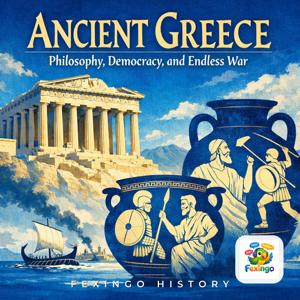
In this episode of Ancient Greece: Philosophy, Democracy, and Endless War, Lucas and Luna explore the Ekklesia, the Athenian assembly that put real power in the hands of citizens. They trace its origins from Solon's reforms to its full flowering under Cleisthenes, and discuss who could attend, how often it met, and the quirky rules that kept debate alive—like the six-foot speaker's platform and the Scythian archers who kept order. They dive into the assembly's role in pivotal moments: the decision to build the Long Walls, the ostracism of Themistocles, the disastrous Sicilian Expedition, and the trial of the generals after Arginusae. Along the way, they consider the limits of direct democracy, from the pay that allowed poor citizens to participate to the exclusion of women, slaves, and metics. With vivid details from Thucydides and Aristophanes, this episode brings the Pnyx to life and asks what we might learn from a system where every citizen had a voice—and a vote.