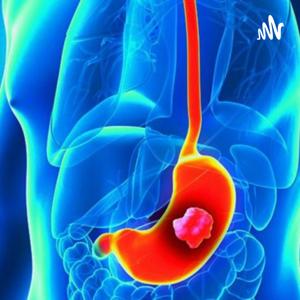
Anxiety and depression in patients with gastrointestinal cancer

Anxiety and depression in patients with gastrointestinal cancer

By Farkas SzabolcsEducationCourses
Download on the App Store

Anxiety and depression in patients with gastrointestinal cancer episodes

  • Outro - Conclusion

    Screening for EGC in high-risk populations reduces gastric cancer mortality and facilitates endoscopic therapy, thus reducing the morbidity associated with the condition.

    2 min
  • Episode 05 – Comorbidity of PTSD and Depression
    • Since the appearance of PTSD in the DSM-III (American Psychiatric Association, 1980), depression was found to frequently cooccur with it (Bottomley, 1998; Massie, 2004; Sellick and Crooks, 1999).
    • The understanding of the nature of this comorbidity among gastric cancer patients is crucial for treatment issues. In a previous study I found that among hospital personnel under prolong and continues stress situation an elevated risk for depression was not necessarily related to an elevated risk for PTSD, but almost in all cases of an elevated risk for PTSD an elevated risk for depression also existed (Palgi et al., 2009).
    • If so, life threatening and prolonged disease, like gastric cancer, is expected to create high risk for clinical level of depression as well as PTSD. The relation between these diagnoses after the cancer onset has pivotal consequences on the participant’s prognosis (Brintzenhofe-Szoc et al., 2009).
    • 6 min
    • Episode 04 - Treatment of Early Gastric Cancer
      • The reason that gastric cancer caries such a poor prognosis is that the presentation is invariably late in the natural history of the disease, with local extension or metastatic disease rendering the condition inoperable.
      • Whilst chemotherapy, both neo-adjuvant and palliative, has a demonstrated role in improving survival in patients with gastric cancer, resection with curative intent offers the only real chance of long-term survival in patients with operable disease. 
      • 10 min
      • Episode 03 - Risk Factors: Smoking, Alcohol, Chemical Exposure, Diet, Anemia
        • Alcohol use has been shown to increase the risk of gastric cancer, but the effect of the amount of alcohol consumed and gastric cancer risk has been controversial. Based on a meta-analysis of 10 studies, moderate alcohol consumption was shown to increase gastric cancer risk by 39%, while heavy consumption further worsened the odds.

          • Cultures whose diets are rich in salt and pickled foods, such as the Japanese, exhibit higher rates of gastric cancer. Japanese immigrants to the United States who assimilated and adopted Western foods exhibited a substantially lower rate of gastric cancer relative to those who did not assimilate their diet.
          • 7 min
          • Episode 02 - Risk Factors of Gastric Cancer
            • The main risk factor for gastric cancer is the bacterium H. pylori. In 2005, Australian researchers Barry Marshall and Robin Warren were awarded the Nobel Prize in Medicine for the discovery of the bacterium H. pylori.
            • Prior to their finding, lifestyle and stress were hypothesized to be the major risk factors in peptic ulcer disease. 
            • In 1985, Marshall deliberately infected himself with the bacterium to demonstrate that it caused acute gastritis. 
            • Thanks to their work, we now know that up to 80% of gastric ulcers are caused by H. pylori.

            • 7 min
            • Episode 01- Incidence and Mortality of Gastric Cancer
              • Over one million cases of gastric cancer are diagnosed each year around the world. Stomach cancer is the 5th most commonly diagnosed cancer in the world, and the 7th most prevalent. 

                • The cumulative risk of developing gastric cancer from birth to age 74 is 1.87% in males and 0.79% in females worldwide.

                  • Gastric cancer is more prevalent in males. In developed countries, gastric cancer is 2.2 times more likely to be diagnosed in males than females. In developing countries, this ratio is 1.83. 

                  • 8 min

                  About Anxiety and depression in patients with gastrointestinal cancer

                  From the publisher's feed

                  Hello!