
Sign up to save your podcasts
Or

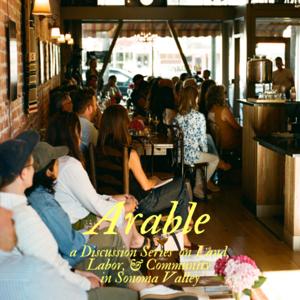


Arable: Episode 09 documents LET'S GET DEEP: THE FUTURE OF THE WINE INDUSTRY, which brought a community conversation to Scribe Winery on August 11, 2026, launching a new series examining the future of Sonoma Valley’s economy. The discussion considered the responsibilities of land ownership and agricultural stewardship, how the contraction of the wine industry might open the door for local businesses with values-driven practices, the intergenerational transfer of different forms of capital, and how much of Sonoma’s economic value comes from its culture and sense of place. The evening brought together Andrew Mariani, co-founder of Scribe Winery; Martha Stoumen, founder of Martha Stoumen Wines; Rodrigo Soto, proprietor of Far Mountain Wine; and John Hamel of Hamel Family Wines, and Joel Peterson, founder of Ravenswood Winery and Once and Future Wines. Alison Seibert, founder of The James Collective, moderated the discussion.
Arable is a documentary series that profiles a new generation of farmers, winemakers, small-business owners, and advocates who are reshaping relationships among land, labor, and community in the region. Directed by Aaron Brown, presented by The Future Collective.We hope these conversations help you understand the values of a new generation that might become the foundation of a regenerative and diversified economic future for Sonoma Valley.Learn more at www.thefuturecollective.org/arable. The project is funded by Sonoma Valley Catalyst Fund.
Arable Short 05 | Gleaning Orchards with Marreya Bailey walks a Sebastopol orchard picking fruit tree by tree, choosing what's ripe by taste rather than variety name, since some of these old apple trees have crossed or been grafted so many times over the decades that no one can identify them anymore. Marreya traces how that same instinct shapes her cider work, from a single-orchard sparkling perry infused with pink jasmine and wildflower honey to a still cider made from an 80-year-old orchard's unnamed apples, and makes the case that cider deserves to be treated with the same seriousness as wine: it's a living ferment, not a mass-manipulated product, and it's long past time American drinkers were introduced to what it can really be.
Arable is a documentary series that profiles a new generation of farmers, winemakers, small business owners, and advocates who are reshaping relationships between land, labor, and community in the region. Directed by Aaron Brown, presented by The Future Collective.
We hope these conversations help you understand the values of a new generation that might become the foundation of a regenerative and diversified economic future for Sonoma Valley. Learn more at www.thefuturecollective.org/arable. The project is funded by Sonoma Valley Catalyst Fund.
Arable: Episode 08 | Anthropology and Agriculture | Mad Marvlus' Marreya Bailey & Dos' Bar's Aaon Brown follows Marreya's path into wine, which ran through biological anthropology, the Court of Master Sommeliers, and harvests split between Sonoma County and Vermont, where she fell for hybrid grapes and fruit wine. The conversation traces the anthropology of fermentation itself: an archaeological dig in the Bahamas that turned up sacred fermented vessels, the erased history of Jupiter Evans and other enslaved cidermakers who shaped Thomas Jefferson's orchards, and how Prohibition-era politics helped rebrand cider as sugary apple juice. Marreya and Aaron dig into why wine and cider carried medicinal and ceremonial weight long before they became industrial products, and why community, transparency, and diversity, not scale, are what will carry the next generation of producers forward. Arable is a documentary series that profiles a new generation of farmers, winemakers, small business owners, and advocates who are reshaping relationships between land, labor, and community in the region. Directed by Aaron Brown, presented by The Future Collective. We hope these conversations help you understand the values of a new generation that might become the foundation of a regenerative and diversified economic future for Sonoma Valley. Learn more at www.thefuturecollective.org/arable. The project is funded by Sonoma Valley Catalyst Fund.
Episode 07 | Hospitality and Place | Valley and Swim Club's Lauren Feldman & Marioni Wine and Dos' Bar's Dan Marioni, brings together two Sonoma natives, who left, found wine somewhere else, and came back to build something for their own community. Dan Marioni traces his path from disillusioned mechanical engineer to natural winemaker, shaped by a season crushing grapes by hand in Sonoma and years spent chasing "alive" wines in Europe, now channeled into Marioni Wine and Dos' Bar on the Plaza. Lauren Feldman talks through founding Valley, a wine bar built for locals and industry people who felt like Sonoma's Plaza had nothing for them, and the wage-equity model she runs it on. Together they dig into what it means to build a business here without selling out, why Sonoma still hasn't decided what it wants to be, and what it would take to make this town, and its wine, feel truly its own again.
Arable is a documentary series that profiles a new generation of farmers, winemakers, small business owners, and advocates who are reshaping relationships between land, labor, and community in the region. Directed by Aaron Brown, presented by The Future Collective. We hope these conversations help you understand the values of a new generation that might become the foundation of a regenerative and diversified economic future for Sonoma Valley.
Learn more at www.thefuturecollective.org/arable. The project is funded by Sonoma Valley Catalyst Fund.
Arable Short 04 | Biochar Burn with Eric Mayer and Dan Marioni follows a vineyard rehab in progress, where Dan Marioni is cane pruning vines back from years of neglect and cutting out the most diseased old growth to coax new life from what's left. The trimmings don't go to waste: Eric Mayer fires up a flame cap kiln to turn the cut canes into biochar on site, and the two dig into the math of it, comparing controlled vineyard trials, char-to-compost ratios, and how much biochar an acre can realistically produce from its own prunings versus what it would take to import enough to blanket the soil.
Arable is a documentary series that profiles a new generation of farmers, winemakers, small business owners, and advocates who are reshaping relationships between land, labor, and community in the region. Directed by Aaron Brown, presented by The Future Collective. We hope these conversations help you understand the values of a new generation that might become the foundation of a regenerative and diversified economic future for Sonoma Valley.
Learn more at www.thefuturecollective.org/arable. The project is funded by the Sonoma Valley Catalyst Fund.
Arable Short 03 Biochar Part 1: Burn with Eric Mayer, Jack Sporer & Charlie Toledo visits a retired vineyard along Huichica Creek in Carneros, where Jack Sporer (FRES.CO Wines) and the Napachar turn turning three-year-old vine piles into biochar with a flame cap kiln instead of burning them off as smoke. Eric Mayer (Napachar) walks through the science of flame carbonization, from why a top-lit burn produces almost no smoke to how crushing biochar and blending it with compost boosts its benefit to the soil. Special returning guest, Charlie Toledo (Suscol Intertribal Council) speaks to the deeper context: fire as an essential, long-suppressed tool of Indigenous land stewardship, and the work of reclaiming that knowledge as the earth rebalances itself after a century of fire suppression and industrial extraction.
Arable is a documentary series that profiles a new generation of farmers, winemakers, small business owners, and advocates who are reshaping relationships between land, labor, and community in the region. Directed by Aaron Brown, presented by The Future Collective. We hope these conversations help you understand the values of a new generation that might become the foundation of a regenerative and diversified economic future for Sonoma Valley.
Learn more at www.thefuturecollective.org/arable. The project is funded by the Sonoma Valley Catalyst Fund.
Arable: Episode 06, Ecology and Agriculture, Napachar, Eric Mayer x FRES.CO’s Jack Sporer brings together two voices reimagining what it means to farm responsibly in wine country: Eric Mayer of Napa Char, a doctoral graduate in climate science, now produces biochar with flame cap kilns, turning vineyard waste into a permanent form of carbon storage instead of smoke, and Jack Sporer of FRES.CO, a winemaker working to move growers off herbicides and toward regenerative, soil-first viticulture. Over a long, wide-ranging conversation, the two trace the throughlines between carbon capture, soil biology, Indigenous fire stewardship, and the economics of a wine industry that will need to change if it wants healthier land and better wine.
Arable is a documentary series that profiles a new generation of farmers, winemakers, small business owners, and advocates who are reshaping relationships between land, labor, and community in the region. Directed by Aaron Brown, presented by The Future Collective. We hope these conversations help you understand the values of a new generation that might become the foundation of a regenerative and diversified economic future for Sonoma Valley.
Learn more at www.thefuturecollective.org/arable. The project is funded by the Sonoma Valley Catalyst Fund.
Arable Short 02 | Hybrid Grapes: Baco Noir with Matt Niess walks through a Sebastopol vineyard first planted by Italian immigrant Domenico Callegari, whose makeshift trellises of scrap metal and TV antennas still shape these century-old, dry-farmed Baco Noir vines. Matt shares why he's filling the vineyard's gaps with low-acid aromatic whites to build a field blend rather than more Baco Noir, and why he's left a patch of native vernal pool flowers untouched to protect the specialist bees that depend on them. Arable is a documentary series that profiles a new generation of farmers, winemakers, small business owners, and advocates who are reshaping relationships between land, labor, and community in the region. Directed by Aaron Brown, presented by The Future Collective. We hope these conversations help you understand the values of a new generation that might become the foundation of a regenerative and diversified economic future for Sonoma Valley. Learn more at www.thefuturecollective.org/arable. The project is funded by the Sonoma Valley Catalyst Fund.
Arable Short 01 | Dry Farmed Apples: Gravensteins with Matt Niess walks through the Hallberg Butterfly Gardens in Sebastopol, home to an 80-year-old Gravenstein orchard on the property where Louise Hallberg was born and raised. Matt shows how this dry-farmed, old-growth orchard coexists with the adjacent butterfly preserve and explains why he co-ferments these apples with wild California grapes for his Wildcard bottling. He makes the case for keeping old orchards like this one standing rather than replacing them with vines: no irrigation, no spraying, and carbon staying locked in the soil, plus a chance to build a market for the agricultural diversity already growing in wine country.
Arable is a documentary series that profiles a new generation of farmers, winemakers, small business owners, and advocates who are reshaping relationships between land, labor, and community in the region. Directed by Aaron Brown, presented by The Future Collective. We hope these conversations help you understand the values of a new generation that might become the foundation of a regenerative and diversified economic future for Sonoma Valley. Learn more at www.thefuturecollective.org/arable. The project is funded by the Sonoma Valley Catalyst Fund.
Episode 05, Hybrids and Community, with 𝑪𝒉𝒓𝒊𝒔 𝑹𝒆𝒏𝒇𝒓𝒐, 𝑻𝒉𝒆 280 𝑷𝒓𝒐𝒋𝒆𝒄𝒕 & 𝑴𝒂𝒕𝒕 𝑵𝒊𝒆𝒔𝒔, 𝑵𝒐𝒓𝒕𝒉 𝑨𝒎𝒆𝒓𝒊𝒄𝒂𝒏 𝑷𝒓𝒆𝒔𝒔 brings together two influential voices in Northern California's fermentation and urban farming culture, Matt Niess of North American Press, a wine and cider producer focused on hybrids and dry-farmed heirloom apples, and Chris Renfro of community nonprofit, Two Eighty Project, and wine shop and venue Friend of a Friend, who sees agriculture as an act of ecological creativity and farms as interdisciplinary sites of culture-building, where wine is just one output of a larger cycle of regeneration and design.