
Sign up to save your podcasts
Or

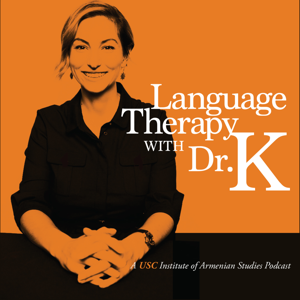

What does it mean to call Armenian an Indo-European language? And, what, exactly, is a "language family"?
In this episode, Dr. K sits down with historical comparative linguist Dr. Hrach Martirosyan to unpack the scientific foundations behind that claim. Together, they explain how scholars reconstruct linguistic relationships across thousands of years, why Indo-European became the most studied language family, and common misperceptions about linguistic ancestry. Moving from early discoveries about deep similarities between Sanskrit and European languages to Grimm's Law and beyond, the conversation illustrates how words like mother, father, and daughter preserve echoes of a shared linguistic past across millennia, and how linguists distinguish inheritance from contact.
This episode offers a clear and compelling introduction to how historical-comparative linguistics uncovers the deep history of Armenian, showing how scientific methods illuminate its place within one of the world's most widespread and extensively studied language families.
 View all episodes
 By USC Institute of Armenian Studies
5
2323 ratings
What does it mean to call Armenian an Indo-European language? And, what, exactly, is a "language family"?
In this episode, Dr. K sits down with historical comparative linguist Dr. Hrach Martirosyan to unpack the scientific foundations behind that claim. Together, they explain how scholars reconstruct linguistic relationships across thousands of years, why Indo-European became the most studied language family, and common misperceptions about linguistic ancestry. Moving from early discoveries about deep similarities between Sanskrit and European languages to Grimm's Law and beyond, the conversation illustrates how words like mother, father, and daughter preserve echoes of a shared linguistic past across millennia, and how linguists distinguish inheritance from contact.
This episode offers a clear and compelling introduction to how historical-comparative linguistics uncovers the deep history of Armenian, showing how scientific methods illuminate its place within one of the world's most widespread and extensively studied language families.

43,929 Listeners

37,649 Listeners

38,856 Listeners
28,945 Listeners

7,665 Listeners

112,075 Listeners
34 Listeners
24,561 Listeners
18 Listeners

19,613 Listeners

12,260 Listeners