
Sign up to save your podcasts
Or



Numbness. Tingling. Burning feet that keep you up at night. Hands that drop things. Feet that feel like there's a balled-up sock in your shoe. If you've been living with neuropathy and were told "there's nothing we can do," this episode is for you.
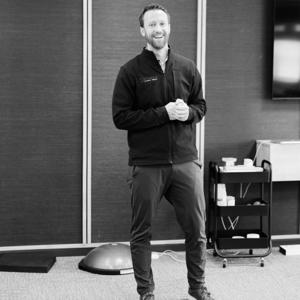
Recorded live at a community workshop, Ricky Morgan, physical therapist and owner of MORGAiN Physical Therapy in Grand Forks, ND, speaks to a room full of people living with nerve pain. His message is one of real hope: nerves can change, and more can be done than most people have been told.
Ricky opens with why this topic is personal. His father, his biggest believer, was diagnosed with a rare progressive neurological disorder a year before he planned to retire. He fought it for seven years before passing away. That experience drives Ricky's mission: to help people arrive well into retirement, and once they're there, to keep them well.
What is neuropathy, really? Ricky explains that your nerves are a vast communication network between your brain, your spinal cord, and the rest of your body. When nerves are damaged, that communication breaks down. It shows up as pain, numbness, weakness, and a loss of control. More than 20 million Americans live with peripheral neuropathy. Diabetes and uncontrolled blood sugar are the most common cause, but far from the only one. Chemotherapy, autoimmune conditions, infections like shingles, injuries, alcohol, and nutritional deficits such as low vitamin B12 can all play a role. In many cases, the cause is never identified.
The impact goes well beyond your feet. When you can't feel the ground, every step becomes uncertain. Fear of falling keeps you home from family gatherings. Poor sleep robs your body of recovery. Hobbies like gardening or playing an instrument start to slip away.
Ricky challenges the three things people with neuropathy hear most often:
He also explains why common treatments often fall short on their own. Exercise, foot care, and good nutrition all matter, but each one alone rarely addresses the root cause. The best results come from combining them.
That's where neuroplasticity comes in. Ricky compares the nervous system to a frozen computer: sometimes it just needs a reboot and the right environment to recover. He walks through the regenerative technologies MORGAiN is bringing together into a comprehensive neuropathy program:
His key point: one tool alone can help. Combined with the right exercise, balance training, nutrition, and hands-on care, it creates the best possible environment for your body to heal, without relying only on medication, injections, or surgery.
Ricky also covers the cost of doing nothing. Left alone, symptoms often spread, balance declines, falls become more likely, and chronic pain takes a toll on mood, sleep, and relationships.
Falls are not inevitable. Losing your independence is not inevitable. You can still arrive well.
Ready to find out if there's a path forward for you? MORGAiN offers a free, no-pressure Discovery Visit to review your history and goals, and to give you an honest answer about whether the team can help.
Hosted on Acast. See acast.com/privacy for more information.
What does longevity really mean? Most people say "living a long life." But a long life isn't always a healthy one. If you live to 100 but spend the last 20 years in a nursing home, is that the life you want?
In this live community talk, Ricky Morgan, physical therapist and owner of MORGAiN Physical Therapy in Grand Forks, ND, redefines longevity as adding life to your years, not just years to your life. His definition: living long and staying healthy enough to do what you want, whenever you want, with whoever you want, for as long as you want.
Ricky shares the story behind the practice. His father worked hard his whole life and saved for retirement. A year before he planned to retire, he was diagnosed with a progressive neurological disorder. He passed away at 64, and the retirement he had worked toward was taken from him. That experience changed how Ricky lives, and it is the reason MORGAiN exists: to help people arrive well into the next phase of life, mobile, independent, and able to enjoy what they worked for.
The heart of the episode is the pain-weakness cycle. Something hurts, so you move less. Muscles and joints decondition, stiffness sets in, pain grows, and fear leads to even less movement. Ricky's message is clear: keep moving. The goal isn't to do too much or to do nothing. It's to find the right amount of the right movement for you.
He breaks longevity into four pillars:
Then it gets practical. Ricky coaches the room through exercises they already know, and shows how small tweaks make them work better:
He also addresses a frustration many listeners share. Group classes and generic programs are great for community and better than nothing, but they can't be tailored to you. Sometimes you're working hard on the wrong exercise and just need better guidance.
Ricky closes with an overview of the natural and regenerative technologies MORGAiN uses, framed in two stages:
Ricky completed a systematic review on red light therapy for his PhD. He explains what the research consistently showed for inflammation and musculoskeletal pain, and why wavelength matters when buying a device. His key point: each approach can help on its own, but the real results come from combining the right exercise, hands-on care, and these technologies into a plan built around you.
The takeaways:
There is hope. You can arrive well into retirement and beyond, and stay independent, active, and free.
Want to see if this approach is right for you? MORGAiN offers free demos of its recovery technologies and a free Discovery Visit to talk through your goals.
Hosted on Acast. See acast.com/privacy for more information.
Have you been told it's "just your age" and you'll have to learn to live with it? The stair railing you grip a little tighter. The wobble when you get up at night. The energy that runs out by mid-afternoon. The golf, gardening, or travel you've quietly stopped doing. If any of that sounds familiar, this episode is for you.
Recorded live at a community talk, Ricky Morgan, physical therapist and owner of MORGAiN Physical Therapy in Grand Forks, ND, has one clear message: strength, balance, and energy can be rebuilt at any age. You don't have to accept decline as your new normal.
Ricky opens up about why he started the practice. His father worked hard his whole life to reach retirement. The year before he planned to retire, he was diagnosed with a progressive neurological illness, and he passed away at 64. Some things in life can't be prevented. But the odds shift in your favor when you decide to invest in your health, strength, and balance today, so you can keep doing what you love for years to come.
Why do we lose our steadiness? About one in four older adults falls each year, and many falls never get reported. Ricky explains that muscle loss starts in our thirties, reflexes slow when they aren't trained, and old injuries creep back. The biggest driver is inactivity. When something hurts, we move less. When we move less, we get weaker. When we get weaker, we hurt more, and life starts to shrink. The goal is to break that cycle as early as possible, and whatever age you are, it is not too late.
Ricky shares simple daily habits you can start right away:
He also calls out the most common mistakes:
Ricky explains how MORGAiN approaches care differently. Instead of generic protocols or quick fixes, the team starts by listening to your goals, then looks for the root cause rather than chasing symptoms. Your ankle pain might actually be coming from your back. He introduces the recovery tools in the practice's lounge, including hyperbaric oxygen, red light therapy, PEMF, compression boots, and an infrared sauna. The team uses them alongside hands-on care, mobility work, and personalized strength and balance training. He also notes that for anyone with nerve pain and diabetes, getting blood sugar under control is essential for any treatment to work.
The Q&A covers questions many listeners share:
It's not about turning back the clock. It's about giving your body what it needs to keep up with the life you want to live, whether that's traveling, caring for a spouse, playing with grandkids, or simply going to the grocery store again.
Ready to take the first step? MORGAiN offers a free Discovery Visit: a short conversation with the team and a quick movement check to find out where to start.
Hosted on Acast. See acast.com/privacy for more information.
Your doctor looked at your X-ray and said, "It's just wear and tear. You'll have to learn to live with it." If you walked out of that appointment feeling defeated, this episode is for you.
In this live Q&A session, Ricky Morgan, physical therapist and owner of MORGAiN Physical Therapy in Grand Forks, ND, takes on one of the most common and most damaging myths in healthcare: that back pain and joint pain are simply the price of getting older. His answer is direct. They are not. Your body has some miles on it, yes, but it is never too late to improve your mobility, your strength, and your life.
Ricky starts with a simple principle he returns to again and again: your body adapts to one of two things, activity or inactivity. The choice is yours. Stay active and your muscles get stronger, your bones get healthier, and your joints move better. Go still, and your body adapts to that too. Pain is not a life sentence. It is a signal that something needs to change.
From there, Ricky answers listener questions:
Do I need an MRI to know what's wrong? Usually not as a first step. A skilled clinician can evaluate you and get very close to the answer. Imaging matters when there's a serious injury, when something isn't adding up, or when a solid two to four weeks of the right care hasn't moved the needle. Too often, people spend time and money on scans and still walk away with no answers. Ricky also shares how the nervous system can hold the body in "protective mode." He has seen someone go from not touching the floor to touching it after a 30-second neurological reset. That's not a tight hamstring. That's a nervous system that needed the right input.
What's the difference between arthritis pain and muscle pain? Muscle pain typically shows up when you use the muscle: lifting, contracting, loading. Joint or arthritis pain tends to feel dull, deep, and achy, even at rest, and often feels better once you get moving. Ricky explains why rest is one of the worst things you can do for a sore joint, and how blood flow and movement help keep joints healthy. He also covers the role food plays in inflammation and how tracking what you eat can reveal patterns between your diet and how you feel.
The biggest myth: "wear and tear" on your scan is causing your pain. Ricky breaks down the research. Imaging findings like disc bulges, degenerative disc disease, and arthritis are extremely common in people who have zero pain. Twenty-year-olds show them. Plenty of 80- and 90-year-olds have them and feel great. If wear and tear were the whole story, everyone would hurt as they aged. Gray hair and wrinkles are normal aging, and nobody calls them a disease. The same is true on the inside.
So where do you start? Ricky keeps it simple:
And if an exercise makes you hurt so badly you can barely function, that doesn't mean you should stop moving. It means you need the right exercise for you, right now.
Ricky closes with the heart of the Arrive Well mission. Most people plan financially for retirement but never plan physically for it. Living to 100 means little if the last 20 years are spent in a nursing home. The goal is to arrive well, strong and capable enough to enjoy the travel, the grandkids, the golf, and the life you worked so hard for.
Not sure where to start? MORGAiN Physical Therapy offers a free Discovery Visit to help point you in the right direction. Send your questions by DM on Facebook or Instagram, and join Ricky live on Tuesdays.
Hosted on Acast. See acast.com/privacy for more information.
In this episode of Arrive Well, Ricky Morgan asks one of the most important questions you may never have stopped to consider: where will your body be in five years? Not financially. Not professionally. Physically.
Most of us assume that where we are today is roughly where we'll stay. But Ricky challenges that thinking directly. Your body is always adapting — either toward activity or toward inactivity. There is no pause button. Every single day is a vote for the future version of yourself.
The real danger, Ricky explains, isn't one dramatic event. It's what he calls the slow drift. Decline happens quietly — skipping a walk because your back hurts, declining a hike invitation, asking someone else to carry the groceries, choosing the closest parking spot, stopping getting on the floor with your grandkids because you're not sure you can get back up. None of these decisions feel dramatic in the moment. But together, they compound into a smaller, more limited life.
And it's rarely the pain itself that brings people into the clinic. It's what the pain has taken away — the gardening, the traveling, the dancing, the grandkids, the mornings that used to feel easy. When your body stops feeling dependable, you stop saying yes. That's the real cost.
Ricky also tackles the serious reality of falls — not to scare, but to prepare. Falls don't happen by bad luck. They're the result of many small factors building up over time: reduced leg strength, poor balance, slower reaction time, less physical activity. The encouraging news is that all of these things can improve — but only if you take action before you need to.
He introduces the concept of the confidence account. Every time you climb the stairs, carry your luggage, go for a walk, or get up from the floor, you make a deposit. Every time your body lets you down or you say "I'm too old for that," you make a withdrawal. The goal is to keep making deposits — not through perfection, but through consistency.
Ricky closes with a powerful contrast between two five-year futures. One where nothing changes and your world quietly shrinks. And one where you decide to invest in yourself — strength training, balance work, protein, mobility — and five years later you're traveling confidently, chasing your grandkids, and people are asking what your secret is. Your answer? I started before I had to.
This episode ends with a challenge: write down today's date and answer two questions honestly. If I continue exactly as I am, where will my body be in five years? And what one decision can I make today that my future self will thank me for?
Five years from now starts tomorrow morning.
Schedule your free discovery visit at morganphysicaltherapy.com or call 701-599-3848.
Hosted on Acast. See acast.com/privacy for more information.
In this episode of Arrive Well, Ricky Morgan introduces one of the most honest and revealing ways to measure your physical health — the travel test. The question is simple: Can your body in its current state keep up with the life you actually want to live?
Most of us have quietly built our daily routines around our physical limitations without even realizing it. We know where the elevator is, when to sit down, and how to pace ourselves at home. But then vacation comes — and that safety net disappears. Suddenly the airport, the luggage, the long hallways, the uneven terrain, and the 20,000 steps a day expose exactly where our physical capacity truly stands.
Ricky walks through several eye-opening tests that travel puts your body through — the airport test, the luggage test, the walking speed test, the cruise ship test, and the hotel bed test. Each one reveals something different about your strength, endurance, mobility, and balance. And that stiff, sore back you blamed on the hotel bed? Ricky says it was probably everything that happened before you even got there.
The key concept of this episode is physical capacity — and the difference between your daily function and your life capacity. Your day-to-day life may only require 30% of what your body has. But travel and the experiences you love can demand 70 to 80%. If you haven't been building that reserve, your body will let you know.
Ricky offers five simple self-tests to try at home:
He also issues an important reminder — stop measuring your health only by pain. Your world can be shrinking long before pain becomes severe. Avoiding stairs, skipping trips, or saying "I don't do that anymore" are the real early warning signs.
His message is clear: treat your vacation like an event and start training for it at least three months out. Purpose-driven training — squats for strong legs at 80, balance work so you can walk confidently on the beach, strength training so you can lift your grandkids — is what keeps you consistent and keeps you living the life you want.
You can never get time back. Don't let your physical health be the reason you stop making memories.
Schedule your free discovery visit at morganphysicaltherapy.com or call 701-599-3848.
Hosted on Acast. See acast.com/privacy for more information.
In this episode of Arrive Well, Ricky Morgan takes on one of the most important and least talked about topics in healthcare today: the insurance model, why it's broken, and why so many people are still suffering despite paying thousands of dollars every year for coverage they believe is protecting them.
Ricky opens with a question that stops you in your tracks: What would health insurance companies think if we were all healthy?
He breaks down the real cost of "having insurance" — annual premiums averaging $20,000, deductibles around $4,000, and plans that only cover 80% even after you've met that deductible. Run the full math and you could spend $34,000 in a single year before insurance covers anything at 100%. Multiply your premium over five years and that's $100,000 — money that could have been invested in your family, your future, and the high-quality care you actually deserve.
Ricky also pulls up a live Google search during the episode revealing that United Healthcare Group ranks among the top five companies in the world by annual revenue at approximately $450 billion. His question is simple: if insurance companies are that profitable, who is actually benefiting?
The answer, he argues, lies in the relationship between large healthcare organizations and insurance companies — a system that decides what gets paid for, what gets denied, and what care you actually receive. Clinicians who know you need A, B, and C are forced to give you X, Y, and Z because that's what insurance reimburses. With expenses rising and reimbursement rates falling, providers are rushed, patients are processed, and outcomes suffer.
Ricky's solution? He built Morgane Physical Therapy entirely outside the insurance model — out of network with all insurance companies and with no relationship with Medicare — so he can work for you, the client, and give you what you actually need without restriction.
The real question when you walk through the door was never "do you take my insurance?" It's always been: Can I trust you? Can you help me get my life back?
The choice of how you invest in your health has always been yours. This episode will help you make it with confidence.
New episodes of Arrive Well drop weekly. Subscribe and share with someone who needs to hear this.
Hosted on Acast. See acast.com/privacy for more information.
Arrive Well | Episode 1: Who We Are & Why We Exist
In this debut episode of Arrive Well, host Ricky Morgan introduces the mission behind the podcast and the story of MORGAiN Physical Therapy. Ricky shares what it truly means to "arrive well" — not just into retirement, but in every area of your life — and why the destination matters far less than how you get there.
Ricky opens up about the frustrations of the traditional healthcare model, why he stepped away from insurance-based care, and how he built a practice centered entirely on what patients actually need. He shares the deeply personal story of his father — the man who encouraged him to bet on himself — and how watching him arrive at retirement with a terminal illness became the fuel behind everything MORGAiN Physical Therapy stands for.
In this episode you'll learn:
Whether you've been told "it's just your age" or you're simply ready to stop settling, this episode is your starting point.
Arrive at 80 feeling 60. The journey starts here.
Hosted on Acast. See acast.com/privacy for more information.
From the publisher's feed
Arrive Well is the podcast for active women 50 and beyond who refuse to accept that aging means slowing down. Hosted by Ricky Morgan, each episode brings together real stories, expert…
From strength training and hormonal health through perimenopause and beyond, to regenerative medicine, longevity science, and the mindset that makes it all stick, Arrive Well gives you the tools to stay mobile, independent, and full of life. We'll explore how to move without pain, travel without limits, get up off the floor with your grandkids, and wake up with the energy you thought you'd left behind.
This isn't about surviving into your 80s. It's about arriving there feeling like 60!
Hosted on Acast. See acast.com/privacy for more information.