
Sign up to save your podcasts
Or

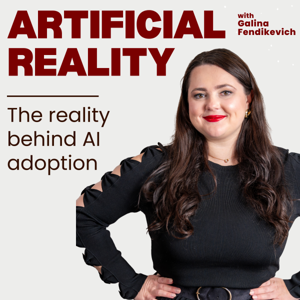


Net Road Show’s Robb Lillie breaks down how ElevenLabs replaced 3AM banker recording sessions, why Microsoft Copilot drove employees to use unsanctioned AI tools, and the EU AI Act compliance gap he calls “fast car, no seat belt.”
Robb Lillie has spent 22 years at Net Road Show, the platform behind investor communications for Goldman Sachs, Morgan Stanley, and Bank of America. He joined when the company was part of broadcast.com before Yahoo’s $5.7 billion acquisition, and now leads AI adoption across text-to-speech, proof-of-concept building, and training for a team that powers IPO roadshow and M&A deal workflows worldwide.
In this episode, Galina Fendikevich and Robb cover what’s working, what’s broken, and what still needs to be built in AI adoption for financial services infrastructure:
This episode is for anyone working in financial services, capital markets, or regulated industries who wants to see how a 22-year deal event production company is adopting AI tools like ElevenLabs, Lovable, and Synthesia without cutting corners on compliance.
It’s also for business leaders evaluating enterprise AI who need a practical framework for deciding what to automate and what to leave alone. And if you’re a builder or developer, Robb names specific unsolved problems in enterprise AI, from search layers across legacy systems to compliance verification for AI-generated video to audio correction memory that learns business terminology.
Follow Robb Lillie:
LinkedIn: https://www.linkedin.com/in/robblillie/
Website: netroadshow.com
Email: [email protected]
Artificial Reality:
Website: artificialrealitymedia.com
Instagram: instagram.com/artificialrealitymedia
LinkedIn: linkedin.com/company/artificial-reality-media
Galina Fendikevich: linkedin.com/in/gfendi
Keynote speaker James Taylor breaks down how he runs his speaking business on Claude, why cheap AI pricing won't last, and how 1,000 people made a Taylor Swift reggae theme song with AI in about 15 minutes.
On Artificial Reality, I ask business owners what's working with AI, what's broken, and what still needs to be built. This episode is a behind-the-scenes look at how one of the world's busiest keynote speakers uses AI across sales, marketing, speech writing and delivery.
James Taylor is an international keynote speaker on creativity, artificial intelligence and innovation, and the author of SuperCreativity: Augmenting Human Creativity in the Age of Artificial Intelligence. He started his career managing rock stars, moved into tech in Silicon Valley, and now gives 50 to 100 keynotes a year in 25+ countries for clients including Apple, Deloitte, Visa and McDonald's. He is a Fellow of the Royal Society of Arts.
In this episode, I ask James what's working, what's broken, and what still needs to be built with AI in his speaking business:
This episode is for you if you're a speaker, consultant or creator who wants AI to handle the business side of your expertise, or a business owner figuring out where AI actually saves time and where it still falls short. It's also for founders and developers building AI tools who want to hear what a power user running five AIs at once still can't find on the market.
Follow James Taylor:
jamestaylor.me
youtube.com/@JamesTaylorMe
linkedin.com/in/jameskirktaylor
instagram.com/jamestaylordotme
SuperCreativity: geni.us/QiDBu
Artificial Reality:
artificialrealitymedia.com
instagram.com/artificialrealitymedia
linkedin.com/company/artificial-reality-media
luma.com/artificialreality
Hosted by Galina Fendikevich
Steven Webster sold his company to Adobe, consulted for NASA, NATO, and Nike, and built a full AI operating system for his next company. Here's how.
Steven Webster is the founder and CEO of Asensei, the movement recognition company that does for physical movement what speech recognition did for voice. Before Asensei, he sold his first company to Adobe, built their worldwide design consulting practice, and opened an innovation studio for Microsoft. He was also the UK's youngest junior jiu-jitsu black belt and coached Edinburgh University's Karate Club to 10 consecutive national championships.
In this episode of Artificial Reality, I ask Steven what's working with AI, what's broken, and what still needs to be built for CEOs running real companies:
This episode is for you if you're a CEO or founder looking for a concrete AI adoption framework from someone who already built one, if you want to understand how to go from basic AI chat to a full agentic operating system across your company, or if you're a builder trying to understand why business leaders struggle with AI tools and what needs to change.
Follow Steven Webster:
Asensei: asensei.ai
LinkedIn: linkedin.com/in/stevenwebster
Five Principles for AI Leadership: webstersensei.substack.com/p/five-principles-for-ai-leadership
AI Leadership and Agentic Office of the CEO:
webstersensei.ai
Substack: webstersensei.substack.com
Artificial Reality:
Website: artificialrealitymedia.com
Instagram: instagram.com/artificialrealitymedia
LinkedIn: linkedin.com/company/artificial-reality-media In-person events: luma.com/artificialreality
Host: linkedin.com/in/gfendi
Chris Madden's agency hit 1 billion views in 3 years. He breaks down why AI clipping tools still fail at the most important part of short-form video, how he cloned his voice and now ships content daily without recording himself, and why he believes social media matters more than AI.
Chris Madden is the founder of Good Future Media, a podcast editing agency whose clients include All In, This Week in Startups, Pirate Wires, and Solana, and Clipstastic, an AI voice cloning content agency.
He spent 10 years teaching English across Thailand, France, Korea, and China before building an unofficial TikTok fan account for the All In podcast that hit 30,000 followers in a month and landed him the role of Head of Content at Twenty VC. He also hosts the Imagine AI podcast with over 150 episodes.
Galina Fendikevich asks what's working with AI, what's broken, and what still needs to be built in podcast editing, AI voice cloning, and content production at scale:
This episode is for you if you run a content agency, podcast, or video production company and want a clear breakdown of where AI saves time and where human editors still outperform every tool on the market.
It is also for founders, thought leaders, and business owners who want to build a social media presence and post consistently without recording themselves on camera, and for anyone building AI tools for content clipping, voice cloning, lead generation, or recruiting who wants to hear exactly what is failing from someone producing 140 videos a week for the biggest shows in tech.
Follow Chris Madden: youtube.com/@ChrisMadden_ instagram.com/chrismadden365 linkedin.com/in/chrismadden365
Work with Chris:
https://www.cliptastic.ai/
https://goodfuturemedia.com/
Artificial Reality:
Website: https://www.artificialrealitymedia.com/
Instagram: https://www.instagram.com/artificialrealitymedia LinkedIn: https://www.linkedin.com/company/artificial-reality-media/
In-person events: https://luma.com/artificialreality
Host: https://www.linkedin.com/in/gfendi/
NYC store co-owners Sara Rojas and Luisa Ramirez break down how a $37 AI tool replaced $1,000 marketing agencies, how ChatGPT cut their email time from ten minutes to under one minute, and the AI failures that still cost them days of work every week.
Sara and Luisa are co-owners of char-CUTE-rie by Bohemian Picnics NYC, a store steps from Central Park where customers build their own charcuterie boards and rent picnic baskets for the park.
Sara handles creative direction and all finances for both the store and their sister event planning business, Bohemian Picnics. Luisa is the executive chef behind the menu and runs all marketing and social media.
Here is what is working with AI, what is broken, and what still needs to be built for small business owners running a store and catering company:
This episode is for you if you run a small business in food service, catering, event planning, or retail and want to see exactly how two non-technical owners use AI to handle emails, marketing, finances, and vendor planning.
It is also for business owners who have tried AI but get frustrated when the tools lose context or produce unusable output, and for builders and developers who want to hear from operators about what saves them time, what breaks on them daily, and what they would pay for tomorrow.
char-CUTE-rie by Bohemian Picnics NYC: https://www.instagram.com/char_cute_rienyc/
Artificial Reality: Website: https://www.artificialrealitymedia.com/
Instagram: https://www.instagram.com/artificialrealitymedia LinkedIn: https://www.linkedin.com/company/artificial-reality-media/
In-person events: https://luma.com/artificialreality
Host: https://www.linkedin.com/in/gfendi/
SwipeFile owner Neville Medhora breaks down how AI destroyed his copywriting business and built him a better one, why AI-written newsletters are losing their audiences, and how he runs a million-dollar solo operation on $20 a month.
Neville Medhora is the owner of SwipeFile and founder of Copywriting Course. He started selling glow sticks online, ran the emails at AppSumo until he hit 750,000 users, and has put his writing in front of over 280 million people. Noah Kagan featured him as one of the entrepreneurs doing over a million dollars a year with zero employees.
What's working with AI, what's broken, and what still needs to be built in copywriting, content, and the one-person AI business:
This episode is for you if you're a copywriter, content creator, or newsletter operator trying to understand what AI actually changes about your craft. It's equally valuable if you run a business and want to see how one person built a million-dollar operation by using AI for everything except the judgment that matters most, or if you're building AI tools and need to hear why your users don't know what to ask and why invisible features outperform flashy ones.
Follow Neville Medhora:
SwipeFile: https://swipefile.com
Newsletter: https://swipefile.com/newsletter
Kopywriting Course: https://kopywriting.com
LinkedIn: https://www.linkedin.com/in/neville-medhora-654749/
Instagram: https://www.instagram.com/neville_medhora/
YouTube: https://www.youtube.com/@kopywriting/videos
Artificial Reality:
Website: https://www.artificialrealitymedia.com/
Instagram: https://www.instagram.com/artificialrealitymedia LinkedIn: https://www.linkedin.com/company/artificial-reality-media/
In-person events: https://luma.com/artificialreality
Host: https://www.linkedin.com/in/gfendi/
After interviewing 6 operators across 7 industries about AI adoption, Galina Fendikevich found 3 patterns nobody could see from inside their own corner.
Galina Fendikevich is the creator and host of Artificial Reality. She did machine learning on Wall Street, was on a team that exited to a $9 billion company, and ran US go-to-market for one of the first generative AI unicorns.
She spent Season 1 asking executives across construction, yacht charter, luxury hospitality, deep tech PR, M&A, restaurants, and health coaching the same 3 questions: what's working with AI, what's broken, and what they'd pay someone to build next.
In this episode, she covers what's working, what's broken, and what still needs to be built across 7 industries:
This episode is for you if you run a business and want to know what your peers are doing with AI before you spend a dollar finding out yourself, if you need a filter for serious AI vendors versus tourists, or if you build AI products and want customer discovery from 7 industries for free.
Download the Free Reports:
https://arc.net/l/quote/lnabmwxw
The Dream 100 List:
https://arc.net/l/quote/nbvswfzr
https://www.artificialrealitymedia.com/
https://www.artificialrealitymedia.com/partnership
https://www.artificialrealitymedia.com/speaking
https://www.instagram.com/artificialrealitymedia
https://luma.com/artificialreality
https://www.linkedin.com/in/gfendi/
Dr. Nikki Siso built 15 Claude skills to assess your toxic load. One client's root belief surfaced in just 3 questions. The holistic health practitioner and Conscious Kitchen founder breaks down how her TALKS assessment cut client intake from hours to 45 minutes with a 10-page report, why she banned all FDA and EPA-approved sources from her AI, and how a client reached the root of a lifelong belief system in 3 questions after years of therapy never got there.
Dr. Nikki Siso is a certified holistic health practitioner and the founder of Conscious Kitchen in Westlake Hills, Austin, Texas. She developed Type 1 diabetes at 29 despite being vegan since 15, which launched a quest through a Harvard master's in sustainability, a PhD in holistic health, shamanic work, and every biohacking tool she could find. She now runs TALKS, a total toxic load assessment powered by Claude.
In this episode, we cover what's working, what's broken, and what still needs to be built in holistic health coaching:
Follow Dr. Nikki Siso:
LinkedIn: linkedin.com/in/nikkisiso
Conscious Kitchen: consciouskitchenatx.com
TALKS Assessment: consciouskitchenatx.com/talks
Artificial Reality:
Website: artificialrealitymedia.com
Instagram: instagram.com/artificialrealitymedia
LinkedIn: linkedin.com/company/artificial-reality-media
In-person events: luma.com/artificialreality
Hosted by Galina Fendikevich: linkedin.com/in/gfendi
Dr. Nikki Siso used AI to open a raw restaurant. Some tools saved thousands. Others cost her $30,000 and a full month. The Conscious Kitchen founder breaks down how ChatGPT caught 8 harmful clauses in a 45-page lease in 3 minutes, why AI completely missed the local permitting steps needed to pass health inspection, and how she built 15 custom skills in Claude to assess toxic load across food, homes, and thought patterns.
Dr. Nikki Siso is a certified holistic health practitioner and the founder of Conscious Kitchen, a raw, organic, plant-based, gluten-free restaurant in Westlake Hills just outside Austin, Texas. She holds a PhD in holistic health and nutrition with a specialty in peak performance and co-founded the restaurant with her mother, a master chef of 30 years.
In this episode, we cover what's working, what's broken, and what still needs to be built in holistic food and restaurant startups:
This episode is for you if you're opening a restaurant or food business and want to know which AI tools save real time, if you're exploring AI for the first time and want honest stories instead of hype, or if you're building AI products and want to hear what's missing in local permitting, budgeting, and personalized nutrition.
Follow Dr. Nikki Siso:
LinkedIn: linkedin.com/in/nikkisiso
Conscious Kitchen: consciouskitchenatx.com
Artificial Reality:
Website: artificialrealitymedia.com
Instagram: instagram.com/artificialrealitymedia
LinkedIn: linkedin.com/company/artificial-reality-media
In-person events: luma.com/artificialreality
Hosted by Galina Fendikevich: linkedin.com/in/gfendi
M&A adviser Christine McDannell says her $100/month Claude subscription does the work of $40,000 in monthly payroll. She breaks down how she trained Claude to draft every client email in five days, why a seller walked into a meeting with a $5 million AI valuation on $125,000 in net profit, and what Claude told her after analyzing 18 months of her Slack messages.
Christine is the founder of The Magnolia Firm, a boutique M&A brokerage specializing in selling profitable tech companies. She built and sold multiple companies of her own before launching the firm five years ago, running her own exits and deal processes from start to finish. She also runs an AI implementation club in Austin.
In this episode, we cover what's working, what's broken, and what still needs to be built in mergers and acquisitions:
This episode is for you if you work in M&A, business brokerage, or professional services and want to see how one adviser automated nearly her entire workflow. It's also for business owners testing AI tools who want real examples of what saves money versus what still falls short. And if you build AI products, you will hear exactly where the tooling gaps are from someone deep in the workflow every single day.
Follow Christine McDannell:
Website: https://www.christinemcdannell.com/
LinkedIn: https://www.linkedin.com/in/christinemcdannell/
Artificial Reality:
Website: https://www.artificialrealitymedia.com/
Instagram: https://www.instagram.com/artificialrealitymedia
LinkedIn: https://www.linkedin.com/company/artificial-reality-media/
In-person events: https://luma.com/artificialreality
Host: https://www.linkedin.com/in/gfendi/
From the publisher's feed
Everyone is talking about what AI can do.
Few are talking about what people actually need it to do.
Artificial Reality is a podcast about the reality behind AI…
Hosted by Galina Fendikevich, the show explores how AI is actually being used across industries like manufacturing, construction, logistics, healthcare, finance, hospitality, and beyond.
Each episode brings together operators, executives, founders, and industry experts to answer three questions:
• What's working?
• What's broken?
• What still needs to be built?
While much of the AI conversation focuses on models, funding, and product launches, Artificial Reality focuses on the people expected to use these tools every day.
How are businesses actually adopting AI?
Where does implementation break down?
What problems still haven't been solved?
And what should builders create next?
The future of AI shouldn't be shaped only by the people building it. It should also be shaped by the people using it.
Artificial Reality is where those conversations happen.
Follow along here: https://www.linkedin.com/company/artificial-reality-media/