Early fur trapping companies established outposts, known as forts, before the Oregon Trail opened. One example was the rendezvous point along the Umpqua River known as the “Old Establishment” or “McKay’s Old Fort,” built in the early 1820s by the North West Company, a Canadian firm active in the fur trade from the 1780s to 1821.
A year before the United States entered World War I, cars were already making an impact on the country. It was 1916 and the three-day Fourth of July celebration in Ashland drew 60,000 visitors.
For settlers along the upper Coquille River in the 1800s, mail delivery was tenuous. The closest post office was in Empire City, a present-day district of Coos Bay, Ore. The round trip took about four days, and generally depended upon the generosity of local farmers who sporadically sailed downstream to sell their produce.
In the 1880s, Sterlingville, Ore., was a busy town of several hundred people working in the mines, farming and running businesses. The town had a post office, school, shops, several saloons, and the largest hydraulic mine in Oregon.
Serving as either Medford mayor or Jackson County judge between 1948 and the 1970s, Earl M. Miller believed a healthy community must have good schools, good roads, and good water.
James Mason Hutchings, born in Towcester, England, in 1820, was a son of a carpenter and expected to become one, too. But at age 23, George Catlin’s paintings of North American Indians excited Hutchings and he left for New York.
Baseball drew people together on Oregon’s South Coast in 1916, as people from all over took advantage of a rare opportunity to gather and become acquainted. A game between Gold Beach and Brookings drew a big crowd in August.
2 min
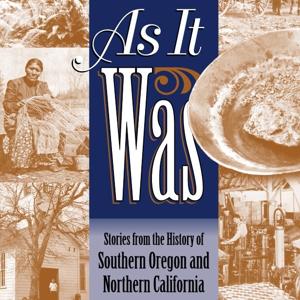
About As It Was
From the publisher's feed
Colorful vignettes dedicated to the regional history of Southern Oregon and Northern California. As It Was is an all volunteer effort -- produced by Raymond Scully and narrated by Shirley Patton in…
partnership with writers from the Southern Oregon Historical Society.If you have a writing background and would like to submit an As It Was essay for consideration, email your written piece to [email protected] collection of As It Was essays is available in a high-quality paperback book at the JPR Online Store. Each episode is also available below.