
Sign up to save your podcasts
Or

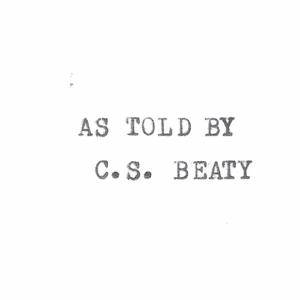


Dear Mr. Fudd,
I’ve always wanted a pen pal. My brother had one once, it was an old neighbor girl who moved to Minnesota. I heard stories of this family growing up and had to pretend that I knew them and cared about them when we visited on summer vacations, but no one ever wrote me a letter. I think it was my parents’ idea to have them write one another, maybe to help spark a romance or to alleviate the pains of the hot girl from across the street from moving away. Jason told me they only sent a couple of letters, but that was more than I ever got.
There’s a roadside Bonsai tree stand that I drive by off of Dodge St. I always see an older Asian guy setting up racks and racks of Bonsai trees on makeshift plywood shelving. It’s kind of like the guy who sells sweet corn from the back of a pickup, but instead it’s Bonsai trees. He never has any customers.
I wonder how one gets into the roadside Bonsai business? I never realized how little I know about the entire industry. Are there Bonsai tree farms? What’s a Bonsai tree go for? I think I might buy one, but I don’t actually want to take care of anything living. Maybe he sells maintenance plans. I’ll let you know what I find out.
Much obliged,
-C.S. Beaty
Thanks for reading By C.S. Beaty! If you subscribe, you’ll get funny stuff without any spam!
•••
When I started writing routinely, I did so without a plan. I wanted to write down the things on my mind, that was about it. I bought a typewriter so the impulse to edit would be removed from the creative process, and after about a year-and-a-half, I had written enough essays to fill a book. Not necessarily a good book, but enough words and pages to bind them all together and write a title on the spine. So for the Christmas of 2023, that’s what I did.
I had yet to decide the means of sharing my writing with the world, so I started smaller. I printed and bound about ten copies of my essays and distributed them to a select few friends and family. The response was mostly positive, like a polite positive. I think everyone understood the effort and care I had put into my writing, but whether it was something more than that—more marketable than that—none of us knew. But I kept writing.
I wrote enough to print a follow-up volume for Christmas 2024, and when I went to chat with Mike The Printer about my latest project, he told me about a fan I didn’t know I had.
I wasn’t the first person to compile my esoteric ramblings into a Christmas present for friends and family, and the similarities between my writing and one of Mike’s other best customers were too coincidental to not bring to my attention. He told me he held back a copy of one of my books and passed it along to this mystery man. And this man approved. This man who I never met, went by the pen name Haywood Fudd.
There is little to no internet trail for Haywood Fudd. In an age of algorithms and curated digital news feeds, Fudd’s chosen medium is entirely analog and anachronistic. He probably puts in as much work as any ass-shaking, disgusting-food-eating, Tik Tok starlet—but he’s not doing the work for the clicks. He’s doing it because he thinks it’s funny and it brings him joy. And it brings others joy. Or so I assume, I’ve never asked him.
Fudd calls himself “The King of Literary Daredevils.” If you read his work, you’ll learn he’s a big fan of Evel Knievel. Most people haven’t read all his work through. Most people don’t get that opportunity. Most people only get a single letter. Written and addressed just to them. A letter from a man they’ve never met, but who thinks it would be funny to send them a letter.
The first stunt I heard of was Fudd’s 2023 assault on the good people of Bliss, Idaho. Somehow, inexplicably, Fudd had located a directory of the name and address of all 226 residents of this small rural town. And sent them all an original letter. Only one person wrote him back—George Freeman—and he dedicated his compilation of letters to him. The same compilation that Mike The Printer was in the process of assembling when he told me about Mr. Fudd.
I was hurt by this. As a person who has bled over a typewriter and felt a mediocre reception, many times, it seemed a travesty that someone would devote so much creativity and effort to an ingenious stunt of this sort and only have a single admirer as a result. I set out to change that.
Eight days after writing that first letter, I received a reply. My first reply.
September 25th, 2024
Dear Mr. Beaty,
Thank you for your September 17 dispatch. I received it while lathered in a thick and luscious coat of e’lan.
Regarding pen pals, I was once contacted by a lady doing hard time in Missouri in 2004 or 2005. She offered to send me body pictures for as I recall $10. I sometimes wonder about her in the wee, wee hours of the night.
Bonsai trees. I would be most appreciative of any information you uncover on these trees. I have this perfect place for a small cops of these trees so long as they don’t require daily watering during the blistering summers.
Know this: I may wanted man on the Googlers. Fire up the Googler and search on Haywood Fudd. You’ll see a link to “strange letter.” The purpose of this paragraph is for you to know exactly who you’re dealing with—the undisputed king of the literary daredevils. As of this epistle, I have written over 1000 letters to perfect strangers. I’m on a literary mission.
If you can think of nothing else this Thanksgiving to be thankful for, I beseech you to get down on bended knee and thank the supreme architect for gravity. Without just the exact amount of gravity, mankind would be doomed. Doomed! Gravity is that crucial.
Much obliged,
-Haywood Fudd
King of the Literary Daredevils
P.S. As is it my want. My raison d’etat, I reply to dispatches with two $1.00 bills.
P.P.S. Kawasaki let the good times roll.
Kawasaki let the good times roll.
Get a board and you’re gonna say, “let the good times roll.”
So I wrote him back, and he wrote me back. And a year-and-a-half and over 50 exchanges later, we’re still at it.
Introducing a new As Told By C.S. Beaty production: Letters to Haywood Fudd.
A few weeks ago I achieved a lifelong dream by publishing my first book. It’s a coming-of-age memoir about my awkward high school years—kind of like Sixteen Candles if that annoying kid who asked Molly Ringwald out on a date wrote a book about his life. As it turns out writing a book and selling a book are two different skillsets, and now that I’ve sort of figured out how to do the first one I’m now fumbling around on the second. The hard cover, paperback, and ebook are all out now on easy to find on my new website csbeaty.com— but I just started recording the files for the audio book. I wanted to share the first couple of chapters. It’s like the free chips and salsa at the Mexican restaurant that are designed to make you starve for the entree. Feel free to order the full meal.
Thanks for reading By C.S. Beaty! You probably want more of this, right? Well, I know one way to make that happen…
What Just Happened?
I could never be at peace again till I had written my charge against the gods. It burned me from within. It quickened; I was with book, as a woman is with child.
-C.S. Lewis
After the final dismissal bell rang, it was a long walk back to the band room.
My last class was English, which was a nice way to end things. I looked forward to those discussions even though I had little in the tank at 3:36 p.m. Mr. G.’s classroom was on the opposite end of the school from where I parked my red Isuzu pickup. The truck was a hand-me-down: handed down from a previous owner to my oldest brother, who then handed it down to my next oldest brother, who then handed it down to me. It had a manual transmission, no power steering, a different shade of red on each panel, and a threaded pipe welded to the tailgate where the original bumper had fallen off. I should have been embarrassed by this automobile forced on me by my parents, but I loved it. It was completely unlike all the starter cars my friends had been gifted, and it gave me an easy way to stand out from the masses—from my classmates whose personalities would melt together if left exposed to the high school environment for too long. It was nice to be forced to be a little different.
Like the rest of the kids in marching band, I had been at Grand Island Senior High before the sun had burned off the morning dew. The parking lot outside the band room was adjacent to the soggy grass fields where we soaked through tennis shoes while practicing marching drills. They always watered the lawn right before we showed up, which once led to our band director halting rehearsal and demanding the athletic director come outside to see what we had to put up with. I’m not sure it helped much. Marching band wasn’t exactly a priority at our school. I learned to pack a change of socks and stashed the soggy ones next to my winter coat in the back of the band room. Throughout all four years of high school, I never once bothered to learn where my locker was. Piling my things on top of these filing cabinets served my purposes just fine. No one messed with the drummers’ stuff piled in the back. The only kids who went into the band room were band kids, and the drummers were not to be fucked with. At least not to be fucked with by other band kids. Outside the walls of the band room we were prey, but within them we were lions.
Noah Woods and I walked side by side for the first half of the route until he exited the main doors to track down his car. Noah was one of my closest friends and probably the only person I didn’t try to prove myself to. I was pretty sure I hadn’t turned Noah into a Christian yet, but I was working on it. He had been to our church’s youth group a few times and even agreed to go on the church’s spring break trip to Denver with me. I was making progress and was determined to convert him—but frankly his lack of interest in his eternal damnation was starting to piss me off.
Noah and I had been friends since middle school when we bonded over watching sports and Quentin Tarantino movies. It was at Noah’s house where I finally finished watching Kill Bill: Volume 1. My mom let me rent it from Blockbuster several years earlier after I told her it was one of my older brother’s favorite films, but she insisted on watching it with me and powered down the DVD player when the opening scene centered around a male nurse selling Uma Thurman’s comatose body for sex to a trucker named “Buck who likes to f**k.” From all my mom’s years working at a hospital, this must have hit a little too close to home. Or maybe it was because I was thirteen at the time.
I passed the mural of our school logo painted over a concrete brick wall—a pair of luscious palm trees in front of a gorgeous sunset, beckoning us to a place far away from the corn fields of central Nebraska. Because of our nonsensical city name of Grand Island, our school and our town as a whole had an island motif forced on it. We were the Islanders, which only made slightly more sense than the Vikings at the nearby Grand Island Northwest High School. I suppose one school liked ships and the other liked where the ships docked, neither of which really fit with the landlocked scenery outside our high school windows. We gave our respective schools more appropriate nicknames: the Islanders would say the Vikings went to “Cow Pie High,” whereas the Vikings returned the favor by calling our school “Drive-by High.” Neither school’s administration accepted these write-in ballots for naming rights, but the monikers fit.
The “purple island” was ahead—a plywood mountain covered in carpet where the anime club kids played Magic: The Gathering. I considered making a pit stop at the nearby snack shack named Hula’s. Hula’s was run by the Special Education students and sold gallon-sized chocolate shakes for $1. Sometimes my mom would buy me a Hula’s punch card, which the workers with Down syndrome often forgot to punch. I probably should have told someone. I started going to Hula’s less and less after childhood obesity concerns reduced the serving sizes available in public schools. These changes devastated Hula’s business, and the impact was felt. I not only lost an easy 1200 calorie snack at the end of my day, but the lack of customers also made it harder to eavesdrop on the conversations of hot girls. I greatly missed the casual mentions about how “shaving your pubes if you’re a girl makes total sense, but I wouldn’t want my boyfriend to do it.”
Anxiety is my motor. In addition to saving the souls of my friends from eternal damnation, the toils of the day ended with a list of homework to be completed, activities to show up for, and work shifts to cover. And the doomsday clock on my time at high school was ticking. Where was I going to go to college? What was I going to study? How was I going to pay for it? Those questions dragged on my subconscious like seaweed building on a tow line. I felt I would get to those to-do items—eventually— but there were others I wasn’t so sure of. As the youngest of four kids, I knew the patterns. I had seen it play out three times ahead of me in the lives of my older siblings. You were supposed to leave high school with a stable of lifelong friends and an established love life. Granted, that’s not exactly how it played out for my sister or either of my two older brothers, but that was how it was supposed to work. I needed to make friends who could be my groomsmen on the day I married my high school sweetheart— but for some reason we were all just kind of shitty to each other.
I entered the main corridor where all five of the school wings met in a central spillway. Any hopes of catching up with my friends would have to be put on hold, as the halls were now deafening with Islanders fleeing from captivity. During my high school orientation, I was taught to hold up my hand with fingers splayed to get a rough idea of the layout of Senior High’s floorplan. The 500 wing was the thumb, the 400 wing the index finger, and so on. I was now in the center of the palm, along with two-thir…
A few weeks ago I achieved a lifelong dream by publishing my first book. It’s a coming-of-age memoir about my awkward high school years—kind of like Sixteen Candles if that annoying kid who asked Molly Ringwald out on a date wrote a book about his life. As it turns out writing a book and selling a book are two different skillsets, and now that I’ve sort of figured out how to do the first one I’m now fumbling around on the second. The hard cover, paperback, and ebook are all out now and easy to find on my new website csbeaty.com— but I just started recording the files for the audio book. I wanted to share the first couple of chapters. It’s like the free chips and salsa at the Mexican restaurant that are designed to make you starve for the entree. Feel free to order the full meal.
Thanks for reading! If you want a free weekly story, sign up for my newsletter. It’s safe. I promise.
What I Did On My Summer Vacation
We shall understand our present, and perhaps even our future, the better if we can succeed, by an effort of the historical imagination, in reconstructing that long-lost state of mind for which the allegorical love poem was a natural mode of expression.
-C.S. Lewis
As the Incans expanded their empire, several indigenous groups fled to the islands of Lake Titicaca to avoid conquer. While the Incans were good at climbing mountains, they were s**t at swimming. So, like the second Avatar movie, which is just a water version of the first Avatar movie, a group of castaways sought a liquid sanctuary. They isolated themselves from foes, but also from everything else. They cared for their families and looked out for their friends. They became self-sustaining and culturally incestuous by adapting their way of life to their new surroundings. And for centuries, little changed.
Incredibly, these islanders still exist. Even when the Incans were no longer a threat, they decided to stay put. After the Incans came Fernando Pizarro, who planted the Spanish flag in conquest and taught savages to become proper Catholics. After Spanish rule came Simón Bolívar, who reclaimed South America so it could be ruled by oligarchs. After oligarchs came drug lords, socialists, corrupt corporations, and more oligarchs. As the outside world shifted and civilizations crumbled, the residents of Lake Titicaca sold fish and stayed out of trouble.
Commercial fishing and environmental hardships have made it harder to sustain a family with a net and a boat, so today most of the islanders make money from tourism. My wife told me about these people while she was planning a trip to Peru. She’s a high school Spanish teacher and each year someone in her department gets to take a group of students to a Spanish-speaking country. Her turn was coming up, and she had heard great things about the two-day excursion to visit these island people. Because my wife is popular with the students at her high school, she had no problem filling the trip with enough bodies to earn a free ticket for both her and me. So, in the summer of 2024, the two of us joined thirty other students and chaperones to see these islands for ourselves.
Lake Titicaca has over a hundred man-made floating islands crafted out of reeds. As they grow, the roots of the reeds naturally intertwine underwater, and using primitive handsaws, the islanders cut out cubes of these roots and lash them together. The blocks are left to sit for about a week so the living roots can weave the parcels together and form a floating mass. Dried reeds are thrown on top to form a matted surface, and then the island is move-in ready.
Stepping foot on one of these floaters feels like you’re walking on a waterbed. A single island is a few hundred square feet and home to a handful of households consisting of families and close friends. Scant solar panels provide the most basic of electricity, but there is no indoor plumbing. Only outdoor. In a lake. There seemed to be little privacy, but despite spending several hours meeting numerous families, I never saw anyone pooping outside. They figured out how to make it work. People are good at adapting to their surroundings.
We were given a presentation on floating island life by the president of Isla Pato Corazón. The various islands rotate hosting visitors so the lucrative tourist dollars can be spread throughout the communities. Most residents spend their days creating items to sell, like elaborate tapestries or miniatures of the elegant boats crafted from the same reeds their homes are built upon. From collecting duck eggs to waiting for a motorboat to take kids to school, the mundane tasks necessary in any culture are shaped by their environment. Including romance.
In rural Nebraska, teenagers drive to a secluded cornfield to make out in the front seat of a Toyota Camry, but in the floating islands they use a “bota romantica.” Just large enough for two full-grown adults and bedded with loose reeds, these sex rafts are shared between islanders for when the need arises. It takes some advance planning, but if a couple wants alone time away from curious eyes and attentive ears, one of these woven canoes can be checked out and discreetly piloted into the thick cover of the growing reeds so the two can get freaky.
I taught the canoeing merit badge during a summer job at a Boy Scout camp, so I am very familiar with what maneuvers would be difficult to perform in a boat. Having sex is one of them.
I bought a miniature bota romantica as a souvenir. I sent my wife a postcard of the full-size sex raft as a memento of our trip.
…
I was impressed but not surprised that these islanders figured out a fix for this intimacy problem. As the foggy sex car scene in Titanic vividly demonstrates, adolescent resourcefulness knows no bounds when the need for some fondling arises. But the problem I always found more confounding wasn’t what to do once you’re horny, but rather: how do you find the woman willing to be the skipper on your boner boat in the first place?
In addition to the floating islands, Lake Titicaca has forty-two “natural islands.” After leaving the floating island of Isla Pato Corazón, we boarded a ferry for a two-hour trip to see how island life differed on one of these permanent sites. Our tour guide grew up on one of these natural islands and told us how things worked where he was from. His native language was Aymara, an indigenous language spoken by the first water settlers. Not all the islands speak Aymara, and our tour guide’s Spanish was rudimentary enough that he and I could converse without confusing one another. He told us about mermaids and fishing, but his best story was how he asked his wife out on a date.
When his grandfather was a lad, it was tradition to take a flute to a particular beach and play a beautiful melody. If a young lady was impressed (or turned on) by the flute playing, she approached the flautist. They started chatting, and if things clicked, they got married. Over generations the art of flute playing was lost. Technology changed and kids no longer had an interest in learning skills where a digital alternative was available. Just as email and MSN Messenger replaced sonnets and letter writing, listening to woodwind music couldn’t compete with the sensual beats available through radio signals. But despite the progress of the industrial age, a dude still needs to figure out how to get a date. And conveniently, instead of learning the flute, now you can just buy a boom box.
When our tour guide came of age, he left his island and voyaged to the far-off shores of the mainland. Fighting back the demons of congested traffic and avoiding the sirens of knockoff Nike apparel sold on a street corner, our hero exchanged his life savings of disposable income to purchase a portable CD player from a home electronics store. Like John Cusack in Say Anything, the eligible bachelor picked the most stirring serenade from his music collection and returned to the beach of his grandfather to blast the love song in the vic…
I always thought I had a normal childhood. At least normal enough. Normal enough to eat macaroni and cheese for lunch and get told by my mom to “stop yelling” after my older brother hit me in the head with a miniature baseball bat. But when my childhood stopped being present tense and moved into past tense, I received new lenses to look at the past. I became an uncle, so I knew what it was like to be an uncle. I knew what it was like to have nieces and nephews. And when that happened, my parents became grandparents. And I got to see what grandparents were like. All of this was very different from how I remembered it going down. It didn’t feel like the version of “normal” I experienced with my own uncles and my own grandparents.
I had a great childhood, and the fact I thought it was boring is probably a testament to just how stable and safe it was. But there were parts that were pretty weird. On both sides of my family, but predominantly on my father’s side, there were aunts, uncles, and cousins who I’ve never met. I mean pictures might exist of us at the same family function, but if you asked me how many sisters my dad has, I would have a hard time answering, an impossible time naming them, and would be completely incapable of picking them out of a lineup. This probably isn’t normal.
Thanks for reading By C.S. Beaty! Want to read the first chapter of my new book? Do you need a story once a week to make life a little more fun? If so, subscribe below. With each subscription, an angel gets its wings.
…
I’ve never met my half-aunt Charlene. While I was in college, I started receiving Facebook friend requests from people I didn’t know. There were three or four surnames that kept coming up, and my dad was a mutual friend with all of them. They were clearly relatives, but that’s as much as I could piece together. Cousins? Half-cousins? Second-half-cousins? Are there second-half cousins? I accepted some of the requests and ignored others. I didn’t have a method for which relatives got to become my digital friends. It kind of depended on how angry I felt at the time about this secret family who I accused in my mind of just wanting to pad their online popularity statistics. I didn’t plan on interacting with any of them, I didn’t really interact with anyone on Facebook, so the stakes weren’t high if someone was offended when I declined their requests.
One of these requests came while I was visiting my parents.
“Mom! Who is Charlene Beaty Bailey?”
“That’s your dad’s half-sister.”
“Wait, what? Half-sister?”
“Yeah, she just showed up one day on the doorstep and your dad didn’t know anything about her. She was your Grandpa Beaty’s daughter before he married your grandma.”
“What?”
“Your Grandpa Beaty had a lot of issues.”
“She looks older than dad.”
“She is.”
As weird as it was I had never heard of Charlene Beaty Bailey, it felt normal for me to have another aunt I didn’t know about. But I knew for CERTAIN that my dad was the oldest in his family. I’ve always known this. It goes: Dad, Uncle Dan, some other people, Uncle Roger is in there somewhere, Uncle Bruce. But now you’re telling me that was wrong? Did I miss this story? When you are told “your dad is the oldest in his family” that’s supposed to mean he’s the oldest in his family, right? Doesn’t having an older sister make you NOT the oldest in your family?
And I’ve made it to legal drinking age before I discovered this aunt’s identity from a Facebook friend request?
This probably isn’t normal.
…
My mom elaborated a bit more, but only just a bit. After Charlene graduated high school, she moved to South Dakota to find her biological father. Who was also my dad’s biological father. My Grandpa Marion Beaty never told my dad or the rest of his new family that he had been previously married, and he already had a daughter. My dad never knew he had an older sister. My dad never knew Charlene existed until she showed up and introduced herself. And I guess we kept the family tradition alive in our own household by never talking about Charlene, or Grandpa Marion Beaty, or really anyone from that side of the family. I always felt it wasn’t my place to ask about any of them. It was hard to ask about someone you didn’t know existed.
I accepted Charlene’s Friend request.
And that was kind of it for a while. I had one weird conversation with my mom, and then we all went back to ignoring our extended family. I would see occasional posts from Charlene, I’m sure she saw some of mine. And life just went on. Those family mysteries stayed mysterious.
At least until Charlene posted about some movie she was in. Like a real movie. Where she played herself.
Journalist Jessica Bruder wrote a book called Nomadland about people who live in their vehicles and travel around. A book my aunt was in. And then a bunch of Hollywood producers, including Frances McDormand decided to turn it into a movie. A movie my aunt was in.
I was never that curious about my family. I was never that curious about my aunt. But Jessica Bruder was curious about my aunt. Director Chloé Zhao was curious about my aunt. Frances McDormand, the woman who won Academy Awards for two of my favorite movies and was married to one of my all-time favorite directors, was curious about my aunt. The world was curious about my aunt. They all cared about her life before I did. And I felt guilty about that.
I still kind of do.
Suddenly this aunt I knew nothing about was sharing her story with the world. And the world cared. And I had no idea she was living in a van. And I had no idea why she started calling herself “Swankie.”
…
The movie had yet to be released outside of the festival scene, and we were still in the heat of COVID lockdowns. Going to a movie theater wasn’t an option, so I had to wait until Hulu released the movie for streaming. I was anxious about learning my family history. I was anxious about the dozens of readers who got a hold of the Omaha Public Library’s copies of the Nomadland book ahead of me. I was anxious about all the people who knew more about my aunt than I did.
When I got a copy of Bruder’s book, I was a bit disappointed. It was interesting and well written—kind of a Grapes of Wrath for the 21st Century. But the story of my aunt wasn’t there. She was in the book—right in the middle of chapter eight—but not her story.
“Swankie also let Vincent use her rented post office box. That gesture meant a lot. Her own family would no longer accept her mail, she said.”
That was it. I guess I would have to wait for the movie for the rest.
Hulu finally released it. We got a seven-day trial and invited my parents over to watch. They had already seen the movie but didn’t want to cancel on us. They always looked for an excuse to spend time with my wife and me. My dad couldn’t help giving his commentary based on whatever insider knowledge he had gleaned from Charlene’s Facebook posts. He mentioned Charlene had driven her van to my childhood home after I moved out. He was impressed by the van’s solar panels she had installed herself.
The movie ended, along with any conversation about my family. It still didn’t feel like the kind of thing to ask too many questions about.
A few months later we all gathered in my basement again, this time to watch the 93rd Academy Awards Ceremony. Where Aunt Swankie, despite the COVID restricted Oscar ceremony, was attending alongside Director Chloé Zhao as her plus-one. She walked the red carpet. She sat between Zhao and Frances McDormand throughout the ceremony. She held Zhao’s Academy Award for Best Director. And when Nomadland was named the 2020 Best Picture, she was on the stage accepting the award alongside all the people who wanted to tell her story.
…
I didn’t get in touch with Swankie after her big night, at least not right away. Now that she was famous, it felt inappropriate. Like I was trying to latch myself onto her only after she was in this Oscar-winning movie.
But when my wife and I adopted three kids from Colombia, she sent me a Facebook message.
“Ok... I am t…
Hey, I wrote a book! And I want you to come drink a beer with me to celebrate!
Come to Vis Major and you’ll find my book, some books from my friends, and some Grand Island music for purchase.
Can’t make the party but still want to read about how stupid I was? Loser* will be available in a few weeks on www.csbeaty.com!
Loser*: A Survival Guide to High School Popularity
While a teen in small town Nebraska, Chris took purity pledges, listened to emo music, played drums in marching band, shot guns competitively, and worked at a Boy Scout camp. He had a crush on every popular girl he met, but he never told them. Some of the hot girls found out though, and that’s when things got weird.
Loser* is C.S. Beaty’s debut memoir about growing up as a millennial in the Midwest and realizing that even though you feel like a loser, that doesn’t mean you are one.
Facebook Event Page:
https://www.facebook.com/share/1DhEBC3ChB/
Want to read the first chapter? Subscribe below to get a weekly story emailed to you.
By Bob Copperstone
Thanks for reading! Subscribe to read the first chapter of Loser* A Survival Guide to High School Popularity by C.S. Beaty,
Wedding in the Sand
I’ve had a chance to recover from my trip to California, and now I’ll share some reminiscences with my friends.
The trip was a destination double wedding of my nieces, Janie’s girls, Kathy and Tina Matschiner, who both live in Lincoln. Tina’s guy, John Robinson, and Kathy’s Russ Black are terrific people. I’m so happy for all of them.
The weddings were on the beach in Santa Barbara, and it was a wonderful experience. It certainly wasn’t your usual wedding experience.
It was a catered affair for about 25 people, with a big, white tent and several pergolas pitched in the sand. The girls had hired a band from LA to play on a portable bandstand, with a dance floor in front. A professional photographer was busy all night. Food was catered, with an open bar.
The grooms and groomsmen wore matching Tommy Bahama shirts, vests, linen pants and flip-flops. The bridesmaids wore long pastel dresses, and the girls were resplendent in full bridal gowns and jeweled sandals.
The lady pastor was barefoot below her white robes, and the guests were garbed in shorts and beach attire. It was, as I said, different.
The ceremony was quite beautiful and touching. I walked Kathy down the sandy “aisle” while Rochelle’s husband, Jack, gave away Tina. (Dang, I stumbled a bit in the sand when starting out on our march, but it turned out OK.)
The fully amplified band really rocked the beach well into the night. It was fun to watch surrounding beach-goers rockin’ to the borrowed music.
They lodged me in a sweet little cottage in nearby Montecito, near the Hobbit House lodge on Miramar Beach that the couples rented (google that – it’s terrific). I rented a car and had the run of Montecito and Santa Barbara, sightseeing, taking a tour of the Santa Barbara Mission and visiting Patricia and Gabriel.
Some of you may have seen the photos that others had taken of the wedding on my site on Facebook. I tried to copy them to email here, but don’t know how. Everyone and his sister were taking photos, so I didn’t take any myself.
The plane trip to California was a disaster, thanks to the Unfriendly Skies of United Airlines. Our flight was to depart at 5:55 a.m., but the check-in was a botched and delayed mess, and the security check was a cattle-herding pandemonium, with four long, creeping lines.
There were five of us in the wedding party on the flight, with lots of wedding dresses and luggage, and as the check-in dragged on, Kathy asked the clerk to call the gate and alert them that we were coming. They didn’t do that, apparently.
Sadly, we got to the gate four minutes after the last call to board was called, and they refused to let us on.
We were stunned, and the girls were naturally frantic, but nothing could be done. Our plane stood at the gate for at least 15 minutes while we chafed and cussed and stared at the closed gate.
No apologies, no sympathetic words or even a listening ear from United.
We five in the wedding party weren’t the only ones denied passage at the gate. We watched the airliner take off with 17 empty seats.
United said they could only book us on a flight the following day, but that would have been impossible. The wedding was Saturday, and the rest of Thursday and Friday had been booked with pastor interviews, rehearsals, rehearsal dinner, staging the wedding site, etc. They wouldn’t refund the tickets.
So Kathy and Russ frantically arranged other flights for that day, rescheduled the rental cars, and we flew into LAX, and drove in a rental van to straggle into Santa Barbara Airport just before midnight to claim our luggage. Our baggage had already been stowed on flight we couldn’t get on.
I’ve got to say, the girls and their guys took the whole thing quite well, and it didn’t hold back the joy but for a brief while.
We had been stranded at the frigid Eppley Airport for 12 hours. It wasn’t fun. My jacket was in my suitcase and I had to suffer in the super-air-conditioned terminal. I don’t know who that guy Eppley was, but I hate him now. I hope he freezes in his coffin.
My solo trip home was similarly gruesome, with United (again – I didn’t have a choice) booking me on a stopover at San Francisco which inexplicably shuffled me to Delta Airlines, whose gates were two terminals and at least a half-mile away, carrying my own luggage and just about missing my connection.
##########################################
After the wedding, I saw Patricia and Gabriel only briefly. I wanted to take them to dinner the next day, but I couldn’t get hold of Gabriel again by phone (sound familiar, Jerry?)
Patricia looked fine; a little more haggard possibly, but she has earned that. Her heart is strong, she said, and she is on regular medication. No more heart palpitations or whatever it was. I’m going to call her son and see if he can tell me more about her.
Sadly, Gabe is now making the same mistakes with his old hoarding habits, and the city of Santa Barbara is citing him for the clutter on his property. Just like at his properties in Wahoo, junk is piling up overhead all over the place in Santa Barbara.
To my dismay, even the house is cluttered with junk. He has no plans forward to sell what he’s got – all the stuff he trucked in there from Wahoo – and he’s still buying more junk from thrift stores. His health seems to be fair, as near as I can tell. I give up on him, though. I know I’ve said that before but, at last, there seems to be no happy end in sight.
The two are still living in the same house, but don’t seem to be close. I’m sad for them, but there’s nothing I can do.
The wedding trip was a fine experience. I’m happy I went. I was so proud to see the girls get married, but I’m glad to be home.
But when I go back to California, and if I have a choice between flying and catching a wagon train, it’s gonna be a tough call.
Kathy & Judy Collins
Kathy had told this story about meeting singer Judy Collins several times. I put it together and had her submit it to the New Yorker magazine’s Metropolitan Diary feature in 2022. They didn’t use it. I’m guessing it was too revealing about Alcoholics Anonymous and privacy
* * *
Kathy: send ONLY the text below to NYT’s Metropolitan Diary (no title).Don’t hesitate to suggest other changes or additions before you submit.
Link to Metropolitan Diary to follow.
* * *
I was pursuing a career in opera in the 1990s when I decided to return to my birthplace, New York City.
I had studied voice in Italy where, through my mentor, I met Luciano Pavarotti and others of Italy’s opera-scene movers and shakers.
But Milan was not New York City.
I craved better career connections, and New York contained the necessary celebrities, with their ready-to-rub elbows.
Growing increasingly bolder, I got myself invited to parties, cafes, bars, and other popular entertainment-world hangouts around New York.
I had some early successes meeting some of the glitterati, which strengthened my resolve to taste the glamour that I was positive the upper echelon forever enjoyed.
Then, one evening, I was in the Upper East Side, rehearsing some Donizetti’s scenes in a basement hall in the St. Jean Baptiste (sic) Church at 76th and Lexington.
The hall’s doorbell rang, and I was asked to answer it.
There stood a rather hard-looking woman bearing an anxious, slightly wide-eyed demeanor.
She crowded closer to me on her tiptoes, craning her neck over my shoulder to peek at the people inside.
“Is this the AA meeting?” she asked.
It was Judy Collins.
By Bob Copperstone
Thanks for reading! Subscribe here and get the first chapter of Loser*: A Survival Guide to High School Popularity by C.S. Beaty!
Letter to Editor
Nov. 16, 2024
Bargain-Basement Comics
By Bob Copperstone
All the daily newspapers serving our part of eastern Nebraska are owned by a single entity, and share a thrifty, barebones half-page comics section. Recently they announced another shuffle.
We lost Doonesbury, among other worthy strips, and left these dregs behind:
“Family Circus”: The epitome of insipidity. Age 64 and shows every year.
“Beetle Bailey,” “Hi and Lois”, “Hagar the Horrible” and
“Sally Forth”: Tough competitors in the vapidity sweepstakes race
“Zits”: The only strip worth the ink it takes to print the Lee Enterprises’ stingy comic pages.
And why bother to disinter the dusty corpses of “Barney Google & Snuffy Smith”
That hillbilly-themed cartoon is 105 years old, for heaven’s sake! The effort to update those goofy characters by giving them modern situations is painfully pathetic. Do not resuscitate!
And that’s just the daily offerings. Don’t even get me started on the Sunday comics, where sub-par panels are printed grotesquely enlarged to fill space and avoid buying us more cartoons.
This entire mess gives the appearance of a bargain-basement shopping spree at the cartoon supplier’s, Andrews McMeel International.
We subscribers deserve better than a cartoon race to the bottom.
Omaha Attorney Barges In
I am a fairly new reader of this World-Herald’s Public Pulse “Comments” feature.
I was initially attracted by the possibility of broadening my outlook on current events in the give-and-take of a public forum. It could be useful to my knowledge of current events.
But I increasingly taste a rancid flavor to the offerings. The distaste is fed by ad hominem attacks that drag participants away from fruitful discourse.
That cheapens the time and effort I take in following the personalized brouhahas that lately often monopolize the discussions.
Even if I am able to follow the drift of those personal attacks (the feuds have been going on for so long that participants are calling each other snarky nicknames or only first and last initials which mean nothing to an intruder like me), it makes me wonder if I am being adequately informed.
Or am I simply intruding on a spat among a tight little clique busily throwing dirt on the characters of perceived foes and talking over my head?
Do I want to risk being pulled into that mud-stained arena?
Well, here I am anyway. What’s next?
Early Jail Time
PARENTS: Can’t make your children toe the line? Are they repeat offenders? Do you need help?
The answer is as close as your nearest state capitol, where wise, all-knowing politicians are striving to steadily lower the age at which children can be jailed. Nebraska laws are currently on track to allow locking up pre-adolescent kids. (”Happy 11” birthday, my future little jailbirds!”
... Where will it all end?
“What’s this? Another poopie diaper? You know better than that. Didn’t the government warn you to stop that?” “Don’t cry, Dear, I’m sure you will make parole.”
A Pissy Grocery Cashier
(I sent this letter to the owner of a Wahoo supermarket several years ago.)
Dear Rex:
I was distressed on Wednesday, about 3:45 p.m., when an elderly woman in front of me at the second to the last register had dropped some blueberries on the floor.
The woman was quite elderly, but had nevertheless competently shopped for her few groceries, although she was obviously a bit addled about her mistake. The blueberries were in a fragile snap-lid plastic container, which would easily pop open if squeezed wrong.
The dark-haired cashier (I don’t know her name) glared at the woman, said “Oh, my god,” called for another checker, announced loudly that there was a “big mess”, and then ran around to the site of the spill.
The elderly customer stood back, a pained look on her face, while the checker held the offending blueberry box in front of her and proceeded to explain, as to a child, how the box could be closed properly.
In my opinion, the checker didn’t need to get all pissy about it and publicly humiliate the poor woman.
How much better a public face your supermarket would have if she had comforted the woman that “it’s all right, no harm done, let’s get someone to pick up the berries and we’ll get you checked out.”
The woman knew she had spilled them, but she was obviously addled and didn’t know what to do. The checker made her feel like a naughty child.
I know I can expect better from your store.
I remember with fondness how years ago my mother, Irma Copperstone, was about that old, and near-blind as well. She shopped at Wahoo Super, and depended on the staff – maybe you, yourself, Rex – to help her shop. She’d give them her list, and they’d fetch the groceries. Very impressive.
That helped keep her independent and out of a nursing home. I’m forever grateful for that, and it made a lasting impression on me. I shop at your store exclusively now.
I hope you can persuade your staff to be a little more empathetic. Please let me know if I can be of more help.
Best wishes,
Bob Copperstone
By Bob Copperstone
A wonderfully quaint wooden viaduct once spanned Wahoo’ s Second Street between Chestnut and Broadway.
It was a formidable, three-stage bridge with an approach, level top, and descent. It carried traffic over a small ravine, while the Chicago & North Western Rail Road (that’s how they spelled the company name then) freight trains passed underneath.
Thanks for reading! Subscribe to read the first chapter of Loser*: A Survival Guide to High School Popularity by C.S. Beaty.
The “Vy-Dock”, as we kids pronounced it, played an important role in my childhood adventures. It served as a destination for a brisk hike going south.
A longer railway hike going north in the opposite direction led to First Bridge, Second Bridge, etc., until reaching the bottom of Bodley’s Hill (named after a local family) at about the Fifth Bridge, a mile or so out of town.
My home was down the tracks on Ninth Street. When I dared to, I ventured to the viaduct. It took a certain amount of courage because the viaduct often sheltered hobos (or tramps or, rudely, bums). There were usually fresh campfire ashes under the structure.
And sometimes there were local boys who would prowl atop the viaduct, looking to moisten intruders below who strayed within the range of their warm, yellow streams.
Although the viaduct appeared fortress-strong, with huge timbers and thick planks, I was skeptical of its soundness when I heard the lumber groan and tremble when cars labored up and over.
Larger trucks didn’t use the structure, avoiding high-centering.
One time I climbed under the bridge almost to the crest of the ravine, tucking myself under the timbers. I could actually watch the cars rumble
noisily directly overhead through large gaps in the planks. I panicked; afraid they’d fall through the trembling structure and crush me. I scrambled down and never did that again.
My fondest memory of the viaduct was exciting as a carnival ride.
It involved a rickety old family car on its last legs, and my father, Hank Copperstone, who delighted in making children laugh with glee.
We’d pile into that old crate, which Dad kept in barely working order using baling wire and high hopes. That was just before we got our used 1939 Plymouth sedan -a luxury limo by comparison.
Dad would drive the earful of kids around the city, with the high point of the adventure being an “airplane ride” over the viaduct.
We stopped in the middle of Second Street just off Broadway, the car aimed west toward the viaduct. We kids quivered in suspense.
Hank stomped on the clutch, slammed into low gear, and revved the engine again and again.
Hunched over the steering wheel with a wicked grin, Dad yelled, “Are you ready to fly, kids? Who wants to fly!”
We knew what was coming. We grabbed upholstery, seat backs, door handles, each other, or any other anchor we could find.
Without waiting for an answer, Hank popped the clutch, and the elderly machine got up a head of speed, the front wheels hitting the first plank solidly and bouncing the screaming children off their feet and seats.
The rear wheels left the ground and landed with a thump, sending the kids airborne again.
Climbing the east side at high speed, the front end aimed for the sky as they reached the flat top level.
Altitude attained! We were flying!
The front end slapped the top level hard. That’s when we heard and felt clattering and scraping noises from under the car. (We didn’t know what happened until we stopped at the bottom and saw that part of exhaust system had busted loose.)
Now the ride slammed down the descending slope. The bucking and slamming continued until we hit pavement again. There was a slight dip where the lumber met the street, and we got a final set of bounces.
The ride was over. The children were dog-tired, weak from screaming and laughing. The car had had it, too.
Hank climbed back up the viaduct to retrieve the muffler and assorted parts, and threw them into the trunk. The ride home was nowhere near as exciting.
The next day, Dad got out the baling wire to get the old crate ready for the next airplane ride.
Today, the viaduct and tracks are gone, and the ravine it spanned has been filled to street level. Saunders County, which owned and maintained the structure, tried to save it after the rails were torn up. But, sadly, it was declared deteriorated and too expensive to repair.
(See? My 10-year-old self warned you it was rickety, even then!)
The ravine is now filled to street level, and Second Street is paved straight through from Broadway to Chestnut. Where the railroad tracks used to be is a strip of land cutting through the city. That land is now the largely unfinished Maple Street right-of-way and, further north, it is part of the hiking and biking trail leading to Lake Wanahoo.
On a personal note, today I live in a little white house just a few yards southeast from where Dad and I, my sisters Rochelle and Janie, and carloads of kids used to go “flying”.
Sometimes on quiet summer nights I can step outside my house and, if I listen carefully over croaking frogs and chirping crickets, I can almost hear echoes of children’s mock-terror screams and their beautiful laughter.
* * *
The following is Bob Smith’s lightly-edited account of the same battered viaduct and the same thrill-seeking adventures that linger in our memories:
In the 1950s, well before cellphones, computers, and before many homes had a TV, teenagers loved to joyride and exercise the freedoms that their fresh driver’s licenses promised. The more friends they could stuff into their cars, the better.
Often, they would challenge the viaduct for the thrill of getting the front wheels airborne over the center of the span.
One night, probably in 1954, I was cruising in a friend’s car with two other guys and three girls when we decided to challenge the viaduct.
We made two passes over the span, with increasingly jolting results. A third run, fated to be the last, aimed the car east.
At first, the driver had kept safely to the right on the two-lane viaduct. On the third pass, he edged closer to the center, gunning it even faster.
To our horror, we suddenly saw the headlight beams of another car on the viaduct coming toward us in the opposite lane.
Our car sideswiped it, and then careened leftward at the bottom ofthe viaduct, slamming head-first into a tree on the north side ofthe street.
The impactjolted the horn to suddenly blare nonstop into the quiet night. The commotion woke the neighbors, and house and porch lights began to snap on. Someone called the police.
No one was injured, and no one had witnessed the incident except the six in our car, and the other driver.
Meanwhile, the three girls had fled into the night, leaving the boys to explain themselves when police arrived.
I don’t remember if any citations were issued. Both cars were driven away.
Bob Smith and his wife, Jody, live in Omaha. He is a 1955 graduate of Wahoo High School. To this day, Bob always stays carefully in his own lane while driving across bridges and viaducts.
As it turns out, the only real difference between stroking the head of our pet cat Bengals and the head of a live cheetah, is that the cheetah seems to enjoy it more.
I had the Cango Wildlife Ranch in Oudtshoorn, South Africa to thank for this knowledge, where they let you go into the animal cages and pet the animals. Granted, it wasn’t all the animals. And the line was too long to pet a full-grown cheetah, so my wife and I elected to stroke the head of a smaller “junior cheetah.” But still. You don’t get to do that in Omaha. The Omaha zoo also doesn’t sell authentic, hand-woven penis guards in the gift shop. Which came with a picture, displaying how it should be properly worn.
I bought a bunch of those of my co-workers.
Thanks for reading By C.S. Beaty! If you subscribe, I’ll give you the first chapter of my book Loser*: A Survival Guide to High School Popularity. Who wouldn’t want that?
•••
Before the zoo, we went on a cave tour at the Cango Caverns. The caves were neat, but the highlight of the trip was when the guide pointed to a metal star permanently affixed to the bottom of a flight of stairs and told us,
“This is where someone slipped, hit his head, and died.”
He also told us a story about a fat woman who took the “adventure tour” and got stuck in a crevice. They had to call rescue services, who cut off her clothes and buttered her up in order to try to extract her obese body. Unfortunately, she was the last person on the tour, so everyone else had to patiently wait a few hours for them to work her free before they could exit the cave.
We were pulled over twice on the way to Oudtshoorn, both times being told to pay tickets on the spot—which both times the African policeman stuffed the bills of South African Rand into his pocket as soon as it was passed to him through the window. One of the cops asked “do you have something for me?” Which I shrewdly replied to with an, “uhh no?” Which he then followed up with, “where are you from?” Which I then said “the United States,” which he responded with, “Oh Barack Obama?” And I immediately replied, “Oh yeah, I LOVE Barack Obama.”
That bribe was quite a bit cheaper than the other one.
Clearly there were different rules in this country than what I was used to. Rules like, “if it’s yellow, let it mellow,” meaning you weren’t supposed to flush your pee because the southern part of the country was in an extreme drought, and they couldn’t spare the water to flush anything other than #2s. But other rules were less clear, and those didn’t come with a helpful rhyme posted on a laminated sign in each public toilet.
•••
We learned a few tips on how to stare down a mother elephant when one stepped out in front of her calf and started stomping toward us. Our safari guide Clifton knew exactly how to de-escalate the situation, and the mama and her baby were able to safely pass in front of our safari vehicle without incident. But Clifton wasn’t always around to tell me what to do.
Cape Town’s Bo-Kaap region was a marked stop on our sightseeing bus tourist map. The region houses the largest concentration of pre-nineteenth century homes in South Africa. The story of Bo-Kaap, like much of South Africa, is directly correlated with poverty and segregation, but with a little more fun. Slaves of Malaysian descent lived in the area originally and then the identical white row houses were leased to low-income residents. But gradually, as each home was transitioned from rental property to permanent ownership, the homeowners announced their newfound financial independence by painting the drab, whitewashed units a bright pastel color of their choosing. Today, for miles and miles, the community is as vibrant as a field of easter eggs.
We thought this would be cool, but we never got to see it.
I don’t understand the phrase “stick out like a sore thumb.” I’ve never once seen someone’s thumb and thought, “wow, that must be sore, it really stands out from the rest of his fingers.” Are there a lot of people with thumb injuries I’m unaware of?
But in a poor, African neighborhood that takes pride in changing a boring, white paint job into a neon shade of self-expression, being white is… well… suffice to say you stick out if you’re white. Especially when you’re carrying 3000 Rand worth of souvenirs in plastic bags with both hands. As soon as we hopped-off our hop-on/hop-off bus, my wife and I were approached by a homeless man of Malaysian descent.
“Oh my baby, my baby is sick. Please sir help my baby, I need money for my baby.”
Me, the experienced road warrior, was onto this man’s game. I could see right through it. No sir, not today. I kept walking without a response.
“Oh please, oh please. My baby needs formula, let’s just go in this store and you can buy me the formula. Just right here. Oh please sir my baby.”
He was persistent, but I was wise.
“Where is your baby?”
Ha, that’ll get him.
“With his mom, he’s too sick. Just right here, let’s go in this store. It’s not much money. Please sir. Here let’s go inside.”
F**k. I was certain that would work. We passed by a Marriott property with a door guard. I considered walking into the hotel and pretending I was staying there. Surely the Marriott staff was used to this kind of thing and would dispose of the hobo based on some established protocol, but I decided that would be overkill. I’d dealt with plenty of homeless beggars in my lifetime, eventually they just go away.
“Right up here, let’s go right up here. Oh my sick baby. Please help.”
The pestering lasted several blocks, and at this point we were turned around. I couldn’t focus. I didn’t see any colorful houses. All I could hear was a smelly man in torn clothing going on and on about a make-believe sick baby.
He pushed us into a store and took us to a very specific aisle.
“Oh no, it’s not here. They’re out of my baby ‘s formula.”
Wow. Shocker.
“Oh no, oh no, oh no. There’s another store, but it’s far. Just give me the money and I’ll go get it.”
I’d gone along with this charade for long enough, I needed it to end so I could see some colorful poor-people houses. Twenty South African Rand is the American equivalent of just under two dollars. I could have fed an entire orphanage of fake babies with the petty cash in my wallet, but it was the principal of the thing, ya know? Right?
“I’m not giving you any money. I don’t think you have a baby.”
He pulled in close. Close enough to where my wife couldn’t hear. But I could. Unlike the fake panic he had been speaking in up to this point, his voice was steady and measured.
“Look, I have a knife in my pocket and I could just stab you and take everything, but I don’t want to do that. Just give me 20 Rand.”
Well, that was a new one. In the moment, I still felt calm. But something changed inside me. I matched his tone.
“I give you 20 Rand and you go away?”
“Yes. That’s all I want.”
I fished my wallet out of my front pocket—you know, only an idiot would put it in the back of his jeans as bait for pickpockets— and took out a brown bill with a picture of Nelson Mandela.
“Go.”
•••
Fight changed to flight. I no longer wanted to see any colorful houses. I no longer wanted to be in Africa. I just wanted to get the f**k out of there. We went back to the bus stop, but there was no bus. I couldn’t wait, not after that. We tried finding a cab, but when we located what we were told was the taxi station, the garage was full of poor people cramming into full-sized vans. That’s when I remembered what I had read about South African taxis before the trip. There were no South African taxis. During Apartheid, white people drove cars and nonwhites were expected to walk. So, gangs established an unregulated system of public transportation, which often resulted in abductions and robberies.
I needed to get out of this part of Cape Town. Now. We walked toward the ocean. That’s generally where we were staying. Where white people stayed. The urgency was painted on our faces, and a man with an AK-47 and a safety vest took notice.
“Do you need help sir?”
“Yes. Please. …
By Bob Copperstone
Dumpster-Diving Into History: Citizens Rescue Nearly Century-Old Bound Newspapers
Thanks for reading! Subscribe to get the first chapter of Loser*: A Survival Guide to High School Popularity by C.S. Beaty for FREE
WAHOO -- If it weren’t for just plain luck -- aided by the city library director, a history-loving studio photographer and a museum curator -- a slice of Saunders County journalistic history would have perished from local view.
In recent weeks, the interior of the Wahoo Newspaper’s former headquarters at Sixth and Broadway is being stripped of its contents in preparation for the property’s sale.
The building dates from 1907 and is currently owned by Robert Johnson of Wahoo. Lee Enterprises, owner of the Wahoo Newspaper, was the most recent tenant. It also owns several other newspapers in Nebraska and several states. The Wahoo paper continues be published from its other locations.
Driving by, Joe Vculek, a local photographer, farmer and unofficial local historian, peeked into the bin, noticing that many bound volumes of old newspapers were among the doomed rubbish.
“There’s no law against taking stuff from dumpsters,” Vculek declared. (Later, it was learned that their actions were legitimate since the dumpster was parked on a city street and not on private property).
Vculek took some loose newsprint scraps for study, and decided to share the discovery with Denise Lauver, Director of the Wahoo Public Library. Erin Hauser, Curator of the Saunders County Museum, joined the group that met that evening at the dumpster site.
Lauver later explained that Wahoo Police Department Chief, Joe Baudler, was notified of the group’s intent. (There were no police present at the recovery site or library).
The library director said her interest had first been piqued when she spotted the dumpster and some of its contents during her morning walk.
Subsequent inquiries by Vculek revealed that Lee Enterprises maintains warehousing in Omaha and that multiple truckloads from Wahoo had already been delivered there.
Vculek agreed that the albums left behind to be disposed of are possibly duplicates of those already in the company’s vast Omaha warehouses, or are in poor condition.
But he concurred that local access to any of the newspapers in Omaha would be iffy, at best, even if the papers were digitalized. For the sake of storage room, it is common practice most everywhere to destroy such items after they are thus reproduced.
Curator Hauser is still inventorying the albums now being stored in the library’s basement. When and if the printed history is snug and safe in acid-free capsules and officially accessioned by the local museum’s board of directors, the public would then be free to experience first-hand the actual printed pages.
Future generations of local history aficionados, perhaps hungry to know more about their family trees, may thank the small gang of citizens who were willing to dive deeply into a dumpster to bring the printed words to a safe harbor here at home.
Purple Streetlights May Pose Danger
One by one, many LED streetlights in the southwest part of Wahoo (the Lower West Side?) have recently begun emitting weird purplish-blue rays instead of the formerly bright white lighting.
This eerie color transformation is on the increase here in our town, causing a potential safety hazard.
The prestigious Scientific American issue of September 27, 2023 suggested that “…the hue of the light illuminating a roadway could affect how drivers and pedestrians perceive their surroundings as they make their way through the night. And that makes purple streetlights a potential safety hazard.”
I first noticed the purpling last spring around Chestnut and First streets. It has continued to spread in that general area.
The purpling is spreading steadily now, day by day. I estimate that a dozen or more are already tuned strong purple, and a lot more show signs of the deterioration. One can actually watch the progress of a defective light as it grows more purple.
I haven’t yet noticed this phenomenon in other parts of the city.
But Wahoo is not alone. Cities all over the nation have encountered this low-profile phenomenon over the past few years.
In 2021, the city of Lincoln began quietly replacing thousands of the faulty LED streetlights. That city said the manufacturer would foot that bill, and indicated that the labor costs involved would also be addressed.
The Scientific American stated that the bright purple light suggests the phosphor layer around the lights has been “delaminated”—peeled off—exposing the blue LED light underneath.*
*https://www.scientificamerican.com/article/streetlights-are-mysteriously-turning-purple-heres-why/#:~:text=It%20is%20hard%20to%20determine,LED%20light%20underneath%2C%20Brgoch%20says.
..”American cities and towns started switching their streetlights from sodium lamps to LEDs about 15 years ago, which changed the color of many nighttime roads from yellowish orange to bright white.”
“But lately an odd new nocturnal color has been spotted across the nation—and the globe. Anecdotal reports of purple-looking streetlights have been popping up since early 2021 in states including Florida, Utah, Texas and Massachusetts, as well as in Canada and Ireland.”
The article continues: “As for the possible delamination of the lamps’ coating, it could be caused by anything: heat buildup inside the light fixture because of constant operation, vibrations from passing cars or even gravity tugging downward on the phosphor layer.”
“Purple streetlights aren’t good for driver or pedestrian safety.
“First, it’s possible that losing the phosphor layer dims the lamps’ brightness…
“Secondly, blue- and violet-saturated light can worsen people’s ability to see details because of the lack of blue-sensitive cones in the center of the (human eye’s) retina.
“Finally, the blue-violet light makes it very difficult to distinguish between different colors. Everything becomes a shade of blue or black.”
Pedestrians and drivers are advised to “stay safe under purple streetlights by removing sunglasses and blue-light-filtering glasses when walking or driving at night.”
Carolyn Barry, Wahoo’s Utility Office Manager, said the staff has recently been apprised of the purpling and had recently met to discuss it further.