
Sign up to save your podcasts
Or

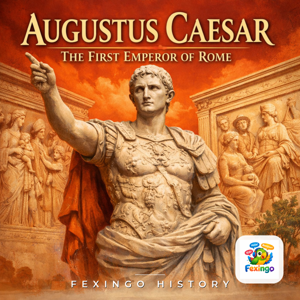
By Fexingo


The podcast currently has 251 episodes available.
The most played episodes among Podcast App listeners.
For decades, Marcus Vipsanius Agrippa Postumus was the inconvenient heir to Augustus, a young man whose behavior reportedly alienated even his adoptive father. But what really happened to him in AD 6? While ancient sources like Tacitus and Suetonius paint a picture of a brutal execution on the island of Pandateria, modern historians question whether the narrative was fabricated by Tiberius to legitimize his own succession. This episode explores the political vacuum left by the deaths of Gaius and Lucius Caesar, the strange exile of Postumus, and the chilling silence that surrounded his disappearance. We look at the archaeological evidence from the island prison, the timing of the Res Gestae Divi Augusti, and how one man’s removal paved the way for the Julio-Claudian dynasty. Join us as we untangle the legend from the likely reality of Rome's first imperial casualty. #MarcusVipsaniusAgrippaPostumus #AugustusCaesar #Pandateria #TiberiusClaudiusNero #Tacitus #Suetonius #ResGestaeDiviAugusti #JulioClaudianDynasty #RomanImperialSuccession #AncientRomeHistory #IslandExile #PoliticalAssassination #RomanPrison #GaiusCaesar #LuciusCaesar #AncientHistoriography #FexingoHistory #History Keep every episode free: buymeacoffee.com/fexingo

We often think of ancient emperors ruling by sword or law, but Augustus Caesar mastered a third, quieter weapon: the coin. In this episode, we explore how Octavian used the Roman monetary system to broadcast his political message across the Mediterranean world. We look at the specific iconography on denarii and aurei, from the personification of Pax to the portraits of his family members, and how these small metal discs served as portable propaganda. We examine the role of the moneta temple in Rome and the strict control Augustus placed over minting, ensuring that every citizen who spent a coin was reminded of his benevolence and divine favor. This story covers the transition from Republican chaos to Imperial stability, told through the lens of numismatics rather than battles. You will hear about the Temple of Juno Moneta, the shift in portrait styles after Actium, and how Augustus managed the inflationary pressures of war debt while simultaneously funding his massive building program. It is a look at the economics of image-making and how money became the primary medium for constructing the myth of the first emperor. #AugustusCaesar #RomanCoinage #Numismatics #Denarius #Aureus #TempleOfJunomoneta #ResGestaeDiviaugusti #PaxRomana #ImperialPropaganda #RomanEconomy #MintingRights #Octavian #Actium #JunoMoneta #RomanHistory #AncientRome #FexingoHistory #History Keep every episode free: buymeacoffee.com/fexingo
While Augustus is often remembered for his military conquests and political maneuvering, his most enduring legacy lies in the infrastructure that bound the empire together. This episode explores the construction of the Via Appia's expansion and the broader network of Roman roads that facilitated not just troop movements, but the rapid exchange of ideas, goods, and culture across three continents. We examine how the cura annonae and the cursus publicus relied on a meticulously maintained system of waystations and bridges, turning the Mediterranean into a lake of connectivity. Lucas and Luna discuss the engineering marvels behind the Appian Way, the strategic importance of the Via Egnatia in linking East and West, and how these stone arteries allowed the Pax Romana to flourish long after the legions had marched home. From the cobblestones of Rome to the distant frontiers of Britannia, we uncover the physical skeleton of the first emperor’s vision. #Augustus #RomanEmpire #ViaAppia #CursusPublicus #RomanEngineering #PaxRomana #AncientHistory #Infrastructure #MarcusVipsaniusAgrippa #ViaEgnatia #FexingoHistory #RoadConstruction #AncientRome #TradeRoutes #MilitaryLogistics #StoneArchitecture #Mediterranean #HistoryPodcast Keep every episode free: buymeacoffee.com/fexingo
While Augustus spent decades crafting his public image through monuments like the Ara Pacis and literary patronage, a darker family drama unfolded behind closed doors. This episode explores the fate of Marcus Vipsanius Agrippa Postumus, the last living grandson of the first emperor. Exiled to the remote island of Pandateria in 9 AD, Postumus lived as a prisoner under mysterious circumstances until his sudden death shortly after Augustus himself passed away. We examine the conflicting accounts from ancient historians Suetonius and Cassius Dio regarding whether he was executed on Augustus's orders or died of natural causes. The narrative also touches upon the role of Lucius Aelius Sejanus’s later precursors in imperial security and how this tragedy forced Augustus to adopt Tiberius as his final heir, fundamentally altering the succession line of the Julio-Claudian dynasty. #Augustus #AgrippaPostumus #JulioClaudian #RomanHistory #Pandateria #Tiberius #Suetonius #CassiusDio #ImperialSuccession #RomanExile #Princeps #ResGestae #MarcusVipsaniusAgrippa #AraPacis #AncientRome #FexingoHistory #HistoryPodcast #ClassicalAntiquity Keep every episode free: buymeacoffee.com/fexingo
While Augustus Caesar is famous for building monuments and rewriting laws, his most powerful tool was the census. In this episode, we explore how the first emperor used detailed population registers to reshape Roman society, determine tax obligations, and solidify the social hierarchy. We look at the mechanics of the census under the Lex Julia, the role of the censors in assessing citizen wealth, and how these records determined military service and political standing. The conversation delves into specific data points from the year 28 BC and 8 BC, revealing a population of roughly four million citizens. We examine the tension between traditional aristocratic pride and the new reality of imperial administration, where every Roman, from senator to freedman, was subject to state scrutiny. Luna and Lucas discuss the implications of this surveillance state, the cultural shift it represented, and how Augustus leveraged demographic data to manage the vast resources of the Mediterranean world without a modern bureaucracy. #Augustus #RomanCensus #LexJulia #Censorship #ResGestae #ImperialRome #PopulationHistory #TaxationInRome #SocialHierarchy #Principate #MedievalDemographics #AncientRome #RomanLaw #Citizenship #FexingoHistory #HistoryPodcast #MediterraneanHistory #RomanEmpire Keep every episode free: buymeacoffee.com/fexingo
The podcast currently has 251 episodes available.