
Sign up to save your podcasts
Or

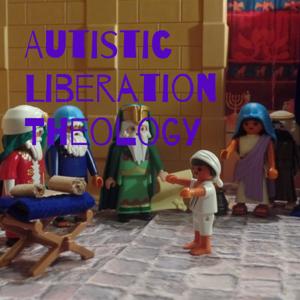


In this episode my guest Paul is talking about his specialist subject: Teresa de Cartagena, a Spanish nun from the 15th century. Her deafness informed her disability theology that includes many very modern ideas.
Laura welcomes AuDHD pastor and professor Rev. Dr. Taylor Denyer to discuss neurodivergent fixations around “ethical” eating. How do we move from individualistic blame and personal shame into grace, community support, and effective action against systemic injustice?
Content warning for OCD, scrupulosity, paranoia, disordered eating, food
Links:
Laura’s email: [email protected]
Laura’s OCD cartoons
https://en.wikipedia.org/wiki/Eco-Kashrut
Timestamps
00:00 Introducing Taylor
03:49 Autism and various food struggles
08:22 Orthorexia — “Am I ethically allowed to eat this?” — Taylor’s experiences
13:23 Grocery store overwhelm
17:50 Describing OCD — the brain seeking reasons & control in a chaotic world
31:00 “Instead of getting help, I got scholarships” — OCD behavior rewarded
35:15 Scrupulosity/Religious OCD and learning theology that helps
39:41 Neurodivergence in Church History
45:22 Bringing in the Bible — moral traps, Luke 5’s anti-empire, economic lens
62:00 That which makes unclean — Matthew 15 / Mark 7; focusing on systemic issues, not the individual
70:08 Grace for self, communal resistance, creating rituals
I have been looking forward to recording this episode for a long time. Jonas, one of my oldest friends, joins me as we discuss the impulses to over-commit, disagree compulsively and/or both at the same time. We look at these patterns in biblical figures and stories and ourselves.
Avery and I are doing a Christmas episode about haptics, breaking the body/mind binary, and a wonderfully autistic touchy-feely Jesus.
0:00 Introducing topic, defining haptics, need for embodiment
11:00 Use of touch in Gospels’ healing stories
27:54 The autisticness of Jesus: hypersensitivity, denying and offering touch
39:34 More autistic Jesus — drawing in the dirt; a messy Messiah
48:21 Somatopsychic impacts, disconnecting from body parts, shame and reconnection
60:04 Medieval haptics — touching Jesus’s wounds
70:10 Bringing the messiness back into the Christmas story — and the pulpit
Working on my current playmobil project I fell into a rabbit hole about the botanist, nutritionist, inventer and all around genius George Washington Carver. I convinced my friend Avery to record an episode about him and his theology.
What do Jesus’ parables, Black and disabled civil rights movements, and Star Trek: Deep Space Nine all have in common? Probably more than you’d think — but for this episode, Laura and Avery focus on their joint uses in imagining a more just future into being.
Some of the places we go in this winding episode: Womanist midrash & sanctified imagination; AutScape & Crip Camp’s modeled possibilities; and in-depth discussions of two Deep Space Nine episodes (“Past Tense” and “Far Beyond the Stars”) that encapsulate the value of science fiction in making imagined futures reality.
(0:00) Introducing the need for marginalized communities to imagine futures the world claims are impossible
(7:30) AutScape, Crip Camp, and small tastes of what a fully accessible world would be like
(18:44) Lack of imagination isn’t always the problem – people in power resist the push for better futures
(26:23) Lily Wachowski’s Indian rope trick: creating what she needed to pull herself up
(31:10) Sanctified Imagination and Jesus’ impossible Kin(g)dom
(44:13) Uses of Sci Fi; introducing Star Trek: Deep Space Nine & “Past Tense”
(57:36) Bell Riots’ parallels to the Attica Prison Riots; race, gender, & dis/ability in “Past Tense”
(1:17:49) “Past Tense” as imperfect midrash
(1:22:13) Introducing “Far Beyond the Stars” — Sisko’s vision of a 1940s Black writer dreaming of himself in space
(1:49:07) Wrapping up — Laura’s sci fi story
A companion episode over on Avery’s Blessed Are the Binary Breakers podcast exploring AutScape in more depth: https://www.blessedarethebinarybreakers.com/podcast-feed/episode/22359848/imagining-futures-into-being-with-autscape
YouTube video “Holy Roller: The Power of a Wheelchair-Using God”: https://youtu.be/NRy7Au8T7BA?si=SnyYRIpoSxs9LuH0
More on the “Judgment Day” comic featuring a Black astronaut: https://www.brandeis.edu/peacebuilding-arts/publications/newsletter/2023/the-eve-ofjudgement-day.html
The African American Policy Forum: https://www.aapf.org/
https://www.autscape.org/
Once again my friend Michi has joined me for an episode.
(0:00) Mark 10:35-44 — James & John's request to be at Jesus' right
My Guest is Pastor Felix Weise.
Timestamps:
(0:00) Introducing Felix, good news vs. nice news, Greek evangelion
(3:30) Looking at verses using the Greek word ekpléssó — Jesus’ good news shocks and disrupts
(13:00) Complexities in the connection between German Church and State; Felix’s roles within the German Church
(22:00) Felix is on the inside, seeking to bring progressive theologies; Laura is on the outside, doesn’t feel safe in church settings where their very presence disrupts the “nice” environment
(34:00) Do you choose to join the church institution to have a platform, power, security — or fight from the outside, but struggle to get heard?
(38:30) More nice news — it’s not bad, but it’s not enough; compare to the theologies of the marginalized that deal with the hard stuff
(49:30) People with privilege also need liberation; the systems of power harm everyone, and “nice” news can numb us to that truth
(55:00) MLK, Jr., called out liberal white Christians who silence the oppressed to avoid discomfort; similar issue with assimilationist gays, respectability politics
(60:00) Keeping things “nice” won’t stop church membership decline; redefine success
(66:45 to end) Toxic positivity that makes us pretend all’s fine; Jesus wasn’t nice, but Jesus was kind
After a long break I am joined again by my friend Michi for a rather whiney episode where I try to relate my own frustration about the role I get pushed into over and over again with no lesser leader than Moses. Special thanks go again to my friend Avery who edited this episode.
1:00 – 10:00 – topic intro – feeling like an ornamental hermit
10:00 – Moses readings: he can’t go with the people into the promised land; why not?
16:30 – “God is his closest kin now” – Moses is never fully of the people, distances himself from them; God breaks this to Moses: “You won’t find a resting place with them”
21:00 – Prophets are buzzkills, treated like liars even when they tell the truth; often not a choice, but a matter of survival
24:45 – struggle to unite other oppressed folks into the fight; may seem like you make their lives harder by reminding them of their own pain
27:00 – Rabbi Ruti Regan: Disabled people are either vilified or put on non-accessible pedestals, where they are non-threatening, lonely. Link to diversity training that doesn’t go farther than tokenism: platforms vs. pedestals
32:00 – Some people distance themselves from you not because they fear your differences, but because they fear to see what you actually have in common
36:00 – Queer parallels: fearing the flamboyance or femininity you might find mirrored in yourself; “I’m gay but not that stereotypical kind of gay”
40:00 – We must learn to face the prophets in our lives with love in order to reduce harm to self and others
44:00 – A prophet’s truth is good news that could liberate others for deeper community & self-knowledge, but it’s received as bad news because it disrupts; as in “The Emperor’s New Clothes,” many prefer a harmful delusion to a temporarily disruptive truth
57:30 - end – Inspiration porn & harmful autistic representation; Laura’s tired of being used for wisdom or inspiration without real connection
Website of Frank L. Ludwig who interprets fairytale characters as autistic:
http://franklludwig.com/
Essay about different important takes on Moses' "punishment":
https://www.rabbisacks.org/covenant-conversation/chukat/why-was-moses-not-destined-to-enter-the-land/
I know, I have announced and teasered this episode for probably over a year now... So, finally, here it is! Peter interpreted through an ADHD lense.
My friend Michi and I have had a lot of fun talking about our ADHD experiences, feeling for Peter and laughing at his and our own troubles with the neurotypical world.
I hope you'll enjoy this episode as much as we did.
From the publisher's feed