
Sign up to save your podcasts
Or

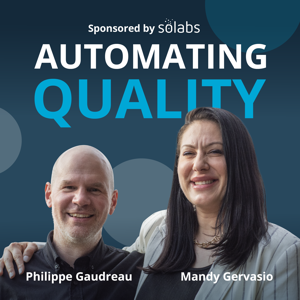


Welcome to the ninth episode of Automating Quality. Mandy Gervasio is your host, and she's on a mission to bring you hot industry topics with her fellow life sciences partners and friends! She's joined by her co-host, the CEO and founder of Solabs, Philippe Gaudreau, as well as their guest for today: Graham O'Keeffe.
Graham O'Keeffe is the CEO of Learn About GMP. He has been in marketing and life sciences for about 20 years and has served roles in various pharmaceutical and biotech companies, focusing mainly on compliance, quality, registry, and quality systems. Learn About GMP is an online web-based training system platform that is designed specifically for life sciences companies. They provide knowledge and expertise that empowers these companies in accelerating their growth and maintaining compliance.
This episode is filled with helpful takeaways and key learnings for better organization and planning when it comes to developing training programs. Graham explains how continuous access to on-demand, web-based training with constantly-updating fresh content can greatly enhance a learner's interest for learning and development. He also shares his perspective on the best content delivery methods to drive effectiveness for millennials; why continuous education is crucial to attracting top millennial workers; and how he sees the industry evolving over the next 3-5 years in terms of learning and development, content delivery, and mechanisms for enhancing compliance.
Key Takeaways:
[:42] About today's topic and guest.
[1:45] Mandy and Philippe welcome Graham to the podcast.
[2:26] Graham's background and current mission of his company, Learn About GMP.
[5:10] What are a few elements to consider for learning retention and effectiveness when tailoring training for a millennial audience?
[10:30] Does Graham think that continuous access to on-demand, web-based training greatly enhances the learner's interest for learning and development?
[15:25] What content delivery methods Graham thinks should be commonly leveraged to drive effectiveness for millennials.
[19:14] Why continuous education is crucial to attracting top millennial workers.
[21:35] How Graham sees the industry evolving over the next 3-5 years in terms of learning and development, content delivery, and mechanisms for enhancing compliance.
[25:11] Mandy wraps up this week's episode and gives a quick summary of the key learnings.
[26:08] About next week's episode.
[26:18] How to get in touch with Mandy and Graham O'Keefe.
Mentioned in this Episode:
Learn About GMP
Graham O'Keeffe's LinkedIn
Welcome to the eighth episode of Automating Quality. Mandy Gervasio is your host, and she's on a mission to bring you hot industry topics with her fellow life sciences partners and friends! She's joined by her co-host, the CEO and founder of Solabs, Philippe Gaudreau.
The focus of this week's show is the specificities of GCP quality systems. Mandy and Philippe are joined by special guest, Nahtalie Bourgouin, VP of Compliance at Skillpad. Skillpad is a sister company of Solabs and Philippe has had the pleasure of collaborating with Nathalie over the years. With more than 25 years of experience in pharmaceuticals and biotech in North America and Europe, Nathalie is a leader in compliance, quality, and project management, with a solid background in risk-based quality assurance processes, training, and auditing. She has planned and audited many GMP and GCP vendors, as well as numerous clinical sites in local and global studies.
The conversation with Nathalie today will surely help companies improve their quality levels. Some key topics discussed today include: the difference between GMP and GCP quality systems, how Nathalie has seen the global regulatory landscape change, the key variables to consider with GCP event management, and specific tools that can be utilized to help streamline the process.
Key Takeaways:
[:34] About today's topic and guest.
[1:45] Nathalie introduces herself and talks about her background in quality and compliance.
[3:30] How are the GMP and GCP quality systems different? And what are the idiosyncrasies of a GCP system?
[5:17] How has Nathalie seen the global regulatory landscape change? And is this driving a new approach for managing clinical event occurrence?
[7:20] What Nathalie sees as a few key variables to consider (as related to GCP event management).
[9:34] Nathalie explains the type of approach that can be implemented to enhance the traceability and robustness related to clinical events that occur in the field.
[13:04] Are there any specific tools that can be utilized to help streamline the process?
[15:53] How does Nathalie see this approach, relating to the new ICH E6 guidance, in regard to data integrity?
[21:18] How to get in touch with Nathalie or Mandy.
[21:54] About next week's episode.
Mentioned in this Episode:
GCP and GMP basics
ICH E6 (R2)
Welcome to the seventh episode of Automating Quality. Mandy Gervasio is your host, and she's on a mission to bring you hot industry topics with her fellow life sciences partners and friends, and to provide awareness and tactical guidance to help strategically facilitate change.
The focus of today's show is a topic that is near and dear to Mandy's heart, and that is: the philosophy of quality. She's joined by a very special guest, Dr. Richard Prince, President and CEO of Now Biopharma; and by her co-host, Philippe Gaudreau, founder and CEO of Solabs. Dr. Richard Prince brings over 3 decades of experience as a successful leader, entrepreneur, executive, teacher and author in Life Sciences. His company, Now Biopharma, provides Life Sciences consultancy services, and also serves as a clinical CRO. They serve as a catalytic agent for companies that have a business need for more rapid and effective drug development programs. They partner with biotechnology, pharmaceutical, and medical establishments to meet complex and time-sensitive priorities within an ever-changing competitive landscape.
In this episode, Mandy and Richard dive deep into what it means to build a quality-centric culture, as well as the potential impacts of not having those fundamental quality threads built into your infrastructure. They discuss how to become successful in a regulated company from a quality perspective, the fundamental building blocks of quality, compliance trends in the industry from the last annual FDA report, how to properly respond to an FDA observation, and Richard's first principles of building a company culture of quality.
Key Takeaways:
[:51] About today's topic and guest.
[1:49] About Dr. Richard Prince's current mission with his company.
[3:47] Richard gives an introduction to today's topic.
[4:38] How does one go about becoming successful in a regulated company in the pharmaceutical industry from a quality perspective? Richard explains his five-step algorithm that will ensure that you have a higher likelihood of being successful the first time around.
[5:32] Richard explains the first of the five building blocks of quality: Knowledge and know-how.
[7:02] The second building block of quality: Design verification.
[8:03] About the third: Process Fidelity and transparency.
[9:55] About the fourth: Performance metrics.
[10:33] About the fifth and last building block: Rational decision making.
[11:33] Richard reveals what's remarkable about the compliance trends in the industry from the last, annual FDA report.
[18:09] Mandy's experience and thoughts on FDA warning letters and observations.
[21:03] Richard emphasizes how to properly respond to an observation (from the FDA.)
[21:53] Drug compliance issues and what the FDA cited them for (in the pharmaceutical industry).
[24:21] Richard outlines the categories of compliance and enforcement actions that the FDA promulgates, what the 483 observation from the FDA is (and how to respond to it).
[31:03] Richards reads what activities the FDA may consider warranting criminal prosecution.
[33:16] Richard reviews some of the First Principles (7 out of 14) that are designed to help build a company culture of quality.
[43:36] Mandy's take on the First Principles.
[46:03] Richard speaks about what makes some of the most successful companies and quality professionals.
[47:14] Richard discusses the 8th First Principle: the importance of an independent quality unit.
[48:17] Richard explains why courage is an important attribute.
[50:12] Richard goes over the 9th First Principle: Establish suitability of equipment, facilities, utilities and methods.
[50:48] Richard speaks about the 10th, 11th, and 12th First Principles: deploying risk assessment, understanding sources of variability and signals of drift, and understanding the link between safety, efficacy, and quality.
[53:02] Richard explains the 13th and 14th First Principles: Quality is never static and requires continual improvement, and take quality and management action when necessary.
[54:40] Richard reads a couple quotes that really help illustrate the importance of quality.
[56:09] Richard summarizes the characteristics that successful quality systems possess.
[1:00:18] Where to reach Richard and learn more about his company, Now Biopharma, LLC.
[1:02:45] About next week's episode, how to reach Mandy, and how to contact Richard.
Want a More Immersive Podcast Experience? Download Richard's Powerpoint Presentation to follow along!
Mentioned in this Episode:
Richard Prince's LinkedIn
Dr. Richard Prince's Books
Welcome to the sixth episode of Automating Quality. Today's topic is data integrity — a current, hot-topic in the regulated space. Mandy is your host, and she's on a mission to bring you hot industry topics with her fellow life sciences partners and friends.
Today, Mandy is joined by her co-host (and founder and CEO of Solabs), Philippe Gaudreau. Together, they interview their data integrity expert, Rich Greer. Rich has a ton of insight and expertise in this area, having been in the industry for around 29 years. He's had varying roles within engineering, validation, and quality.
Rich provides some great takeaways such as: instituting a data integrity program for the first time, re-assessing your current program for opportunities for improvement, common gaps and misunderstandings around data integrity, and more.
Key Takeaways:
[:40] About today's topic and guest.
[1:53] Rich gives an intro to his industry background.
[3:24] What is data integrity? And what are some key considerations when trying to implement a data integrity program?
[7:10] Key factors related to data integrity when considering implementing and maintaining your GxP electronic systems.
[8:58] Rich explains some tactical strategies to manage legacy GxP systems.
[15:05] Some common gaps and misunderstandings Rich has seen around data integrity and maintaining compliance.
[18:38] If data integrity has been compromised, what are some critical actions an organization must take to remediate?
[23:26] Summarizing key points from this week's episode.
[24:00] How to get a hold of Mandy and Rich.
[24:20] About next week's episode.
Mentioned in this Episode:
GxP
Rich Greer's LinkedIn Page
Welcome to the fifth episode of Automating Quality. Today's topic is change management — picking up the conversation from their first episode on the topic. Mandy is joined by her co-host, Philippe Gaudreau, CEO of Solabs — and together, they welcome back their guest this week, Rachel Fountain.
Rachel is currently a Principal Consultant, working in the software industry with a focus on quality and risk management. She has amassed 14 years of experience in the Life Sciences industry as a quality expert — implementing change management systems and helping companies move from one automated system to another.
This episode, Mandy and Rachel take their conversation from the first about of AQ and take it one step further by discussing the do's and don'ts of changement from a post-implementation automated solutions lense.
Key Takeaways:
[:33] About today's return guest, Rachel Fountain.
[1:24] Rachel and Mandy give a refresher on episode one's discussion on change management.
[2:19] The do's and don'ts when it comes to dedicating resources to the change management process.
[5:02] The do's and don'ts around writing an effective change plan.
[8:00] How Rachel thinks training should be integrated into change controls.
[12:06] The do's and don'ts around managing metrics.
[16:27] Rachel's closing comment for listeners.
[16:51] How to contact Mandy, where to find Rachel online, and about next week's episode.
Mentioned in this Episode:
Rachel Fountain's Linkedin Profile
Welcome to the fourth episode of Automating Quality. Today's topic is operational effectiveness. Mandy is joined by her co-host, Philippe Gaudreau, CEO of Solabs; and their guest this week, Alan Greathouse, Senior Director of Quality and Service Assurance with the FDA Group.
Alan D. Greathouse has over 15 years of CGMP manufacturing experience focused on parenteral drug products. Throughout his career he has optimized countless manufacturing processes and excels at identifying and correcting operational inefficiencies.
This episode, Mandy, Philippe, and Alan discuss operational effectiveness; what it means and how people can improve. More in-depth, Alan outlines some key strategies for measuring OE, what criteria can be used to evaluate effectiveness, the approach that he recommends for growing life science organizations to build their initial infrastructure to measure OE, and strategies and metrics that have worked particularly well in his experience.
Key Takeaways:
[:30] About today's guest, Alan Greathouse
[1:10] Alan introduces himself and describes the focus of today's episode.
[2:33] Key strategies for measuring operational effectiveness (via use of an electronic solution.)
[5:14] What criteria can be used to evaluate effectiveness?
[9:04] The approach Alan recommends for growing life science organizations to build their initial infrastructure.
[11:21] Strategies and metrics that have worked particularly well for measuring operational effectiveness (in Alan's experience.)
[13:50] How Alan thinks organizational culture plays a key role in influencing OE.
[17:28] Philippe gives his feedback on Alan's ideas.
[18:27] Wrapping up the episode with Mandy, how to contact Mandy and about next week's episode.
Mentioned in this Episode:
The FDA Group
Alan Greathouse's Linkedin
Welcome to the third episode of Automating Quality. Today's topic is phase appropriate quality — a topic that is especially relevant for anyone in the life sciences industry. Mandy is joined by her co-host, Philippe Gaudreau, CEO of Solabs; and industry veteran, and the Vice President of Quality and Compliance from Eirion Therapeutics, Mary Senica.
In this episode, Mandy and Mary take a deep dive into a lot of critical components of quality and supporting processes. Mary gives her advice to growing companies and explains how to design processes so they're appropriate for your organization or the product that you're manufacturing.
There's a lot of fantastic takeaways this week, such as: key factors to consider when looking to implement an electronic solution, how to determine when a software solution is warranted within a company, what makes a successful training program, and the basic principles to consider as part of a company's CMC practices.
Key Takeaways:
[:20] About today's guest, Mary Senica.
[1:09] About Mary's background and industry experience, and her primary role at Eirion Therapeutics.
[2:36] What are the specifics GMPs and regulatory guidance related to the drug development process?
[4:18] When looking for an electronic answer or solution to a compliance system, what are some key factors to consider?
[10:10] How to determine when a software solution is warranted within a company.
[16:58] Why it is so important to implement a system that allows everyone to function together effectively.
[18:34] What makes a successful training program.
[22:05] What are the expectations for GMP equipment as a company moves through the phases of the product development life cycle?
[26:06] The basic principles that must be considered as part of a company's CMC practices.
[28:50] What advice Mary would give a growing organization as they mature through the product life cycle (in regard to implementing key electronic solutions.)
[31:48] Wrapping up the episode with Mandy, how to contact Mary and about next week's episode.
Mentioned in this Episode:
Eirion Therapeutics
GMP
CFR
CMC
FDA.gov
Previous AQ Episode: Optimizing Compliance When Implementing an Automated Training Solution with Jay Turner
AQ Episode 1: Change Management with Rachel Fountain
Mary Senica's Linkedin
Welcome to the second episode of Automating Quality. In this episode, Mandy is joined by Jay Turner of EduJay LLC. Jay's a self-proclaimed learning and development ninja at his latest entrepreneurial venture, EduJay! He has devoted his career to improving people, processes, and programs to produce business results — everything from implementing learning management systems, to designing staff development and leadership development programs, to providing executive coaching.
This episode, Jay talks to Mandy about how automated solutions can be effective in improving training and compliance, key considerations when introducing an automated solution, how deployment of a LMS solution makes training more engaging, how to enliven your compliance training, and how to foster a culture that is focused on learning.
Key Takeaways:
[:20] About today's guest, Jay Turner.
[1:59] What automated solutions Jay has that have been effective in improving training, effectiveness, and compliance.
[10:40] Key considerations when introducing an automated solution (such as an LMS for training).
[19:38] Jay's experience with optimizing compliance in regards to implementation of an automated training solution.
[25:53] How can deployment of a LMS solution make training more engaging? And how to enliven your compliance training.
[37:06] Wrapping up the episode with Mandy, how to contact Jay, and about next week's episode.
Mentioned in this Episode:
EduJay LLC
Jay Turner's Twitter
Jay Turner's Facebook
Jay Turner's Linkedin
Welcome to the first episode of Automating Quality. Today's show is focused on change management — a vital topic for the Life Sciences and regulated industry. Your host is Mandy Gervasio, Sales Engineer and Quality Best Practice SME at Solabs. She is joined by her co-host, Philippe Gaudreau, CEO of Solabs.
In this episode, Mandy and Philip interview Rachel Fountain. Rachel is currently a Principal Consultant, working in the software industry with a focus on quality and risk management. She has amassed 14 years of experience in the Life Sciences industry as a quality expert — implementing change management systems and helping companies move from one automated system to another.
Today, Mandy and Rachel discuss strategies to streamline the change management process by utilizing an automated solution, key items that have the most impact when moving into an automated solution, and Rachel's recommendations for smaller organizations looking to implement a change management program from scratch.
Key Takeaways:
[:14] About today's episode on change management with Rachel .
[1:00] Rachel's background, passions, and current work.
[2:26] Strategies to streamline the change management process by utilizing an automated solution.
[7:19] Rachel's position on assessing the performance of an organization or change management system in regards to cycle times.
[10:20] Has Rachel seen a reduction in audit observations upon implementation of an automated change control solution?
[12:10] The current thinking and expectations around implementing effectiveness checks as related to change management. Is it mandatory?
[14:40] Some key items that have the most impact when moving into an automated solution vs a manual change control process.
[19:57] Rachel's recommendations to smaller organizations looking to implement a change management program from scratch.
[23:25] Summarizing this week's episode, how to get in touch with Mandy and Rachel, and about next week's episode.
Mentioned in this Episode:
Kaizen Event
Six Sigma
QMS Infrastructure
Effectiveness Review Performance
Rachel Fountain's Linkedin Profile
From the publisher's feed