
Sign up to save your podcasts
Or



Got something to say to this podcast? Send a voicemail, and you might hear yourself on the next episode!
ISO/PAS 8800: Safety Standard for Artificial Intelligence in Road Vehicles
Executive Summary
ISO/PAS 8800 is a newly established international standard designed to enhance the safety of road vehicles equipped with artificial intelligence (AI) systems. Developed in response to the rapid integration of complex AI technologies in the automotive sector, the standard supplements existing safety frameworks—specifically ISO 26262 (Functional Safety) and ISO 21448 (Safety of the Intended Functionality, or SOTIF).
The standard introduces a holistic, lifecycle-based safety framework for electrical and electronic (E/E) components that utilize AI. Key takeaways include:
Got something to say to this podcast? Send a voicemail, and you might hear yourself on the next episode!
Beyond the Audit: 7 Surprising Reasons Your IATF 16949 System Might Be at Risk
1. Introduction: The Certification Trap
The "Certification Trap" is a systemic failure of leadership, not merely a quality department oversight. It is the primary reason why Tier 1 suppliers, certified for over a decade with libraries of pristine procedures, continue to be blindsided by major nonconformities during surveillance audits. These organizations mistake a documented system for an effective one, creating a dangerous gap between "compliance on paper" and genuine operational discipline.
When a Quality Management System (QMS) is treated as a static performance for an auditor rather than a living tool for zero defects, it becomes brittle. This vulnerability is exacerbated by a failure to proactively identify Customer-Specific Requirements (CSRs) across the entire supply chain. Under SI-03, you are responsible for identifying and integrating CSRs from all customers, including those flowing down from the OEM through higher-tier integrators. If you are waiting for your customer to formally hand you a manual, you have already failed the standard’s expectation of proactivity.
2. Takeaway 1: The "Hidden Rules" You Aren't Reading
Most quality managers focus exclusively on the primary text of the IATF 16949 standard, neglecting the Sanctioned Interpretations (SIs) issued by the IATF Oversight Office. These are not "suggestions"—they are official corrections and extensions that carry the same authority as the standard itself.
SIs are often issued because the standard was intentionally silent or ambiguous on a high-risk topic. They exist to close the technical loopholes that organizations often exploit to bypass the spirit of the requirement. For instance, while the standard might outline general competence, the SIs provide the "teeth" that auditors use to fail a system that lacks evidence of effectiveness.
"IATF-approved certification bodies (CBs) are required to audit against all in-force Sanctioned Interpretations. Your CB auditor will have the current SI list. If your team has not reviewed SIs since initial certification, there is near-certainty that at least one SI is being violated in your current QMS."
Ignoring SIs is a critical risk. If your organization has not conducted a documented gap assessment against active SIs—such as the requirements for software development (SI-01) or outsourced processes (SI-11)—your QMS is technically incomplete and non-compliant.
3. Takeaway 2: Your Core Tools are an Engine, Not a Checklist
The five Core Tools—APQP, PPAP, FMEA, MSA, and SPC—are the operational engine of automotive quality. However, mature systems frequently fall into "mechanical application," where teams produce outputs simply to check a box. This checkbox mentality effectively blinds the organization to "process drift," allowing defects to migrate toward the customer while the paperwork remains "compliant."
A hallmark of this failure is the transition to the AIAG-VDA FMEA (7-step approach). Many organizations have adopted the new forms but have failed to adopt the methodology. They ignore the mandatory use of Action Priority (AP) levels (High, Medium, Low) and continue to rely on outdated RPN thresholds. Under the harmonized standard, an AP rating of "High" is a mandatory trigger for action; leaving these open without documented justification or an agreed timeline is a direct violation that an expert auditor will flag immediately.
Got something to say to this podcast? Send a voicemail, and you might hear yourself on the next episode!
Renault Group Automotive Tools & Standards: A Comprehensive Guide for Newcomers
1. Introduction to the Renault Quality Ecosystem
Systems integrity in the automotive sector relies on the intersection of standardized tools and qualified human agency. For those entering the Renault Group supply chain, the foundational framework is defined by the IATF 16949:2016 standard, augmented by the Renault Group Customer-Specific Requirements (CSR) Version 5.0 (Effective April 2026).
This CSR document, alongside Standard 00-10-415, establishes the contractual link for part quality. It integrates the Renault Group Product Quality Procedure (RGPQP) as the primary vehicle for ensuring that supplier deliverables align with Renault’s technical and safety expectations.
Key Takeaway Renault Group mandates 100% high-quality part delivery and zero non-conformities. Organizations must demonstrate that their entire production complies with all Safety and Regulatory Characteristics applicable in the countries of commercialization. Evidence of conformity must be stored and provided upon request.
--------------------------------------------------------------------------------
2. The Renault Technical Toolbox: Core Tools Explained
To operate within the Renault ecosystem, suppliers must adopt a specific technical "language." While Renault allows flexibility in the foundational methodologies used for analysis—such as FMEA/AMDEC based on AIAG or VDA standards—it mandates specific "Renault-Specific" overlays and gauge criteria.
Tool Name
Core Function
Critical Requirement for Renault
MSA (Measurement System Analysis)
Evaluation of measurement equipment reliability.
Gauge confirmation must explicitly include Bias, Linearity, Repeatability, and Reproducibility.
SPC (Statistical Process Control)
Statistical monitoring of process stability.
Mandatory process capability studies and continuous monitoring of process parameters.
RCCP (Renault Claim Compensation Procedure)
Management of quality-related liabilities.
Defines the mechanism for defining supplier liability and financial compensation for non-conformity.
--------------------------------------------------------------------------------
3. Strategic Methodologies: R-FMEA, RGPQP, and PSW
The transition from general automotive standards to Renault-specific requirements is most visible in project management and risk mitigation.
Comparison: Industry Standard vs. Renault Equivalent
Industry Standard
Renault Equivalent
Key Distinction
APQP
RGPQP
Mandatory for all projects; replaces standard APQP with a Renault-specific milestone framework.
PPAP
PSW Package
The Part Submission Warrant (PSW) package is the formal equivalent/replacement for traditional PPAP.
FMEA
R-FMEA
Mandatory Renault add-on used to update assessments and drive preventive improvements.
Technical Nuance: R-FMEA and Cascading Quality
Reverse FMEA (R-FMEA): This is a non-negotiable requirement. The objective of R-FMEA is to facilitate the "transition from corrective to preventive actions" by verifying the actual shop floor conditions against the theoretical risk assessment.
Sub-supplier Management: Tier 1 suppliers are architecturally responsible for their supply chain. You must deploy the same quality requirements to sub-suppliers and define individual objectives based on their real performance.
e-RGPQP IS Submission: Sub-supplier PSWs (or equivalents) must be fully validated by the Tier 1 and submitted in the e-RGPQP IS system before the Tier 1’s final PSW submission.
Control Plan Nuance: Per Section 8.5.1.1, your Control Plan must specifically include controls designed to detect failures caused by external products and services.
Got something to say to this podcast? Send a voicemail, and you might hear yourself on the next episode!
Iveco Group Customer Specific Requirements for IATF 16949
Executive Summary
This briefing document outlines the key customer-specific requirements (CSR) established by Iveco Group, which supplement the IATF 16949:2016 quality system standard for its suppliers, referred to as "Organizations." Dated 24/11/2025 (Revision 01), these requirements mandate a comprehensive and proactive approach to quality, safety, and corporate responsibility that extends beyond standard compliance.
Key takeaways include:
• Expanded Supplier Accountability: Suppliers are responsible not only for product quality but also for demonstrating compliance with core sustainability pillars, including personnel safety, environmental protection, and regulatory adherence (e.g., REACH).
• Rigorous Management of Special Characteristics: The document places significant emphasis on identifying, documenting, and controlling "Key" product characteristics that impact safety, legal conformity, or customer satisfaction. Suppliers must maintain related qualification and process documentation for a minimum of 15 years.
• Proactive Quality Assurance and Performance Monitoring: Organizations must conduct regular, planned quality checks, including complete self-qualifications every two years and annual dimensional/material controls. Supplier top management is required to conduct monthly performance reviews analyzing customer satisfaction metrics, audit outcomes, and the costs of poor quality.
• Strict Communication and Escalation Protocols: The requirements mandate immediate and clear communication. Suppliers must inform Iveco Group of any production disruptions within six hours of a sudden interruption. They are also obligated to notify their own Certification Body within five working days if placed on "New Business Hold" (NBH) or a high-level "Controlled Shipment Level" (CSL).
• Cascading Requirements Through the Supply Chain: Suppliers are expected to enforce Iveco Group-like quality standards, particularly for the product approval process (PPAP), upon their own sub-suppliers, ensuring that quality standards are maintained throughout the entire value chain.
1. Document Overview and Scope
The "IVECO GROUP CUSTOMER SPECIFIC REQUIREMENTS FOR IATF 16949" is designed to complete and specify the IATF 16949:2016 Quality System Requirements for all suppliers (termed "Organizations"). It integrates with existing technical documentation such as Drawings, Norms, Procurement Specifications, and Requests for Quotation (RFQ). The contractual Statement of Requirements (SOR) should be consulted as the main reference for additional guidance.
1.1. Core Procedural Framework
The customer-specific requirements complement a set of fundamental procedures that govern the supply relationship between Iveco Group and its Organizations. These core procedures are detailed in the following table:
Got something to say to this podcast? Send a voicemail, and you might hear yourself on the next episode!
Introduction: Beyond Buckles and Airbags
For decades, the story of car safety has been one of reaction. Seatbelts restrain you during an impact. Airbags cushion you. Anti-lock brakes engage when you're already skidding. These are brilliant, life-saving technologies, but they all share one thing in common: they are designed to mitigate a disaster that is already underway.
Now, a new paradigm is emerging, shifting safety from reactive to predictive. By leveraging artificial intelligence to analyze immense volumes of driving data, engineers are uncovering surprising truths about the root causes of accidents. A new automotive safety initiative, Project Sentinel, is at the forefront of this shift, and its findings challenge some of our most fundamental assumptions about what it means to be safe on the road. This article explores the three most counter-intuitive takeaways, revealing how AI is learning to prevent accidents before they even begin.
--------------------------------------------------------------------------------
1. The Over-Confidence Trap: Why "Perfect" Drivers Can Be a Liability
The first surprising discovery turns a common assumption on its head: drivers with spotless records can sometimes pose a greater risk than those with minor infractions. Project Sentinel's AI found that a history devoid of incidents can foster a complacency that leads to a critical weakness when facing sudden, unpredictable hazards—what the project team calls "Black Swan" events.
The "why" is rooted in hard data. The project's AI found that drivers with zero logged infractions over a five-year simulation had a 15% slower reaction time to these "Black Swan" events compared to drivers with a history of minor, infrequent infractions. This "Complacency Curve," as the project calls it, challenges not just insurance risk models but the very way we design training and licensing for an automated future. This insight is impactful because it challenges our very definition of a "safe driver," shifting the focus from a perfect historical record to the necessity of constant situational awareness.
--------------------------------------------------------------------------------
2. The Urban Illusion: Slow Speeds Don't Mean Low Risk
Most drivers feel a sense of relative safety when crawling through slow-moving city traffic. The speeds are low, and control feels high. However, Project Sentinel’s data reveals this feeling to be a dangerous illusion. The data shows an extremely high frequency of low-speed collisions in dense urban environments.
The reason is cognitive overload. While the speed is low, the number of complex, unpredictable variables a driver must track is immense, averaging 12 to 15 dynamic variables simultaneously, from pedestrians to cyclists and intersections. This creates a staggering mental burden. A key finding from the project highlights the sheer complexity of this environment, even for a machine:
"The sheer density of unpredictable variables in urban environments makes low-speed navigation one of the most computationally challenging problems for an AI."
If navigating this chaos is one of the most difficult tasks for a powerful AI, it represents an even greater cognitive strain for a human driver. This is precisely why this seemingly "safe" environment is actually fraught with a high probability of risk.
--------------------------------------------------------------------------------
3. Smart Data Over Big Data: The Myth of "More is Better"
Got something to say to this podcast? Send a voicemail, and you might hear yourself on the next episode!
This document provides a systematic analysis of security threats, potential impacts, and mitigation strategies for the modern connected vehicle platform, based on the project's foundational documentation.
--------------------------------------------------------------------------------
1.0 Introduction: The Evolving Threat Landscape for Connected Vehicles
The strategic importance of cybersecurity in the automotive sector has grown exponentially. As modern vehicles become more complex and interconnected, their integration of advanced electronics, wireless communication, and external networks creates a vast and evolving attack surface. This increasing connectivity, while enabling revolutionary features, introduces new and significant security challenges that must be addressed proactively throughout the entire vehicle lifecycle.
The core objectives of this security project, as outlined in the foundational documentation, are to establish a comprehensive and resilient security posture. These objectives include:
• Identification of potential vulnerabilities across all electronic systems and communication interfaces.
• Development of robust countermeasures designed to prevent, detect, and respond to cyber threats.
• Compliance with international standards, specifically adhering to the rigorous framework established by ISO/SAE 21434.
• Integration of security solutions in a manner that does not compromise vehicle performance, safety, or user experience.
A robust risk analysis is therefore contingent on a clear understanding of the system's foundational security architecture, which defines the boundaries and interfaces to be protected.
--------------------------------------------------------------------------------
2.0 System Architecture and Security Posture
A multi-layered, defense-in-depth security architecture is fundamental to protecting the modern vehicle. This approach ensures that a compromise in one layer does not lead to a systemic failure. This section details the core components of the proposed system, each designed to protect a specific domain of the vehicle's electronic infrastructure and to function as part of an integrated whole.
2.1 Central Security Gateway
The Central Security Gateway functions as the vehicle's central firewall and network router. Its primary responsibility is to filter and monitor all data traffic exchanged between different network domains, such as infotainment, telematics, and powertrain. By enforcing strict, policy-based communication rules, it isolates critical systems and prevents unauthorized messages from propagating. It serves as the first line of defense for the internal networks detailed in Section 2.3 and relies on cryptographic identities managed by the HSM (Section 2.2) to authenticate traffic.
2.2 Hardware Security Module (HSM)
Got something to say to this podcast? Send a voicemail, and you might hear yourself on the next episode!
The Automotive Industry Crisis: A Failure of Vision and a Call for Radical Transformation
Executive Summary
The global automotive sector is facing a profound existential crisis that extends beyond technological disruption. While Western automakers have invested billions in electrification and digital innovations, they have critically neglected their most vital asset: human capital. This has resulted in a severe skills gap, delayed projects, compromised quality, and a rapid erosion of market share and profitability. The core of the crisis is not a lack of technology, but a failure of strategic vision and a deep-seated managerial resistance to change.
In stark contrast, China has executed a methodical, decade-long industrial strategy, creating an integrated ecosystem of specialized education, battery production, and government support. This has granted Chinese firms a dominant position, with superior technology, faster development cycles (24-30 months vs. the West's 48-60), and significantly lower production costs.
The primary obstacle to a Western recovery is internal. An over-reliance on obsolete tools like spreadsheets, which consume 30-40% of technical professionals' time, combined with a management culture that protects the status quo, is paralyzing innovation. The solution requires a "360-degree industrial transition"—a radical overhaul of processes, culture, and skills. This involves eliminating outdated workflows, embracing end-to-end digitalization, and aggressively adopting Artificial Intelligence not as a threat, but as a tool to amplify human capability. Survival is contingent on the courage to abandon failed past practices and execute this comprehensive transformation without delay.
Got something to say to this podcast? Send a voicemail, and you might hear yourself on the next episode!
Ford Bronco Seat Bolt Defect: Internal Risk Analysis
1.0 Introduction and Purpose
This document provides an objective, data-driven risk analysis of the recent National Highway Traffic Safety Administration (NHTSA) recall concerning the Ford Bronco front seat pivot bolt. The purpose of this internal analysis is to synthesize the available information regarding the defect's nature, scope, and potential impact. The findings herein are intended to inform strategic decision-making across key business functions, including safety compliance, operational logistics, and brand management, ensuring a coordinated and effective corporate response.
2.0 Defect Characterization
A precise definition of a product defect is strategically fundamental. A clear technical understanding forms the basis for developing an effective engineering response, communicating accurately with regulatory bodies like the NHTSA, and mitigating potential legal and financial exposure. The issue at the core of this recall involves a specific structural component failure within the vehicle's cabin, with a technical breakdown as follows:
• Component: The specific part identified as faulty is the height-adjust pivot bolt located in the front driver and passenger seats.
• Failure Mode: The nature of the defect is a critical lapse in assembly and quality control, where the bolt may be loose or completely dislodged from the seat frame.
• Quality Control Assessment: The presence of a loose structural bolt on a new vehicle represents a significant quality control failure. As noted in the source material, such a defect "simply shouldn't happen" and points to a critical lapse in manufacturing or inspection protocols.
This specific technical failure has a widespread impact, affecting a significant number of recently produced vehicles.
3.0 Scope and Scale of the Recall
Quantifying the scope of a recall is essential for strategic planning. These metrics directly inform logistical requirements for the service campaign, guide financial provisioning for repair costs, shape the customer communication strategy, and ultimately define the overall magnitude of the business impact. The core statistics for this recall, as documented by the NHTSA and Ford, are presented below.
Got something to say to this podcast? Send a voicemail, and you might hear yourself on the next episode!
Honda's Family Haulers Under Fire: Feds Investigate Over 500,000 Odyssey and Pilot Models for Major Safety Flaws
Introduction: The Unsettling Truth Behind a Trusted Family Brand
For decades, the Honda brand has been synonymous with reliability and trust, a go-to choice for families seeking safe, dependable transportation. Vehicles like the Honda Odyssey minivan and the Pilot SUV are staples in suburban driveways, purchased with the expectation that they will protect the people that matter most. It’s a reputation built on years of engineering and customer satisfaction.
That well-earned trust is now facing a serious challenge. The National Highway Traffic Safety Administration (NHTSA) has announced two official investigations into more than 583,000 of these popular family vehicles for significant safety concerns. While these are not yet recalls, they represent a critical development that every Odyssey and Pilot owner needs to understand, as the issues involve fundamental safety systems: airbags and seat belts.
1. A Safety Feature That's Dangerously Proactive: The Odyssey's Airbag Issue
The first investigation centers on a deeply alarming problem: the inadvertent deployment of side airbags in 2018-2022 Honda Odysseys. According to complaints filed with the NHTSA, these airbags can deploy suddenly and without warning while the vehicle is in motion. In some cases, the trigger was as common as driving over a pothole. This potential issue, which could affect 441,002 vehicles, is particularly troubling for a model that has been Honda's most recalled vehicle over the past decade. The NHTSA has already received 18 complaints, including two reports of injuries.
The agency's official statement underscores the severity of the risk:
The complaints allege that the inadvertent deployments occurred while the vehicle was in motion. Consumers allege no warning prior to air bag deployment. Some allegations state that the deployment(s) occurred after traveling over a pothole or similar roadway feature. Inadvertent deployment of air bags while a vehicle is in motion can lead to injury of vehicle occupants or driver distraction, which may result in a collision.
This is a profoundly concerning development. A safety feature designed to save lives in a collision is potentially causing the very distraction and
Got something to say to this podcast? Send a voicemail, and you might hear yourself on the next episode!
The Hypercar and the Screw: A Case Study on the Aston Martin Valkyrie Recall
In base a 1 fonte
The Hypercar and the Screw: A Case Study on the Aston Martin Valkyrie Recall
Introduction: The Devil in the Details
The Aston Martin Valkyrie is more than just a car; it's a masterpiece of automotive engineering, a hypercar that pushes the boundaries of technology and performance. When a machine this complex and meticulously built is announced, the world takes notice. It's even more surprising, then, when such a vehicle is recalled not for a complex system failure, but for a component so seemingly mundane: a screw. This analysis explores how a tiny, incorrectly sized part can trigger a cascade of critical failures in a multi-million dollar machine, offering a powerful lesson on the absolute importance of quality control.
--------------------------------------------------------------------------------
1.0 The Recall in Numbers: Key Facts
The official recall notice, monitored by Germany's Federal Motor Transport Authority (KBA), outlines the essential scope of the issue.
Detail
Information
Make
Aston Martin
Model
Valkyrie
Number of Vehicles Affected
137
Production Period
16. 6. 2020 – 23. 12. 2024
Official KBA Reference
15104R
Manufacturer Code
RA-18-2044
These figures provide the what, who, and when of the recall, but the technical explanation reveals the true severity of the problem.
--------------------------------------------------------------------------------
2.0 The Chain Reaction: How a Small Screw Creates a Big Problem
The defect at the heart of the Valkyrie recall demonstrates a classic chain reaction, where a single, small error escalates into a potentially catastrophic system failure.
2.1 The Root Cause: An Issue of Millimeters
The point of origin for this multi-million-dollar recall is a fundamental error of dimensioning: the screws used on the fuse box's locking plate were manufactured to be too long. In the tightly packaged architecture of a hypercar, where every gram of weight and cubic centimeter of space is meticulously optimized, there is no tolerance for such a deviation. This seemingly minor discrepancy is the starting point for a series of dangerous consequences.
2.2 The Domino Effect: From Damaged Wires to System Failure
The oversized screws set off a dangerous sequence of events, with each stage presenting a greater risk to the vehicle and its occupants.
1. Initial Damage: The excess length of the screws causes them to press into and damage the vehicle's wiring harness. This harness is the nervous system of the car, routing power and data to all critical components and transmitting everything from critical sensor readings to driver control inputs.
From the publisher's feed
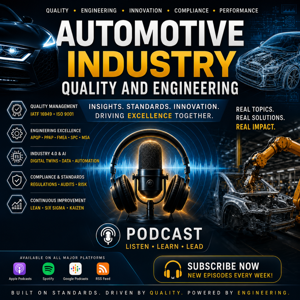
This podcast is dedicated to Automotive Industry,innovation,research and development,quality and engineering and official vehicle recalls occured.
If you want to share with me this passion…