
Sign up to save your podcasts
Or

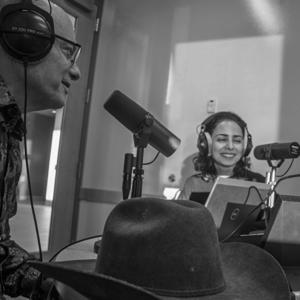


What happens when AI sounds convincing but fails to reason correctly? Azadeh sits down with Dr. Suparna Chatterjee, Assistant Professor at New Mexico State University, to explore how generative AI can support equitable STEM education while challenging traditional ideas about knowledge and authority. They discuss culturally responsive teaching, AI literacy, and why students should question AI rather than treat it as an answer key. Dr. Chatterjee shares classroom examples of AI’s limitations, strategies for fostering deeper learning, and ways teacher preparation programs can promote critical and responsible AI use. Who should hold the authority in learning: students or AI?
Azadeh and Guy talk with Dr. Melissa Warr, assistant professor of educational design and learning technologies at New Mexico State University, about how AI can quietly reinforce inequity in classrooms. Melissa shares new findings comparing 2024 and 2026 models. AI scoring of identical student work has become less biased, but the written feedback has not. When the AI is told a student likes rap music instead of classical, it writes at a lower reading level, gives more direct instruction, and talks down to the student. This echoes schooling’s “hidden curriculum,” where some students are treated as less capable.
The conversation covers why teachers should disclose when they use AI for feedback, and how generative AI’s social nature pushes TPACK toward a stronger focus on context. Melissa describes classroom activities that make bias visible. In one, students generated images of the Three Little Pigs set in India and Mexico and spotted the stereotypes. In another, veterinary science students found that AI recommended oxygen for a cat with pneumonia at a city clinic but not at a low-resource one. She also explains why she protects AI-free time each morning, and why “one-to-three” (students talking to each other while using AI) may matter more than one-to-one devices. Her activities are available at equityandai.net.
Can AI help students become better thinkers, or does it make it too easy to avoid the struggle that leads to real learning? Azadeh and Guy sit down with Dr. Lawrence Chen, Professor of Electrical and Computer Engineering at McGill University, to explore how AI is reshaping engineering education. They discuss productive failure, the limitations of traditional assessments, and why focusing on the learning process matters more than ever. Dr. Chen shares how he uses an “AI second” approach in his engineering ethics course, encouraging students to think and collaborate before turning to AI to challenge their ideas. The conversation also explores AI bias, diverse perspectives, and the importance of questioning AI-generated answers. As Dr. Chen reminds us, plausibility is not validity, and learning to recognize the difference is an essential skill for future engineers.
Nick Husbye returns for a second conversation with Azadeh and Guy. The first question is about modeling. Pre-service teachers learn as much from how we use AI in our own courses as from anything we teach about it. Nick describes narrating his AI use out loud, writing AI expectations directly onto assignment sheets, and showing students where the tool failed him. He walks through a Claude skill he built from research on multiple-choice item design to revise his quiz banks, and the flawed items that still slipped through. The one thing he never wants students to see is him handing his pedagogical thinking over to AI, or blaming a bad question on the tool.
The conversation turns to instructors whose strong reactions to AI end up teaching students to hide their use. Nick shares how his summer children’s literature course moved from a stack of AI slop to an assignment where students submit their full chat dialogue.
In the second half, Guy asks how to prepare teachers for schools with AI policies that range from open access to complete bans, often with mentor teachers who are behind on the technology. Nick starts with what teachers can control, which is their own preparation. He also talks about using AI to put expert knowledge into words for novices, protecting human connection in a world of self-checkout lanes, and building the professional confidence to know when to adopt and when to hold a line.
In this episode, Guy and Azadeh talk with Nick Husbye, associate professor of literacy at the University of Nebraska–Lincoln and Guy’s co-host on Not That Kind of Doctor, about how he uses AI with preservice teachers. Nick’s guiding principle is that AI should amplify thinking rather than export it. Consumer models are good at organizing information, spotting patterns, and naming strengths and weaknesses in what we give them. They do not produce wisdom, and pedagogical content knowledge is a form of wisdom.
Nick describes how his students draft lesson plans by hand in class, photograph them, and then use AI to stress-test the plan through an instructional coach persona he built. He explains why that persona gave better feedback than a “veteran teacher” persona. The conversation turns to authorship, the em dash witch hunt, and why critical literacy frameworks that assume a human author cannot simply be extended to AI-generated text. Guy and Nick close on what AI exposes about five-paragraph templates and the assessments that drive them, and on the responsibility teacher educators carry for preparing teachers for the students they will teach.
What does AI adoption look like when you're the principal, counselor, tech director, and social studies teacher all at once? In this episode, Guy sits down with Nick Ziegler, EdTech Specialist at ESU5, and Andrew Easton, Chief Learning Officer at the ESU Coordinating Council, to explore how Nebraska's Educational Service Units are helping rural schools navigate AI integration in education. From AI-generated images for world language classrooms to classroom observation devices trained on high-quality instructional materials, the conversation covers practical AI tools for teachers, digital citizenship frameworks, and an exciting statewide professional development event. If you care about educational equity and AI literacy, this one's for you.Link to TLI Professional Learning 2026-2027 ~ October 22, 2026:https://esupo.org/workshops/SectionDetails.aspx?SectionID=1960
What happens when AI can finally deliver one-on-one tutoring at scale, but students use it to skip learning entirely? Azadeh and Guy sit down with Dr. Seyyed Ahmad Rahimi, Associate Professor of Learning Sciences and AI at Georgia Tech, to explore the tension between AI-powered performance and genuine learning. They unpack stealth assessment, productive failure, and the SAIL framework for safe AI integration in education. Dr. Rahimi also shares groundbreaking research on using large language models to assess creativity, and what it means to raise lifetime learners in an AI-driven world. If you care about the future of human thinking, this episode is essential listening.
What happens when AI enthusiasts show up at an engineering education conference? Azadeh returns from the ASEE Midwest Conference with fresh insights on how engineers and faculty are grappling with artificial intelligence in the classroom. From agentic AI workshops to qualitative research on students delegating AI tasks, this episode unpacks the nuanced tension between AI support and AI replacing student thinking. Azadeh and Guy explore entrustment frameworks, longitudinal studies on generative AI use, and why a little technical knowledge still matters in an AI-powered world. If you care about AI literacy in higher education, this one's for you.
What does it actually take to use AI well in a math classroom? In this season four premiere, Azadeh and Guy welcome Dr. Lorraine Males, Wyoming Excellence Chair in Mathematics Education, to explore AI integration in teacher preparation. Dr. Males shares insights from her NSF-funded research with Colleague AI, a human-centered platform designed to support, not replace, teacher judgment. The conversation covers why foundational pedagogical knowledge must come before AI tools, how a focus on process over product changes everything, and what math educators can learn from the calculator era. If you care about AI in education done right, this episode is for you. Link to Colleague AI:
https://www.colleague.ai/
Season 4 of “Azadeh and Guy on AI” starts next week, and we are running it differently.
For three seasons, we built each episode around a topic, a paper, or a perspective we wanted to think through out loud. This season every episode is an interview. We are sitting down with instructors and students across higher education and K-12, from engineering, education, business, and the humanities, to hear how AI is being used in and out of their classrooms.
Three things we are trying to get right this season:
* Real classrooms over abstractions. We want the account from people teaching and learning right now, not another round of predictions about where this is headed.
* Both sides of the desk. We are talking with students as well as instructors, because the two often describe the same tool in ways that do not match. A student finds a use the instructor never intended. An instructor redesigns an assignment after watching AI walk through the old one in seconds.
* A range of fields. What counts as good use in a writing seminar and in an engineering lab are not the same thing, and the differences are worth naming.
We are recording on video for the first time this season, so you can watch the conversations if you would rather. When a guest shares something on screen, we will make it available to audio-only listeners too.
If you are teaching with AI, learning with it, or studying how it changes a classroom, I want to hear what is surprising you. What has worked, and what has failed?
First episode next week.
From the publisher's feed