
Sign up to save your podcasts
Or

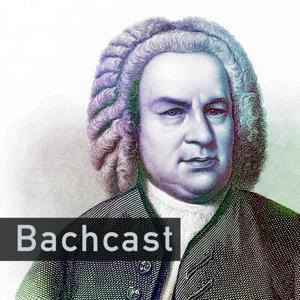


Bach was not only a composer; he was also an arranger. He arranged his own compositions for different purposes, for sure, but he also arranged the works of others. We believe today that he did this as an educational exercise, taking pieces he admired or that were revered by others and adapted them to new media. Such an example is the Concerto for Organ in A minor after a work by Antonio Vivaldi, BWV 593. The work by Vivaldi is the eighth concerto in his collection L’estro Armonico for violin (likewise in A minor), RV 522. Vivaldi’s opus 3 was widely published and celebrated. It’s got a strong opening theme and Bach’s re-working is interesting: he chose to re-write the piece for orchestra and violin for a single instrument, a church instrument.
In this episode, I think it’s worth exploring the original and listening to how Bach adapts the solo/ripieno structure to one instrument. We’ve already explored this in an earlier episode around the Italian Concerto, BWV 971. This time, however, Bach has chosen a more robust instrument that can more dramatically change color and volume.
In this episode, I continue the examination of Bach’s sonatas for violin and harpsichord and in #5, I see Bach stretching his abilities to invent as a composer. The keyboard part still gets a very fair showing in the partnership between the two instruments, but the violin part for me here really shines as something special. For one, it’s a real violin part, offering in the third movement double stopping throughout which for me really shows off one of the things only a stringed instrument can do that woodwinds, for instance can’t do: play harmony. Coupled with this, the writing for the keyboard part for me really feels grounded in one choice of instrument: the harpsichord. I often do not get caught up too much in the idea of Bach’s orchestration, because I don’t think the small details mattered to him as much. That’s a bold thing for me to say, because I don’t have anything beyond a hunch about that. Part of my opinion is informed by Bach’s world and the need to be pragmatic. We have enough evidence of Bach arrangements (such as Brandenburg 4 re-written for harpsichord with recorders) to see that the particular color of an instrument may not have had a significance beyond association. Bach did choose instruments for their association, but I can’t say that we’ll ever have evidence that he chose them for their color or preference in timbre. In Episode 29, I used the example of Gould’s recording with Sir Yehudi Menuhin. While I was not a fan of the vibrato style employed by Mr. Menuhin, Gould’s performance on piano I think was interesting. If I take Bach’s 2nd Orchestral Suite (BWV 1067) that features the transverse flute, I could point to the recording by Ensemble Sonnerie that substitutes the oboe. For me, it’s wholly convincing.
But in this sonata, to me the tonal quality of the harpsichord makes so much sense when we look at the third movement; we also have what I call the badass motive in the fourth movement that seems like it was conceived especially for the violin: it takes off in an upward climb, then right when we get to the top, it comes back down dramatically into the lower reaches of the violin’s gamut. The first entrance of the theme goes down to a middle C, which would technically be possible on some flutes, but the volume would be so low we’d likely not hear it; consequently later, it goes lower, and we couldn’t hear it at all. It’s a line that seems custom-fit for the violin in terms of range, style, and the ability of the performer to “do something” interesting with it.
One further example is in the opening movement that starts with solo keyboard, and the violin part “sneaks” in on the middle C note. To be sure, musical notes don’t “sneak”; it’s performers who do human things, like sneak. The melody and harmony presented by the keyboard player is nice and pleasant and there’s no real need for a second voice; but then there it is, then it’s taken up immediately by the keyboard player as countersubject to the opening line. The keyboard moves in quarter notes, the violin in slower notes, legato and particularly different than the keyboard part. You hear it, and the differences are idiomatic to the instruments themselves.
One issue that I touch upon is the idea of ornamentation. In the Koopman/Huggett collaboration, Mr. Koopman is not shy about adding flourishes. I make the point that maybe this is something the violinist could pick up too, but in that recording, Ms. Huggett sticks to the score more religiously. And that’s an important distinction, one of reading a score and performance practice. The best example we likely have is Corelli’s slow movements to this opus 5, which are written simply in slower notes. It wasn’t until we saw publication of “arrangements” of these pieces that performance practice may have differed dramatically with regard to a lot of notes being added to the original framework. I’d like to think that the opening movement of this sonata is ripe for such an interpretation, but unlike with Corelli’s opus, we do not have a published version of an alternative written-out. One might argue that Bach’s music doesn’t need that type of colorful addition; I’d still like to hear someone attempt it. The type of ornamentation that does take place in the recordings I highlight is all a little safer, once we get away from Koopman. We will hear the typical mixture of devices used around cadences. The interesting part which I exploit in the podcast is the opening of the second movement, with a theme that opens with two longer notes.
The Triple Concerto in A minor (BWV 1044) I view as a harpsichord concerto with obligato parts for violin and flute. In some ways, it relies less upon the violin and flute than in Bach’s similarly scored work, the fifth Brandenburg Concerto, BWV 1050. Bach uses the middle movement to move away from the dark mood of the first movement to a very tender duet between two voices set in a major key; the third movement returns to the severe minor mode, using a (typical) contrapuntal framework with the opening theme.
In my appreciation for this work, I’ve noticed ensembles taking a number of different tempi for the outer movements which can support the music, given the proper environment. More acoustically live locations deserve slower tempos. For those adopting slower tempos, there is a great deal of “detail” that’s left for enjoying in the harpsichord part, especially.
Among the recordings featured here, I like the interpretations by Pierre Hantaï and the Concert Français and Café Zimmermann under Pablo Valetti and Céline Frisch best. Of all the performances mentioned, each have some hallmarks and deserve attention.
Elizabeth Blumenstock, the American baroque violinist well known on the west coast, once played at the Cleveland Museum of Art and performed this sonata. This must have been in early 1996, as I remember I had just broken my leg and I attended on crutches. The second and fourth movements bounce so nicely, I often feel the urge to tap my foot to them, or else actually move my body. This continues our exploration of Bach’s sonatas for violin and keyboard; this one happens to be my personal favorite.
Always of interest is the balance between keyboard and violin; which is the lead? Are they equal partners? Depending upon the version we listen to, there are different answers to that question. It’s clear in the writing, for me, that the violin part and the right hand of the keyboard part are both melodic and deserve equal treatment. The balance is tough perhaps to achieve in a recording as there are two places to tinker with balance: the players and their positioning and ability to come in and out of the foreground texture, and then the mixing engineer. Ideally the big issues would be tackled by the players themselves, as in a live performance.
This episode features recordings by:
Bach's Musical Offering, BWV 1079, contains two keyboard fugues presented in open score. A ricercar in 3 parts and one in 6. Both pieces are favorites of mine, and in my college days, I even wrote an original piece using the work's "royal theme." In this epsiode, we take a break from the sonatas for violin and harpsichord to explore this 6-part setting from BWV 1079.
In the episode, I feature recordings by:
Despite the fact that Bach's style was in opposition to what was becoming a lighter style, as his own son would come to embrace as a composer, I believe on top of the puzzle he's fit together with this fugue he is still managed to reach us emotionally with some drama. The capacity to emphasize and capitalize upon this drama is brought around performances that allow us the clarity of different instrumental sounds on different lines combined with those that can "breathe." Ultimately, my favorite recording is one of compromises by Ensemble Contraste, where in a piano plays multiple parts of the 6-part texture, and the ensemble still holds back just a bit not to over-emphasize the treasures within. While no performance will lighten things to the point of the example I share from C.P.E. Bach's keyboard sonatas, I'm led to believe there are richer musical rewards with richer musical textures.
I should add that rewards rich or lean, each of the recordings featured are recommended for your collection. In addition, I recommend this book that I referenced in my earlier episode featuring BWV 1079 that's easy to read for non-musicians (and musicians alike) that paints just what an extraordinary occasion it was for J.S. Bach to visit Pottsdam, his son, and the court of Frederick the Great.
As we continue our survey of Bach's sonatas for violin and keyboard I want to be sure we also pay attention to the third and fundamental voice in the texture, the left-hand, or bass voice.
Most telling is how the bass line--in terms of motivic structure and especially rhythm--plays a role in the melodic voices.
In this episode, I compare readings of BWV 1015 between Stephano Montanari with Christophe Rousset and Pablo Valetti with Céline Frisch. While Valetti ultimately chooses the fastest tempos, both recordings share a lot of similar affect with the choices made by the performers.
Unique to the Valetti and Frisch recording is the use of a specialty stop on the harpsichord in the 3rd movement. I should clarify, as I used the word “stop” a lot in the podcast — as in a “stop” comes across and lays across the strings. The stop, to be precise, is the mechanism that activates the lowering of material to change the sound of the strings. This mechanism could be a switch or lever near the keys, or in some models, could be activated with a knee lever (so you can continue playing). The word comes from the organ world, where a stop was the big physical knob you would push in or pull out to “stop” the flow of air and therefore direct air away from a set of pipes that produced a particular sound.
If you’re interested in knowing more about how these instruments work, I referred to this article which I found easy to read, and not to mention interesting!
And, of course, Ottavio Dantone, who now I've mentioned twice, is director of Accademia Bizantina. Montanari has been their leader on violin.
BWV 1014 is the first in a series of sonatas for violin and keyboard. In the two recordings featured here, a violinist is pitted against a keyboard player. Bach’s writing in these is not simply a figured bass line, but instead, has a written-out right hand part, giving him the opportunity to create a 3-voice texture (right hand, violin as solo voices, and the left hand with bass). In this episode, I feature recordings by Jaime Laredo (violin) and Glenn Gould (piano) from 1976 and a 2006 recording by Stephano Montanari (violin) and Christophe Rousset, harpsichord.
BWV 22, Jesus nahm sich die Zwölfe is a five-movement cantata for SATB written as Bach’s audition piece for the job as cantor and music director in Leipzig.
The first and second movements feature a solo oboe. The first movement features a choral fugue in the role of an “audience” who has an omniscient perspective.
The third movement is a recitative which allows Bach to change key centers away from the “flat heavy” keys of G minor, C minor, and E-flat major to B major.
The last movement features a chorale above a moving, rhythmically repetitive foundation, in the style of Kuhnau, Bach’s predecessor at St. Thomas’s.
The concerto for keyboard is written in three movements (fast-slow-fast) and has been titled by Bach to be "after Italian taste,” likely a reference to its structure and use of ritornello-solo form. Unlike his transcriptions of orchestral concerti reduced to a keyboard, this is Bach’s composition of an original piece. He does the same thing in his second Clavierübung collection with a French overture-suite for keyboard.
Interpretations vary in chosen tempo and how performers choose to deal with the “ensemble” and “solo” aspects of the work. Historically-informed performers will choose here the harpsichord as the instrument, which is well suited for this task, if a 2-keyboard version is chosen. Instruments with more than one keyboard allow for the instrument to play a different set of strings (2 sets versus 1), or a set of strings sounding an octave higher (4’ stop) or an octave lower (16’) stop.
I’ve chosen a wide variety of performances to illustrate the possibilities for the modern performer.
Purchases of recordings made through the links below help support biberfan.org.
From the publisher's feed