Back Garden Biology

Back Garden Biology

By Oxford UniversityEducation
Download on the App Store

Back Garden Biology episodes

  • The Worm that Turned
    The species with the biggest biomass in any garden is almost certainly the earthworm. These humble denizens of our soil provide essential services by turning over soil and promoting plant growth. Professor Peter Holland explains why Darwin found them so fascinating and Lindsay explains how their muscles work, allowing them to escape from birds, no matter how early they turn up.
    18 min
  • Seeing the Wood for the Trees (Part II)
    We take a walk around a local park to admire more winter trees and see why conifers win over broadleaved trees as we move further North, but even they have to drop their needles during the winter in the farthest reaches of the Boreal forest.
    14 min
  • Seeing the Wood for the Trees
    In winter the bones of the trees are laid bare, giving us a chance to see their skeletons. Join Lindsay as she takes a tour round Wytham Woods in Oxford, showing you how to identify our common native trees from their bark and the shape of their branches.
    18 min
  • Seeing the Wood for the Trees (Transcript)
    In winter the bones of the trees are laid bare, giving us a chance to see their skeletons. Join Lindsay as she takes a tour round Wytham Woods in Oxford, showing you how to identify our common native trees from their bark and the shape of their branches. Creative Commons Attribution-Non-Commercial-Share Alike 2.0 UK: England & Wales; http://creativecommons.org/licenses/by-nc-sa/2.0/uk/
    0 min
  • One billion years a slave
    Peering into a drop of pondwater allows you to look back in time and see key events in the history of life on Earth. In this episode we learn where plants obtained the machinery needed for photosynthesis and find out how hard it is for multicellular beings to form.
    17 min
  • One billion years a slave (Transcript)
    Peering into a drop of pondwater allows you to look back in time and see key events in the history of life on Earth. In this episode we learn where plants obtained the machinery needed for photosynthesis and find out how hard it is for multicellular beings to form. Creative Commons Attribution-Non-Commercial-Share Alike 2.0 UK: England & Wales; http://creativecommons.org/licenses/by-nc-sa/2.0/uk/
    0 min
  • Feed the birds?
    What do birds like eating and what decisions do they have to make when visiting a bird feeder? Not quite tuppence a bag - Brits spent around 200 million pounds a year on bird food. But what do birds like eating and what decisions do they have to make when visiting a feeder? Lindsay visits her mum's garden to get some close-up shots, Friederike Hillemann tells us about her research in Wytham Woods and Annette Fayet explains how puffins face similar problems.
    17 min
  • Feed the birds? (Transcript)
    What do birds like eating and what decisions do they have to make when visiting a bird feeder? Not quite tuppence a bag - Brits spent around 200 million pounds a year on bird food. But what do birds like eating and what decisions do they have to make when visiting a feeder? Lindsay visits her mum's garden to get some close-up shots, Friederike Hillemann tells us about her research in Wytham Woods and Annette Fayet explains how puffins face similar problems. Creative Commons Attribution-Non-Commercial-Share Alike 2.0 UK: England & Wales; http://creativecommons.org/licenses/by-nc-sa/2.0/uk/
    0 min
  • Interview with a Vampire
    Find out how plants like mistletoe and hayrattle extract resources from their hosts and how hayrattle engages in a game of rock, paper, scissors, that makes managing meadows a whole lot easier. Around half of the species on our planet are parasites. Plants can play this game, being either partially or fully parasitic on their hosts. Find out how plants like mistletoe and hayrattle extract resources from their hosts and how hayrattle engages in a game of rock, paper, scissors, that makes managing meadows a whole lot easier.

    15 min
  • Interview with a Vampire (Transcript)
    Find out how plants like mistletoe and hayrattle extract resources from their hosts and how hayrattle engages in a game of rock, paper, scissors, that makes managing meadows a whole lot easier. Around half of the species on our planet are parasites. Plants can play this game, being either partially or fully parasitic on their hosts. Find out how plants like mistletoe and hayrattle extract resources from their hosts and how hayrattle engages in a game of rock, paper, scissors, that makes managing meadows a whole lot easier. Creative Commons Attribution-Non-Commercial-Share Alike 2.0 UK: England & Wales; http://creativecommons.org/licenses/by-nc-sa/2.0/uk/
    0 min

About Back Garden Biology

From the publisher's feed

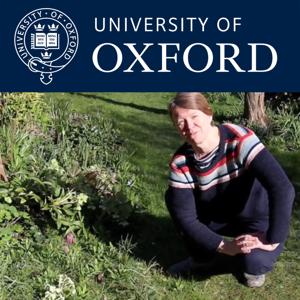
In this fun and informative series Dr Lindsay Turnbull, Associate Professor and Fellow of The Queen’s College, Oxford University, looks at the biology of the back garden. This series is recorded…

More shows like Back Garden Biology

Philosophy for Beginners by Oxford University

Philosophy for Beginners

329 Listeners

Approaching Shakespeare by Oxford University

Approaching Shakespeare

328 Listeners

General Philosophy by Oxford University

General Philosophy

70 Listeners

Reuters Institute for the Study of Journalism by Oxford University

Reuters Institute for the Study of Journalism

8 Listeners

Aesthetics and Philosophy of Art lectures by Oxford University

Aesthetics and Philosophy of Art lectures

77 Listeners

Theoretical Physics - From Outer Space to Plasma by Oxford University

Theoretical Physics - From Outer Space to Plasma

60 Listeners

The Secrets of Mathematics by Oxford University

The Secrets of Mathematics

41 Listeners

Critical Reasoning for Beginners by Oxford University

Critical Reasoning for Beginners

30 Listeners

Literature and Form by Oxford University

Literature and Form

18 Listeners

Ethics in AI by Oxford University

Ethics in AI

4 Listeners