
Sign up to save your podcasts
Or

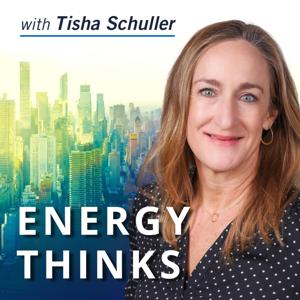

What you’ll get in this episode of Energy Thinks
The most important conversations often must reckon with a profound tension: two opposing ideas that are both true. Example:
* Communities deserve voice and process.
* Communities can’t keep using their voices to “ban” the stuff that keeps the lights on—pipelines, transmission, firm generation—without consequences: spiking bills, stalling projects, and disappearing reliability.
I look for conversations with people with whom I don’t always agree—in order to explore the tensions that we must confront to make progress.
In this episode, I sit down with Josh Freed, senior vice president for climate and energy at the centrist think tank Third Way, to explore what a U.S. energy strategy rooted in the national interest could look like. That’s the connective tissue between today’s theme and the bigger question behind it: We can’t ban our way to the national interest. We have to define what we’re optimizing for—reliability, affordability, security, competitiveness, and yes, lower emissions—and then build the infrastructure that makes those goals real.
Josh brings an important, and still too rare, perspective to our industry’s work: What is politically viable to Democrats, and what do American citizens care about? We talk about the affordability pressures shaping public sentiment, the deeper failure to build infrastructure at scale, permitting reform, nuclear power, natural gas, coal, innovation, and what it would take to restore a sense of mission to American energy policy.
If we are serious about moving beyond polarization—and about building again—we need this kind of conversation. And if you’re an oil and gas leader, you can’t delegate this to your government affairs team. It’s a direct call to leadership from you. The next decade will be defined by whether we can build—and whether industry (you!) shows up as a credible partner in defining and addressing the trade-offs that building requires.
Why Josh?
I’ve known Josh for nearly a decade. We do not see the world the same way. And that’s exactly why I wanted him on the show.
Josh and his colleagues at Third Way are helping shape the future of the Democratic Party’s energy message. That’s good news—because Josh consistently challenges orthodoxies on the left, questions ideological purity tests, and argues that clean energy must compete on cost and reliability if it’s going to scale.
If you care about building durable coalitions—and ensuring oil and gas companies can be credible partners in what comes next—you need to understand how leaders like Josh are thinking. He represents the kind of center-left partner you’ll be able to do business with ... if you’re ready to make trade-offs yourself.
Some of Josh’s insights
* What energy is politically viable? “Democrats and centrists need to re-embrace ‘all of the above.’ The reality is, natural gas is still used in our economy and in economies around the world for a wide variety of reasons, and it’s going to continue to be used for the foreseeable future. Oil is the same way, and we have to not only accept but embrace that reality.”
* On a linchpin for permitting reform: “We—as a country, the energy sector, developers, investors—need to have confidence that there’s a path that works and that the government is good for its word, regardless of who’s in power in the White House ... and we just don’t have that right now, and we didn’t have that to the full extent that we should have in the last administration, either.”
* On American leadership: “There’s this broader systemic problem, which is we don’t build infrastructure or do big things in the United States anymore. And it is because there’s this ideological challenge on both sides of the aisle that we need to only adhere to a set of technologies, a set of market constraints, or other politically imposed circumstances that really do limit the way our economy builds things and powers the country.”
Bonus content!
We also talk about The Myth and The Moment—why “easy transition” narratives collapse the moment you collide with reliability, permitting reform, and the sheer scale of infrastructure required.
Watch the episode on YouTube or listen to the podcast on Substack to hear Josh and me discuss The Myth and The Moment.
Order your copy of The Myth and The Moment: From Polarization to Progress in the New Energy Landscape.
What to do next in The Moment
* Email us, and we’ll help you train for the energy race. It’s a marathon, not a sprint.
* Enjoying The Myth and The Moment? Leave a review to help others find it.
* If this email was forwarded to you, please subscribe here.
* Are you ready to race? Hit that heart button below.
Over (opting out) and out,
Tisha
 View all episodes
 By Tisha Schuller

4.9
3434 ratings
What you’ll get in this episode of Energy Thinks
The most important conversations often must reckon with a profound tension: two opposing ideas that are both true. Example:
* Communities deserve voice and process.
* Communities can’t keep using their voices to “ban” the stuff that keeps the lights on—pipelines, transmission, firm generation—without consequences: spiking bills, stalling projects, and disappearing reliability.
I look for conversations with people with whom I don’t always agree—in order to explore the tensions that we must confront to make progress.
In this episode, I sit down with Josh Freed, senior vice president for climate and energy at the centrist think tank Third Way, to explore what a U.S. energy strategy rooted in the national interest could look like. That’s the connective tissue between today’s theme and the bigger question behind it: We can’t ban our way to the national interest. We have to define what we’re optimizing for—reliability, affordability, security, competitiveness, and yes, lower emissions—and then build the infrastructure that makes those goals real.
Josh brings an important, and still too rare, perspective to our industry’s work: What is politically viable to Democrats, and what do American citizens care about? We talk about the affordability pressures shaping public sentiment, the deeper failure to build infrastructure at scale, permitting reform, nuclear power, natural gas, coal, innovation, and what it would take to restore a sense of mission to American energy policy.
If we are serious about moving beyond polarization—and about building again—we need this kind of conversation. And if you’re an oil and gas leader, you can’t delegate this to your government affairs team. It’s a direct call to leadership from you. The next decade will be defined by whether we can build—and whether industry (you!) shows up as a credible partner in defining and addressing the trade-offs that building requires.
Why Josh?
I’ve known Josh for nearly a decade. We do not see the world the same way. And that’s exactly why I wanted him on the show.
Josh and his colleagues at Third Way are helping shape the future of the Democratic Party’s energy message. That’s good news—because Josh consistently challenges orthodoxies on the left, questions ideological purity tests, and argues that clean energy must compete on cost and reliability if it’s going to scale.
If you care about building durable coalitions—and ensuring oil and gas companies can be credible partners in what comes next—you need to understand how leaders like Josh are thinking. He represents the kind of center-left partner you’ll be able to do business with ... if you’re ready to make trade-offs yourself.
Some of Josh’s insights
* What energy is politically viable? “Democrats and centrists need to re-embrace ‘all of the above.’ The reality is, natural gas is still used in our economy and in economies around the world for a wide variety of reasons, and it’s going to continue to be used for the foreseeable future. Oil is the same way, and we have to not only accept but embrace that reality.”
* On a linchpin for permitting reform: “We—as a country, the energy sector, developers, investors—need to have confidence that there’s a path that works and that the government is good for its word, regardless of who’s in power in the White House ... and we just don’t have that right now, and we didn’t have that to the full extent that we should have in the last administration, either.”
* On American leadership: “There’s this broader systemic problem, which is we don’t build infrastructure or do big things in the United States anymore. And it is because there’s this ideological challenge on both sides of the aisle that we need to only adhere to a set of technologies, a set of market constraints, or other politically imposed circumstances that really do limit the way our economy builds things and powers the country.”
Bonus content!
We also talk about The Myth and The Moment—why “easy transition” narratives collapse the moment you collide with reliability, permitting reform, and the sheer scale of infrastructure required.
Watch the episode on YouTube or listen to the podcast on Substack to hear Josh and me discuss The Myth and The Moment.
Order your copy of The Myth and The Moment: From Polarization to Progress in the New Energy Landscape.
What to do next in The Moment
* Email us, and we’ll help you train for the energy race. It’s a marathon, not a sprint.
* Enjoying The Myth and The Moment? Leave a review to help others find it.
* If this email was forwarded to you, please subscribe here.
* Are you ready to race? Hit that heart button below.
Over (opting out) and out,
Tisha
1,095 Listeners
1,250 Listeners
401 Listeners

112,220 Listeners
262 Listeners

6,095 Listeners

28 Listeners

16,196 Listeners
280 Listeners
116 Listeners