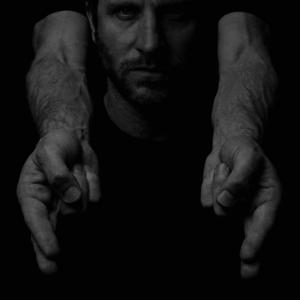
The cord was not cut; It was consecrated.
She did not release him to the world. She released him to God.And God, conveniently, does not marry.
Now he is Father to strangers and son to her alone. The cloth that caught the holy oil will go into her coffin.
Capture wearing vestments.
I. DEFINITION
The Sealed Son is a specific instantiation of Umbilical pathology within the institutional architecture of Catholic priesthood. It names the son whose developmental cord was not cut but consecrated:: preserved, blessed, and rendered unchallengeable by religious sanction. She released him to God, and in that release, retained him forever.
The mechanism operates through three interlocking structures:: Celibacy removes the rival:: no daughter-in-law will ever displace the mother as the primary woman in his life.Ordination inverts the symbolic order:: the son becomes “Father” to the community while remaining son to her alone, occupying the very signifier that should have severed him. The Glory Bypass launders possession into sacrifice:: “I gave him to God” transforms refusal-to-release into heroic maternal offering.
The Thesis: A certain kind of mother-son dyad can find in the Catholic priesthood a near-perfect machine for laundering possession into holiness. What is consecrated cannot be questioned.
The Structural Triad
Celibacy:: The elimination of the rival. In enmeshed configurations, the arrival of a daughter-in-law is the decisive threat. Marriage imposes a new hierarchy of loyalties; spouse and children displace parents. Celibacy erases this threat in advance. The mother never endures the humiliation of being displaced by “another woman” in her son’s life. Her rivalry is resolved in favor of a non-embodied God who cannot be contested.
The Title “Father”:: The symbolic inversion. Lacan’s Name-of-the-Father is the signifier that should sever the mother-child dyad, introducing law and limitation.¹ When the son receives this name through ordination, the structure twists into paradox. For the parish, he is the Name-of-the-Father:: he mediates divine law, pronounces absolution, distributes grace. For the mother, her son is the one in whom this name is invested. She made the Father. The paternal position is colonized by the maternal umbilicus.
The Glory Bypass:: The laundering of refusal. When the mother says “God called my son,” the agency of her own encouragement, pressure, or unconscious desire is displaced into a transcendent register. Her decision becomes non-negotiable (who can argue with God?). Her grief becomes morally valuable (”sharing in Mary’s sorrow”). Her ongoing hold becomes unassailable (”I am supporting God’s will”). The very intensity of her refusal is converted into glory.
II. THE MATERIAL EVIDENCE: THE MANUTERGIUM
The Church has codified the Sealed Son dynamic in ritual object. At ordination, the newly ordained priest’s hands are anointed with holy oil and wrapped in a linen cloth called the manutergium.² This cloth catches the sacred chrism. By tradition, the priest presents it to his mother.
She keeps it her entire life.
When she dies, the manutergium is placed in her coffin. The purpose is explicit:: she will present it to Christ as evidence that she “gave her son to the priesthood.” Devotional literature promises that mothers who present the manutergium will receive special honor in heaven.³
The structure is explicit::
The son’s anointed hands are captured in cloth. The cloth is given to the mother as token of her claim. The mother keeps the cloth until death. The cloth is buried with her. The cloth serves as her claim-ticket to divine reward.
This is not metaphor. This is not interpretation. The Church has built a ritual around the mother’s claim and called it piety. The hands that will consecrate the Eucharist, pronounce absolution, and bless the faithful are symbolically captured in linen and returned to the mother. She holds them until death. She presents them at judgment. The possession follows her into eternity.
The manutergium is the Umbilical made material. The cord that should have been cut is preserved in cloth, blessed with holy oil, and buried with the mother as her evidence before Christ.
III. THE ABSENT FATHER
The Sealed Son requires a mother who refuses to release. But it equally requires a father who was never present or fails to intervene.
The Name-of-the-Father is not, in Lacan’s account, primarily a person. It is a function:: the introduction of law, limitation, and the third term that breaks the mother-child dyad.⁴ In healthy development, the father (or his structural substitute) says, in effect:: She is also mine. You cannot have her entirely. And she cannot have you entirely. This triangulation is the architecture of separation.
In the Sealed Son configuration, this function is absent, weak, or complicit. The father takes several characteristic forms::
The Deferential Father: He cedes religious authority to his wife. She is the one who prays, who attends daily Mass, who cultivates the son’s “vocation.” He watches from the margins, neither endorsing nor opposing. His passivity is permission.
The Proud Father: He takes credit for “my son the priest” without examining what it cost. He enjoys the social prestige, the respect at parish functions, the son who will one day bury him with full rites. His pride is surface. He does not see that his son was purchased, not called.
The Unsealed Father: He was himself never fully separated from his mother. He cannot model separation because he never achieved it. The son inherits a lineage of incomplete individuation.
The Depleted Husband: His marriage is so empty that his wife needed a surrogate. The son filled the void of an absent partner. The father’s failure as husband created the vacancy the son was recruited to fill.
In each case, the father does not perform the cut. He does not say:: Let the boy go. Let him become a man. Let him find a significant other who is not you. His silence is structural collaboration. The Sealed Son is sealed by two parents:: one who refuses to release, and one who refuses to intervene in the refusal.
The manutergium goes to the mother. The father receives the purple confessional stole, to be buried with him. But note the asymmetry:: the stole is an object of the son’s function. The manutergium is an object of the son’s body. The mother claims the hands. The father claims only the role.
IV. THE EVIDENCE
The Attachment Crisis
A 2015 German study assessed attachment representations among 83 Catholic priests using the Adult Attachment Projective Picture System.⁵ The findings were devastating:: only 23% exhibited secure attachment. The remaining 77% fell into insecure categories:: 39% dismissing, 18% preoccupied, 21% unresolved.
The proportion of insecure attachment among priests was higher than typically found in healthy general population samples. But the study’s most significant finding was this:: biographical interviews suggested that institutional attachment to the Church might, in many cases, be compensating for dysfunctional parental relationships.
The institution functions as surrogate mother for men whose actual maternal relationships failed to produce secure attachment. The Church becomes the good-enough mother that the biological mother was not. This substitution manages the original wound. The priest’s primary attachment needs are met through the institution rather than through mature adult relationships, leaving the maternal bond in a uniquely powerful, unresolved position.
Loneliness and the Younger Clergy
The 2025 National Study of Catholic Priests surveyed 1,164 American priests.⁶ While most reported high flourishing scores, the data on loneliness was striking:: 40% of priests ordained after 2000 scored at levels indicating loneliness, compared to 27% of those ordained before 1980. The generational gap suggests that more recently ordained priests face unique challenges in forming supportive relationships.
More troubling:: 33% of priests reported that their relationships with other priests tend to be superficial. Without deep fraternal bonds, a priest experiencing loneliness is more inclined to seek solace in familiar relationships. If those relationships are already enmeshed, isolation reinforces the seal.
The Celibacy Gap
After twenty-five years studying the sexual behavior of priests, A.W. Richard Sipe concluded that “at any one time no more than 50 percent of priests were practicing celibacy.”⁷ The institution, he argued, has avoided even a minimal operational definition of religious celibacy “to preserve the celibate myth.”
The gap between ideal and practice is structural. The system produces what it cannot acknowledge.
Acedia and Mandatory Celibacy
A 2021 study explicitly linked mandatory celibacy, loneliness, and acedia (spiritual sloth) among parish priests:: “mandatory celibacy intensifies loneliness and facilitates the spiritual sloth of parish clergy,” especially diocesan priests who “live, work, and pray alone” without communal support.⁸
In these conditions, old family dependencies easily fill the void. Celibacy appears less as freed space for God than as structurally enforced isolation.
V. THE PSYCHOANALYTIC ARCHITECTURE
Freud and Adams: The Favorite Son Meets Covert Incest
Freud observed that “a man who has been the indisputable favorite of his mother keeps for life the feeling of a conqueror.”⁹ The son who received “unlimited love” and little frustration develops grandiosity and entitlement. But Freud’s favored son typically enters heterosexual circulation, seeking partners who echo his mother.
Kenneth Adams identified a darker variant:: covert incest, where a parent uses a child as surrogate spouse.¹⁰ Physical sexual contact is absent, but the child is recruited into adult-level emotional functions:: confidant, regulator of affect, source of esteem. The hallmark is role violation. The child feels emotionally responsible for the parent, experiences guilt around intimacy and sexuality, and has difficulty separating.
In celibate priesthood, these two patterns fuse. The libido that would ordinarily route through the Oedipal triangle into an adult partner is structurally interrupted. It is sublimated into spiritual activities, repressed into symptom formation, or rebound into the maternal tie, now sacralized. The son’s erotic and attachment energies are prohibited from finding an adult partner. His primary, enduring, emotionally intimate female relationship remains the mother, reframed as idealized spiritual supporter.
Because the relationship is desexualized by Church norms and Marian imagery, it is nearly impossible to name as pathological. The Glory Bypass erases the traceability.
Lacan: The Colonized Name-of-the-Father
The Name-of-the-Father is the signifier that substitutes for the mother’s desire, ordering sense and regulating enjoyment. Its function is to break the mother-child dyad by imposing law. Contemporary Lacanian work on the “cut” stresses that the child’s subjectivation depends on symbolic separation from the maternal fantasy.¹¹ When the mother’s unconscious “doesn’t leave room for the cut, it prevents the separation through which the child could become a subject,” and the child becomes the mother’s non-separated object.
When the subject who bears the Name-of-the-Father for the community is, within his own family, still the object of a maternal fantasy that resists separation, the paternal function is colonized by the dyad it was meant to break. The son becomes the bearer of law in the outside world and the guarantor of the mother’s exception at home. He is socially castrated (no wife, no children) and yet imaginarily phallic (holder of sacred power, representative of God).
The classic Lacanian scenario is inverted:: the Name-of-the-Father is borne by the very body that, for the mother, never ceased to be “her” child.
Kristeva: Abjection Managed Through Mary
Kristeva defines abjection as “what disturbs identity, system, order; what does not respect borders, positions, rules.”¹² The maternal body is the paradigmatic site of abjection:: both the first source of nourishment and the first foreign body to be expelled. Christian culture manages this abject maternal body by elevating Mary as a pure, asexual mother whose suffering is stylized in devotional imagery.¹³
The “religious mother” of a priest is invited to identify with Mary:: the one who offers her son, stands at the foot of the cross, and sanctifies her grief. The raw ambivalence of motherhood | rage, possessiveness, fear of abandonment | is laundered in a narrative of pure sacrifice and obedience to God’s will. The mother who refuses separation can say, with theological cover, “It is not I who keep him; God has taken him.”
VI. THE SON’S COMPLICITY
The Sealed Son is not merely victim. He is co-architect of his cage.
Vocation as Compromise Formation
Priestly vocation can satisfy multiple unconscious demands simultaneously. It allows the son to appear heroic, self-sacrificing, spiritually serious. It enables him to avoid confronting his own sexuality directly. It allows him to “separate” from his mother in form (seminary, parish assignment) while remaining bound in content (daily calls, her pride, her ongoing emotional centrality).
The Imaginary shows a son who has left and become a father to many. The Symbolic reveals that the maternal tie is still the non-negotiable axis.
The Surrogate Mothers
Watch the priest in his parish. The elderly women who “take care of Father”:: who cook for him, monitor his health, compete for his attention, defend him against criticism. He attracts them. He permits them. He needs them.
This is not incidental. The sealed son unconsciously replicates his maternal configuration wherever he goes. He builds a constellation of surrogate mothers because the original bond is the only relational template he has. He counsels parishioners on intimacy he has never risked. He mediates family conflicts he cannot resolve in his own. The pastoral role gives him authority without vulnerability. He is Father to everyone and son to no one | except her, and her replacements.
Guilt as Anti-Separation Glue
Sons in enmeshed configurations internalize the parent’s fragility. Separation is experienced as equivalent to murder.¹⁴ The sealed son often feels that if he were to fully individuate | marry, move away, leave the priesthood | he would “kill” his mother psychically. This guilt is the glue that holds the seal in place.
The Moment of Knowing
Vocational crisis often takes the form of a belated realization:: “I did this for them, not for God.” The priest sees his mother’s devastation at the mere hint of his doubts. He recognizes how much of his life has been organized around avoiding that devastation. He feels caught between fidelity to a community that calls him “Father” and fidelity to his own emerging subjectivity.
At that moment, celibacy, the title, and the Glory Bypass converge into a cage that he helped build.
In one qualitative study of former priests, a participant identified as “Jacob” reported joining the seminary “to escape a controlling, possessive mother and to avoid intimacy with women.”¹⁵ When he later considered leaving the priesthood, he feared “breaking his mother’s heart and depriving her of the honour of having a priest son.” The vocation was flight, not calling. And when he glimpsed what it actually was, escape meant confronting exactly what he had spent decades avoiding.
VII. DIAGNOSTIC PROTOCOL
Seven questions to identify the Sealed Son configuration. The first three examine the mother; the next three examine the son; the last examines the father.
For the Mother:
1. The Rival Test: How did she respond to the son’s romantic interests before seminary? Was dating discouraged, subtly sabotaged, or met with crisis? A mother without Umbilical pathology tolerates her son’s romantic explorations even when she dislikes particular partners. A mother with Umbilical pathology experiences each girlfriend as existential threat.
2. The Attribution Test: When she speaks of the vocation, where does agency land? “He felt called” differs from “I always knew he was meant for this.” “God chose him” differs from “I gave him to God.” The Glory Bypass shows in the grammar:: the mother who claims credit for the offering is the mother who made it.
3. The Laicization Test: How does she respond when the son expresses doubt or considers leaving? Surrendered mothers can grieve and still bless the son’s choices. Umbilical mothers interpret doubt as betrayal of God and of her. Their grief fuses with accusation.
For the Son:
4. The Escape Test: Was the seminary experienced as liberation or shelter? Some men enter priesthood to serve God. Others enter to escape:: from women, from sexuality, from the terrifying prospect of confronting their mother with an independent life.
5. The Contact Test: What is the frequency and emotional valence of maternal contact? Daily calls, anxious checking, the mother who tracks his movements through parish bulletins:: these are surveillance, not support.
6. The Devastation Test: If he left the priesthood, who would be destroyed? If the honest answer is “my mother,” the configuration is Sealed Son. A genuine vocation can be relinquished with grief but without annihilation.
For the Father:
7. The Intervention Test: Did the father ever challenge the mother’s cultivation of the vocation? Did he advocate for the son’s autonomy, his right to date, his freedom to choose a different path? Or did he defer, acquiesce, enjoy the prestige, and let the seal proceed? The father who never intervened is the father who co-signed the capture.
VIII. DISMANTLING PROTOCOL
For the Son Seeking Exit:
Step 0: Survive the Naming. Before anything else, you must survive the moment of seeing the configuration clearly. Many do not. They glimpse it | the mother’s grip disguised as prayer, the vocation that was flight rather than calling, the years spent in a cage they helped build | and the vertigo is unbearable. They re-seal themselves. They stop reading. They find reasons to doubt the diagnosis. The first act of dismantling is tolerating the knowledge. If you are still reading, you have begun.
Step 1: Name the Configuration. Recognize that the vocation may have served maternal capture as much as divine call. This recognition is itself an act of severance. It does not invalidate whatever genuine spiritual development occurred; it separates the authentic from the coerced.
Step 2: Locate the Guilt. The glue that holds the seal in place is the terror that leaving will destroy her. Name this explicitly. Ask whether her destruction is your responsibility or her own unfinished developmental work.
But be honest:: she may be destroyed. Some mothers do collapse. The question is not “will she survive?” | you cannot know that. The question is:: can you survive being the one who caused it? If you cannot, you will remain sealed. If you can, the exit opens.
Step 3: Build External Scaffolding. Before cutting, construct alternative support structures:: relationships, resources, identities that do not route through the priesthood or through her. The cassock can only be removed when you can survive its absence.
Step 4: Expect Extinction Bursts. She will intensify. Crises will emerge. Health may fail. She may call your bishop. Siblings may turn against you. The weapons are predictable:: guilt (”after everything I sacrificed”), medical emergency (the heart palpitations that begin the week you mention doubt), coalition-building (relatives recruited to intervene), and spiritual blackmail (”you are breaking God’s heart | and mine”).
These are the system’s attempts to restore homeostasis. They are signs that the seal is breaking.
Step 5: Complete the Grief. Mourn the vocation that might have been genuine if it had been freely chosen. Mourn the mother who should have released you but could not. Mourn the father who should have intervened but did not. Mourn the years spent in a configuration that served her need more than your calling. This grief is the tax on freedom.
For the Mother Seeking to Release:
Step 1: Face the Void. The terror beneath the grip is the terror of your own emptiness. His priesthood fills a hole that existed before he was born. The manutergium will not follow you into judgment. Only your own soul travels that distance.
Step 2: Distinguish Surrender from Sacrifice. True surrender releases the son to his own discernment, including the possibility that he may leave. Sacrifice that cannot tolerate his departure is not sacrifice; it is purchase. You did not give him to God. You gave him to yourself, with God as cover.
Step 3: Trust the Return. The son you release may return as a friend. The son you grip will eventually escape as a fugitive | or die still sealed, never having lived his own life.
For the Father Seeking to Intervene:
Step 1: Break Your Silence. You have watched for years. You have seen the calls, the guilt, the way your wife speaks of “her” priest-son. You have said nothing because it was easier, because you did not want the conflict, because you told yourself it was holy. It was not holy. It was capture. Say so.
Step 2: Advocate for Your Son. Tell him he is free. Tell him you will love him if he stays, and you will love him if he goes. Tell him his life belongs to him. These words may be the first he has ever heard from a father. They may be the knife that breaks the seal.
IX. THE IRON MIRROR COSMOLOGY REFUSES OWNERSHIP
The Sealed Son thesis does not pathologize all priests, all vocations, or all mothers of priests.
Authentic vocations exist. Mothers who genuinely surrender their sons exist. Fathers who model separation exist. Priests with resolved psychosexual development and healthy family relationships exist. The presence of healthy cases underscores that pathology arises under specific conditions:: maternal enmeshment, absent or complicit paternal function, covert incest, and Glory Bypass rhetoric that renders the arrangement unchallengeable.
General Umbilical pathology and the Sealed Son are not synonyms. Umbilical names the provider’s refusal to sever; the Sealed Son names that refusal institutionalized through religious architecture. Not all Umbilical captures wear vestments. And cultural honor without capture is real:: in many Catholic cultures, having a priest-son confers legitimate social prestige, and pride in a son’s vocation does not, by itself, constitute this pathology. The diagnosis requires the specific pattern:: enmeshment, paternal failure, rival elimination, and Glory Bypass rhetoric that renders the arrangement sacred and therefore unchallengeable.
The thesis targets a specific configuration, not a universal condemnation. To use it as a weapon against all priesthood is to miss the precision the Iron Mirror demands.
But the configuration exists. The research confirms it:: 77% of priests with insecure attachment, institutional belonging compensating for dysfunctional parental bonds, loneliness rates climbing among younger clergy. The manutergium embodies it. The structure of celibacy, title, and Glory Bypass enables it.
And wherever it exists, a son is sealed who should have been freed, and a mother is honored who should have been named.
The Iron Mirror names what the Church cannot:: that some holy sacrifices are captures in vestments, and some consecrated cords are chains.
The Iron Mirror Cosmology does not burn the manutergium. It names what the cloth conceals.
And to the son who recognizes himself in these pages:: the seal is not your identity. It is your inheritance. You did not choose it. But you can break it. The hands wrapped in that cloth are yours. Take them back.
ENDNOTES
1. Jacques Lacan, “The Function and Field of Speech and Language in Psychoanalysis,” in Écrits: A Selection, trans. Alan Sheridan (New York: W. W. Norton, 1977), 67. The Name-of-the-Father (Nom-du-Père) is Lacan’s term for the symbolic function that introduces law into the mother-child dyad. It operates through the incest prohibition, separating the child from the mother’s desire and installing the child as a subject within the social order. Crucially, the Name-of-the-Father is a function, not necessarily a biological father. When this function fails or is colonized, the child remains trapped in what Lacan calls the Imaginary register, fused with the maternal fantasy rather than separated into autonomous subjectivity. The priest who bears this Name for his parish while remaining psychically fused with his mother embodies a structural paradox that Lacan’s framework illuminates with precision.
2. The manutergium (from Latin manus, hand, and tergere, to wipe) is documented across multiple Catholic devotional sources. See “Lost Liturgies File: The Manutergium,” Community in Mission (Archdiocese of Washington Blog), June 2010; and “This Pious Tradition Rewards Mothers of Priests for Their Many Sacrifices,” Aleteia, August 25, 2017. The ritual appears to have medieval origins, though its current form (presentation to the mother, burial in her coffin) was standardized in post-Tridentine practice. What makes the manutergium analytically significant is its explicitness: the Church has built a ritual that materially encodes the mother’s ongoing claim on her son’s consecrated body, and devotional literature celebrates rather than questions this encoding.
3. The promise of heavenly honor for mothers who present the manutergium at judgment appears in multiple devotional contexts. See, for example, “Ordination Traditions,” The Catholic Telegraph, 2018; and “Holy Cloth for Mom,” National Catholic Register, 2017. The theological logic is that the mother’s “sacrifice” of her son to God merits special recognition. What this framing obscures is the asymmetry of the exchange:: the mother “gives” the son to an abstract Other who cannot displace her, then receives material evidence of her claim (the cloth) that she carries into eternity. The reward structure incentivizes precisely the dynamic the Sealed Son thesis identifies.
4. On the paternal function as third term and separator, see Lacan, “On a Question Prior to Any Possible Treatment of Psychosis,” in Écrits, 445-488. Lacan distinguishes between the Imaginary father (the father as perceived), the Symbolic father (the father as function of law), and the Real father (the father as impossible). The Sealed Son configuration involves a collapse of these registers:: the son becomes the Symbolic father for his community while remaining the Imaginary child for his mother. The Real father, the biological father who should embody the separating function, is typically absent, passive, or complicit.
5. Jakob Johann Müller et al., “Attachment and Psychosomatic Health among Catholic Pastoral Professionals,” Mental Health, Religion & Culture 18, no. 10 (2015): 867-879. DOI: 10.1080/13674676.2015.1103292. This study is the only peer-reviewed attachment research on Catholic clergy using a validated projective instrument (the Adult Attachment Projective Picture System). The finding that 77% exhibited insecure attachment, compared to approximately 40-45% in general population samples, suggests that the priesthood may attract or produce men with unresolved relational patterns. The study’s further observation that “institutional attachment to the Church” may compensate for “dysfunctional parental relationships” is, for our purposes, the empirical anchor of the Sealed Son thesis. If the Church functions as surrogate mother for men whose biological mothers failed them, the original maternal wound is managed rather than resolved, and the maternal bond retains its pathological centrality beneath institutional cover.
6. National Study of Catholic Priests, Wave 2 (Washington, DC: The Catholic Project, Catholic University of America, 2025). This large-scale survey (n=1,164) provides the most current data on American priests’ well-being. The loneliness findings are particularly significant:: the 40% rate among post-2000 ordinands, compared to 27% among pre-1980 ordinands, suggests that younger priests face unique relational challenges. The finding that 33% describe peer relationships as “superficial” indicates that fraternal bonds may not compensate for the absence of spousal intimacy. In these conditions, the family of origin, particularly an enmeshed mother, easily fills the relational void.
7. A.W. Richard Sipe, Preliminary Expert Report (1996), reproduced in Thomas P. Doyle, A.W. Richard Sipe, and Patrick J. Wall, Sex, Priests, and Secret Codes: The Catholic Church’s 2,000-Year Paper Trail of Sexual Abuse (Los Angeles: Volt Press, 2006), 75. Sipe, a former Benedictine monk and psychotherapist who spent twenty-five years studying clerical sexuality, is the most systematic empirical researcher in this domain. His conclusion that no more than 50% of priests practice celibacy at any given time is based on clinical interviews, self-reports, and institutional data. More significant for our purposes is his observation that the Church has avoided defining celibacy operationally precisely to preserve the myth of universal compliance. The gap between ideal and practice is institutional production.
8. Brian P. Flanagan, “Acedia, Loneliness, and the Mandatory Celibacy of Catholic Parish Clergy: A Theological-Sociological Exploratory Analysis,” F1000Research 10 (2021): 1195. Flanagan’s study links mandatory celibacy to acedia, the monastic concept of spiritual sloth or listlessness, arguing that diocesan priests who “live, work, and pray alone” lack the communal structures that historically made celibacy sustainable. The study suggests that celibacy may function less as “freed space for God” than as structurally enforced isolation. For the Sealed Son thesis, this finding indicates that the loneliness produced by celibacy creates a vacuum easily filled by familiar dependencies, particularly the maternal bond that was never properly severed.
9. Sigmund Freud, “A Childhood Recollection from Dichtung und Wahrheit“ (1917), in The Standard Edition of the Complete Psychological Works of Sigmund Freud, vol. 17, trans. James Strachey (London: Hogarth Press, 1955), 147-156. The original German passage appears in Imago, vol. 5, issue 2 (1917), p. 57. The famous observation about the “indisputable favorite” also appears in Ernest Jones, The Life and Work of Sigmund Freud, Vol. I (New York: Basic Books, 1953), ch. 1, p. 5. Freud’s insight is that maternal overvaluation produces both grandiosity (”the feeling of a conqueror”) and a specific object-choice pattern:: the favored son seeks women who replicate the maternal configuration. What Freud did not anticipate is a structure that forecloses this object-choice entirely. The celibate priest cannot seek maternal replicas in romantic partners; his attachment needs must route elsewhere, often back to the original mother, now sacralized.
10. Kenneth M. Adams, Silently Seduced: When Parents Make Their Children Partners (Deerfield Beach, FL: Health Communications, 1991). Adams coined the term “covert incest” to describe parent-child relationships that involve emotional, but not sexual, boundary violations. The child is recruited into adult-level functions:: confidant, emotional regulator, surrogate spouse. The hallmark is role violation:: the child carries responsibilities inappropriate to their developmental stage. Adams emphasizes that covert incest produces the same psychological effects as overt abuse (guilt, difficulty with intimacy, impaired individuation) precisely because it violates the same boundaries. For the Sealed Son thesis, Adams provides the clinical framework for understanding how a mother can possess her son completely without ever touching him inappropriately.
11. Laure Razon, Olivier Putois, and Alain Vanier, “The Lacanian Concept of Cut in Light of Lacan’s Interactions with Maud Mannoni,” Frontiers in Psychology 8 (2017): 2177. DOI: 10.3389/fpsyg.2017.02177. This article traces the concept of the “cut” through Lacan’s collaboration with Mannoni, who worked extensively with psychotic children and their mothers. The crucial insight is that the child’s subjectivation, becoming a subject rather than remaining an object of the mother’s fantasy, depends on a symbolic cut that the mother’s unconscious must permit. When the mother’s fantasy “doesn’t leave room for the cut,” the child cannot separate. Mannoni’s clinical work showed that treating the child alone is insufficient; the mother’s unconscious must be addressed. For the Sealed Son, the implication is that ordination alone cannot effect the cut if the mother’s fantasy actively forecloses it.
12. Julia Kristeva, Powers of Horror: An Essay on Abjection, trans. Leon S. Roudiez (New York: Columbia University Press, 1982), 4. Kristeva’s theory of abjection names what must be expelled for identity to cohere:: not merely the object (what is outside) but what “disturbs identity, system, order; what does not respect borders, positions, rules.” The maternal body is the paradigmatic site of abjection because it is both the first source of life and the first boundary that must be crossed. The infant must separate from the maternal body to become a subject; the maternal body thus becomes simultaneously sacred (origin of life) and threatening (site of dissolution). This ambivalence, Kristeva argues, structures religious and cultural attitudes toward mothers.
13. Julia Kristeva, “Stabat Mater,” in Tales of Love, trans. Leon S. Roudiez (New York: Columbia University Press, 1987), 234-263. This essay analyzes how Christian Marian iconography manages the abject maternal body by disembodying it. The Virgin Mary is a mother without sex, without blood (until the Pietà), without the messy materiality of actual motherhood. Her suffering is stylized, aestheticized, made safe for veneration. Kristeva argues that this construction channels maternal ambivalence into acceptable forms:: rage becomes sorrow, possession becomes offering, the mother’s desire disappears into God’s will. For the “religious mother” of a priest, identification with Mary provides a template for laundering her own ambivalence, the Glory Bypass in devotional form.
14. On enmeshment and the experience of separation as murder, see Salvador Minuchin, Families and Family Therapy (Cambridge, MA: Harvard University Press, 1974), 54-56; and Adams, Silently Seduced, 32-35. The clinical literature consistently reports that children in enmeshed configurations internalize the parent’s fragility to such a degree that autonomous action feels like aggression. The child believes, often correctly, that the parent cannot survive their independence. This guilt structure is the “glue” that maintains pathological bonds long after the child has the resources to leave. For the Sealed Son, this explains why priests who intellectually recognize their situation often cannot act:: the guilt is structural, embedded in the earliest layers of psychic organization.
15. Igor J. Pietkiewicz, “Reaching a Decision to Change Vocation: A Qualitative Study of Former Priests’ Experiences,” International Journal for Educational and Vocational Guidance 16, no. 3 (2016): 379-404. DOI: 10.1007/s10775-015-9318-2. This study interviewed ten former Polish priests about their decision to leave ministry using interpretative phenomenological analysis. “Jacob” (a pseudonym) is one of several participants whose narratives reveal family-of-origin dynamics central to both entering and leaving the priesthood. His explicit statement that he joined the seminary “to escape a controlling, possessive mother” is rare in the clinical literature, not because such motivations are rare, but because they are rarely named. Pietkiewicz’s study provides qualitative evidence that vocational discernment and maternal enmeshment can be deeply entangled, and that laicization often requires confronting exactly what ordination was designed to avoid.
Fingerprints:
Conception by Barnes :: 2019 Feb in Tx. Deployment:: Baguio Apr 18 2025.
Kinetic Legitimacy: 100+ hours total. 40+ thinking, walking, self assailment. 40+ hours remembering, checking sources, 12+ hours in Latin, theological roots, 10hrs writing :: 6hrs editing.
Timestamp: February 2026. THE SEALED SON | Maternal Enmeshment in the Architecture of Catholic Priesthood :: Barnes
Get full access to R.B. Barnes at barnes7.substack.com/subscribe